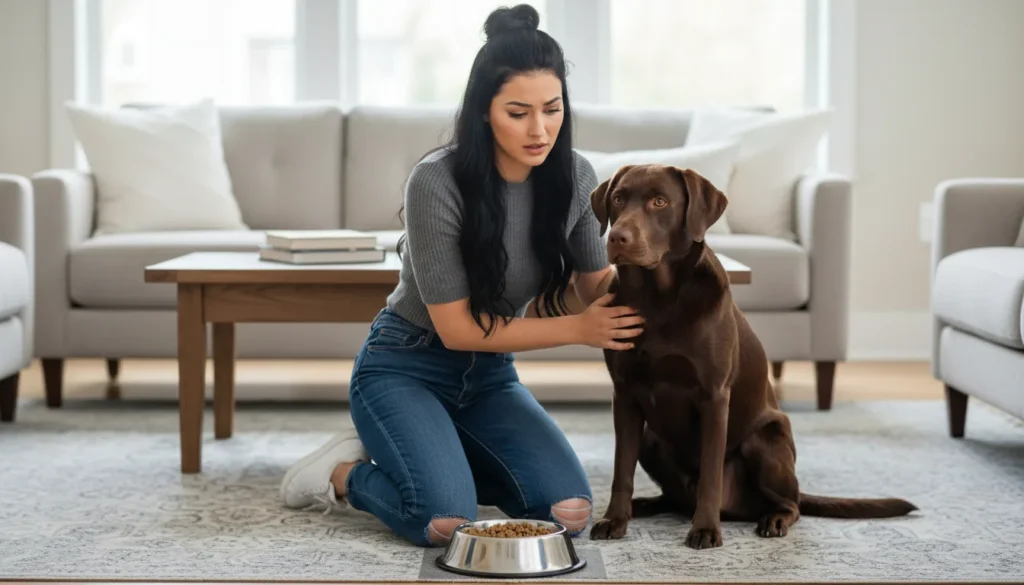
The Small Change That’s Easy to Ignore
Your dog still eats.
Still walks.
Still follows you from room to room.
But something feels different.
They don’t sniff as much.
They ignore sounds they used to investigate.
They pass by new objects without interest.
You might think:
“They’re just calmer now.”
“Maybe they’re finally maturing.”
“It’s probably nothing.”
But curiosity is not a personality quirk in dogs.
It’s a biological signal.
And when curiosity fades, it’s often one of the earliest indicators that something inside your dog has shifted.
Why Curiosity Matters More Than Most Owners Realize
Curiosity isn’t just playful behavior.
For dogs, curiosity reflects:
- Neurological health
- Sensory engagement
- Energy availability
- Emotional balance
- Physical comfort
A curious dog is actively processing the world.
A less curious dog isn’t being stubborn or bored — they’re redirecting resources inward.
Veterinary behavior insights aligned with guidance from the American Veterinary Medical Association note that behavioral disengagement often appears before clear clinical symptoms, especially in early or low-grade illness.
Curiosity fades early because it’s optional behavior — and the body turns off optional systems first.
The Biological Reason Sick Dogs Lose Curiosity
When a dog becomes unwell, the body shifts into conservation mode.
Energy is redirected toward:
- Immune response
- Healing
- Temperature regulation
- Inflammation control
Exploration, investigation, and novelty-seeking require extra energy.
So the body makes a trade-off.
Curiosity is reduced — not eliminated — just enough to conserve strength.
This is not depression.
It’s survival efficiency.
Curiosity vs Obedience: Why This Change Is Often Missed
Here’s why many owners overlook this sign:
Sick dogs often remain obedient.
They still:
- Respond to commands
- Walk when asked
- Eat meals
- Stay close to you
Obedience is social behavior.
Curiosity is self-initiated behavior.
Dogs can suppress curiosity long before they stop cooperating.
That’s why this change hides in plain sight.
How Reduced Curiosity Actually Looks in Daily Life
Loss of curiosity isn’t dramatic.
It’s subtle.
Watch for:
- Less sniffing during walks
- Ignoring new sounds
- Reduced interest in unfamiliar people or dogs
- Walking past new objects without investigation
- Shortened exploration time
Your dog isn’t disengaged from you.
They’re disengaging from the environment.
Common Health-Related Reasons Curiosity Drops First
1. Low-Grade Pain or Discomfort
Pain doesn’t always cause limping or whining.
It often causes disinterest.
When movement or posture causes discomfort, dogs explore less to avoid strain.
2. Inflammation or Infection
Even mild inflammation affects:
- Brain signaling
- Motivation
- Sensory processing
This leads to reduced novelty-seeking.
3. Digestive or Metabolic Strain
When digestion or nutrient absorption is compromised, energy availability drops.
Curiosity requires surplus energy.
4. Emotional Stress Related to Illness
Feeling “off” makes dogs cautious.
They conserve attention and reduce exposure to unfamiliar stimuli.
A Comparison That Makes the Pattern Clear
Normal Curiosity vs Illness-Related Curiosity Loss
| Behavior | Healthy Curiosity | Illness-Related Change |
|---|---|---|
| Sniffing | Frequent, engaged | Brief or absent |
| Reaction to sounds | Investigates | Ignores or delays |
| Interest in novelty | High | Low |
| Walk engagement | Exploratory | Mechanical |
| Recovery after rest | Fully returns | Remains muted |
If curiosity doesn’t return after rest, it’s meaningful.
Real-Life Example Many Owners Miss
A young dog known for exploring everything suddenly stopped sniffing on walks.
No limping.
No appetite change.
No visible pain.
A week later, mild gastrointestinal illness was diagnosed.
The curiosity loss wasn’t personality change.
It was the earliest symptom.
Once the issue resolved, curiosity returned naturally — without training.
Why Dogs Stop Exploring Before They Stop Eating
This surprises many owners.
Eating is essential.
Exploration is optional.
Dogs preserve:
- Breathing
- Eating
- Movement
Curiosity ranks much lower in survival priority.
That’s why waiting for appetite loss means you’ve missed earlier signals.
Why This Matters Today
Dogs live longer and healthier lives — but that also means:
- More subtle illness patterns
- More slow-developing conditions
- Fewer dramatic warning signs
Modern dog care relies heavily on behavioral awareness, not crisis response.
Curiosity loss is one of the earliest, least disruptive clues available to owners.
Ignoring it delays care.
Noticing it enables prevention.
Common Mistakes Owners Make
Avoid these assumptions:
- ❌ “They’re just calmer now”
- ❌ “They’ve grown out of it”
- ❌ “They still eat, so they’re fine”
- ❌ “They’re just tired today”
- ❌ “All dogs slow down eventually”
Curiosity doesn’t disappear without reason.
Hidden Tip: Compare Curiosity to Their Own Baseline
Don’t compare your dog to other dogs.
Ask:
- Are they less curious than they were last month?
- Do they disengage faster than before?
- Does curiosity fail to return after rest?
Patterns matter more than intensity.
What You Can Do Right Now
1. Observe Walk Behavior Closely
Sniffing is diagnostic.
2. Track Changes Over 7–14 Days
Short-term dips happen. Patterns matter.
3. Reduce Environmental Stress
Ill dogs disengage faster in chaotic spaces.
4. Schedule Preventive Veterinary Checks
Especially if curiosity loss pairs with subtle energy changes.
5. Trust Early Signals
You know your dog’s normal better than anyone.
Expert Insight on Early Behavioral Signs
Animal welfare and behavior resources from organizations like the American Society for the Prevention of Cruelty to Animals emphasize that behavior changes often precede visible illness.
Curiosity decline is one of the quietest — and most reliable — of these changes.
Key Takeaways
- Curiosity is a biological signal, not a personality trait
- Dogs reduce curiosity early to conserve energy
- Obedience can remain even when curiosity drops
- Loss of curiosity often appears before appetite or mobility changes
- Early observation enables easier, gentler care
Frequently Asked Questions
1. Is it normal for dogs to become less curious with age?
Gradually, yes — but sudden or uneven changes are not normal.
2. How long should curiosity loss last before concern?
More than 7–10 days deserves attention.
3. Can stress alone reduce curiosity?
Yes, but illness and stress often overlap.
4. Should I try to stimulate curiosity again?
No — forcing engagement can increase strain.
5. When should I see a veterinarian?
If curiosity loss persists or appears alongside other subtle changes.
The Quiet Truth About Curious Dogs
Dogs don’t lose curiosity because they stop caring.
They lose it because their body is prioritizing something else.
Noticing that shift early is one of the most powerful ways to protect their health.
Disclaimer: This article is for general educational purposes only and does not replace professional veterinary advice. If you have concerns about your dog’s health, consult a qualified veterinarian.

Dr. Chaitanya Solanki is a licensed veterinarian with over 10 years of hands-on clinical experience in companion animal medicine. As the founder of Dr. C.M.’s Pet Clinic, he has treated thousands of dogs and cats, focusing on preventive care, behavior, nutrition, and early disease detection. His writing is evidence-based, clinically informed, and designed to help pet owners make confident, responsible care decisions.
Pingback: Why Subtle Energy Changes in Pets Are Often the First Warning Sign
Pingback: Why Dogs Stop Chewing Toys When They’re Unwell — The Subtle Sign Most Owners Miss