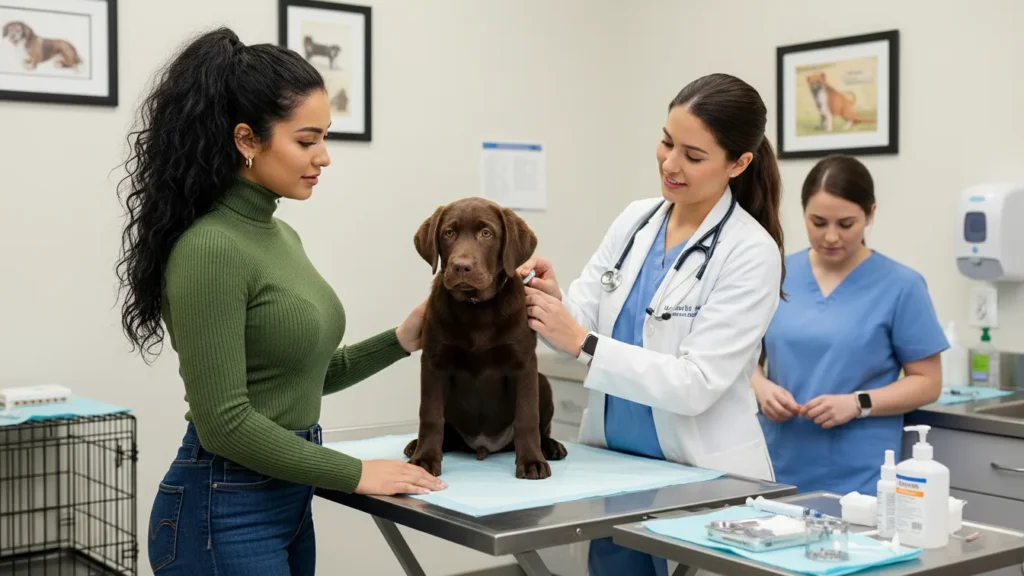
“But My Puppy Was Vaccinated…”
It’s one of the hardest sentences veterinarians hear.
Your puppy received their shots.
You followed the schedule.
You did what you were told.
So when a vet says the word parvo, it feels confusing — even unfair.
Many owners assume vaccination equals full protection.
In reality, parvo immunity is built in stages, and there’s a critical window where puppies are still exposed, even after shots.
Understanding this window doesn’t create fear.
It creates clarity — and better decisions.
What the Parvo Vaccine Actually Does
The parvo vaccine doesn’t act like a switch that flips immunity on overnight.
Instead, it:
- Trains the immune system
- Requires multiple doses
- Builds protection gradually
Each vaccine dose is a lesson for the immune system — not a shield by itself.
This is why puppies receive a series of parvo vaccinations, not just one.
The “Immunity Gap” Vets Worry About
The most important concept owners rarely hear about is the immunity gap.
Puppies are born with maternal antibodies passed from their mother’s milk. These antibodies:
- Protect early in life
- Also block vaccines from working fully
As maternal antibodies fade:
- Vaccine response improves
- But protection may still be incomplete
This overlap creates a gap where:
- The puppy isn’t fully protected by mom
- The vaccine hasn’t fully taken effect yet
That’s when parvo sneaks in.
Why Timing Matters More Than Most Owners Realize
Vaccination schedules exist for a reason — and spacing matters.
If vaccines are:
- Given too early
- Missed or delayed
- Stopped after one or two doses
Protection may never fully develop.
Most puppies need multiple parvo doses until 14–16 weeks of age to ensure maternal antibodies no longer interfere.
Stopping early is one of the most common reasons vaccinated puppies still get sick.
Exposure Happens Faster Than Immunity
Parvo is incredibly resilient.
It can live:
- In soil for months
- On shoes, floors, clothing
- In parks, sidewalks, lifts, and waiting areas
A puppy doesn’t need to meet a sick dog.
They only need to step where one has been.
Even a vaccinated puppy can be exposed before immunity finishes developing.
Why “He Looks Healthy” Can Be Misleading
Many puppies infected during the immunity gap:
- Look normal at first
- Eat and play initially
- Show subtle changes before crashing
Vaccination reduces severity — but doesn’t always prevent infection if exposure timing is unlucky.
This is why some vaccinated puppies still develop parvo, but may:
- Recover faster
- Respond better to treatment
- Avoid severe complications
Vaccinated vs Unvaccinated Parvo Cases
There is a difference — and it matters.
| Factor | Vaccinated Puppy | Unvaccinated Puppy |
|---|---|---|
| Onset severity | Often slower | Rapid deterioration |
| Survival chances | Significantly higher | Much lower |
| Treatment response | Better | Poorer |
| Complications | Fewer | More common |
Vaccination doesn’t fail — it reduces risk and improves outcomes.
Common Reasons Vaccinated Puppies Still Get Parvo
Veterinarians usually find one or more of these factors:
- Incomplete vaccine series
- Early exposure before immunity matured
- High viral load in environment
- Improper vaccine storage or handling
- Weak immune response due to stress or illness
None of these mean the vaccine was “useless.”
They explain why timing and protection matter.
Real-Life Scenario Vets See Often
A puppy receives:
- First parvo shot at 6 weeks
- Second at 9 weeks
Owner assumes protection is complete.
The puppy visits:
- A park
- A friend’s house
- A shared apartment lift
At 11 weeks:
- Appetite drops
- Vomiting begins
This puppy was vaccinated — but not fully protected yet.
What Owners Can Do to Truly Reduce Risk
Vaccination is step one — not the only step.
Smart Protection During the Immunity Gap
- Complete the full vaccine schedule
- Avoid high-traffic dog areas early
- Limit contact with unknown dogs
- Carry puppies instead of letting them walk in public spaces
- Disinfect shoes and surfaces regularly
These steps save lives — quietly and effectively.
Mistakes That Give a False Sense of Security
Avoid assuming:
- “One shot is enough”
- “My area is low risk”
- “Other dogs look healthy”
- “Vaccinated means immune immediately”
Parvo exploits assumptions.
Why This Matters Today
Parvo remains common because:
- Puppies socialize earlier
- Urban environments concentrate exposure
- Vaccination education is incomplete
- Owners aren’t warned about the immunity gap
When owners understand why vaccination needs time, outcomes improve dramatically.
Key Takeaways
- Vaccination does not equal instant immunity
- Puppies have an immunity gap due to maternal antibodies
- Parvo exposure can happen before protection is complete
- Vaccinated puppies usually fare better than unvaccinated ones
- Completing the full vaccine series is critical
- Smart precautions reduce risk during early weeks
Frequently Asked Questions (FAQs)
1. Can a fully vaccinated puppy still get parvo?
It’s rare once the full series is complete, but no vaccine is 100% absolute.
2. Does one parvo shot protect my puppy?
No. Multiple doses are required for reliable immunity.
3. Should I avoid taking my puppy outside?
Avoid high-risk areas until vaccination is complete, but controlled exposure is fine.
4. Does vaccination reduce severity if infection happens?
Yes. Vaccinated puppies typically recover faster with fewer complications.
5. When is my puppy considered fully protected?
Usually after completing the full vaccine series around 14–16 weeks, as advised by your vet.
Vaccination Is Protection — Not a Shortcut
Parvo after vaccination doesn’t mean failure.
It means biology is complex, immunity takes time, and timing matters.
When owners understand this, they stop blaming themselves —
and start protecting their puppies more effectively.
That understanding saves lives.
Disclaimer: This article is for general educational purposes and does not replace professional veterinary advice. Please consult your veterinarian for guidance specific to your puppy.

Dr. Chaitanya Solanki is a licensed veterinarian with over 10 years of hands-on clinical experience in companion animal medicine. As the founder of Dr. C.M.’s Pet Clinic, he has treated thousands of dogs and cats, focusing on preventive care, behavior, nutrition, and early disease detection. His writing is evidence-based, clinically informed, and designed to help pet owners make confident, responsible care decisions.
Pingback: Canine Coronavirus vs Parvo — How Vets Tell the Difference Early
Pingback: Why Viral Infections Hit Puppies Harder Than Adult Dogs