When Sleep Breaks for “No Reason”
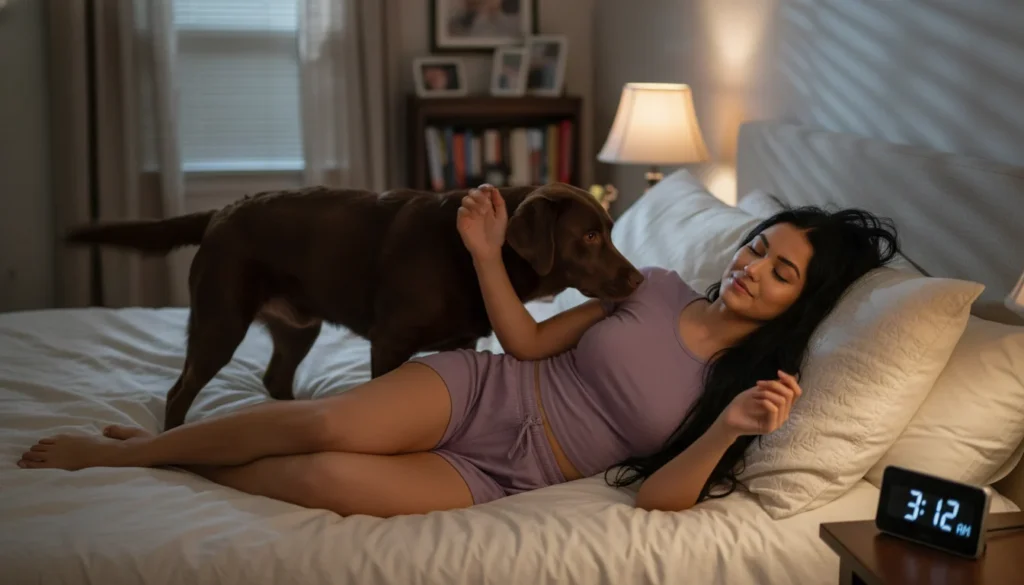
It’s 3:12 a.m.
Your dog nudges your arm. Or whines softly. Or just stares until you wake up.
Nothing looks wrong. Food bowl’s full. No thunder. No obvious emergency.
And yet—here you are, awake.
For many dog owners, this becomes a recurring mystery: Why does my dog wake me up when nothing seems wrong?
The short answer?
There is a reason. Dogs almost never wake their humans randomly.
The long answer—and the one that actually helps you sleep again—lies in understanding how dogs experience time, safety, routine, and communication very differently than we do.
This article breaks down the real causes behind nighttime wake-ups, what they mean, when to worry, and what you can do—starting tonight.
Why “No Clear Reason” Usually Means “Human-Missed Reason”
Dogs don’t operate on human logic.
They don’t check the clock.
They don’t reason that “it’s too early.”
They don’t ignore discomfort hoping it resolves by morning.
Dogs act in response to internal signals (physical and emotional) and environmental changes—many of which humans sleep straight through.
Common triggers humans overlook include:
- Subtle body discomfort
- Emotional insecurity
- Routine mismatches
- Sensory changes (smell, sound, vibration)
- Learned behavior patterns
To a dog, waking you up may feel necessary, not optional.
The Instinctive Reasons Dogs Wake Their Owners
Long before couches and alarm clocks, dogs survived by staying alert—especially at night.
Even modern dogs retain these instincts.
Instinct-driven wake-up triggers:
- A perceived environmental change
- A noise outside your hearing range
- A scent shift near the home
- Movement patterns that feel “off”
Dogs evolved to alert their pack when something changed during vulnerable hours.
You’re the pack now.
Routine Confusion: Dogs Track Time Differently
Dogs don’t understand schedules the way humans do—but they do track patterns.
They rely on:
- Light changes
- Hormone cycles
- Household activity rhythms
- Feeding and walk timing
If any of these shift—even slightly—it can trigger confusion or anxiety.
Common routine disruptions:
- Feeding later than usual
- Evening walks skipped
- Travel or visitors
- Seasonal daylight changes
- Owner stress affecting household energy
When routines blur, dogs often seek reassurance—by waking you.
Emotional Security: Nighttime Is When Anxiety Speaks
Night removes visual cues.
Sounds feel louder.
Separation feels bigger.
For dogs with even mild anxiety, nighttime can amplify insecurity.
Signs your dog may be waking you due to emotional stress:
- Clingy behavior after waking you
- Pacing before nudging you awake
- Soft whining or sighing
- Settling only after you respond
Dogs don’t “self-soothe” like humans. They look to their bonded person.
Physical Discomfort Dogs Can’t Ignore Until Morning
Dogs don’t rationalize pain.
If something feels wrong—even mildly—they respond immediately.
Possible physical triggers:
- Digestive discomfort
- Joint stiffness
- Urinary pressure
- Temperature sensitivity
- Early-stage illness without obvious symptoms
According to guidance aligned with organizations like American Veterinary Medical Association, subtle behavior changes—especially sleep disruptions—are often early indicators of discomfort.
Importantly:
This doesn’t mean panic. It means pay attention to patterns, not one-off events.
Sensory Triggers Humans Sleep Through
Dogs hear higher frequencies, smell deeper layers, and feel vibrations humans miss entirely.
Nighttime triggers include:
- Wildlife movement outside
- Distant sirens or machinery
- HVAC system cycles
- Neighbor activity
- Weather pressure shifts
What feels like silence to you can feel like new information to your dog.
Learned Behavior: When Waking You “Worked Before”
Dogs repeat behaviors that get results.
If your dog once woke you and received:
- Comfort
- Food
- A walk
- Attention
- Reassurance
Their brain logged: Wake human = relief
This doesn’t mean manipulation. It means learning.
Puppies vs Adult Dogs vs Senior Dogs
Age matters.
Puppies:
- Smaller bladders
- Developing sleep cycles
- Separation sensitivity
Adult dogs:
- Routine-driven wake-ups
- Emotional cues
- Environmental awareness
Senior dogs:
- Cognitive changes
- Joint discomfort
- Increased nighttime confusion
Each age group wakes owners for different reasons, even if the behavior looks the same.
Comparison Table: What Your Dog’s Wake-Up Likely Means
| Behavior | Likely Cause | What to Do |
|---|---|---|
| Gentle nudging | Emotional reassurance | Calm response, consistent routine |
| Whining or pacing | Anxiety or discomfort | Observe patterns, adjust environment |
| Sudden alert barking | Sensory trigger | Check surroundings, reinforce calm |
| Repeated nightly waking | Learned habit | Gradual behavior retraining |
| Restlessness before waking you | Physical discomfort | Monitor health, consult vet if persistent |
Mistakes Owners Often Make (That Make It Worse)
Many well-meaning owners accidentally reinforce the behavior.
Common mistakes:
- Immediate food rewards
- Overly emotional responses
- Inconsistent reactions
- Ignoring repeated patterns
- Assuming “attention-seeking” without context
Dogs don’t think in terms of “bad habits.” They think in outcomes.
What Actually Helps (Actionable Steps)
Step 1: Track the Pattern
Note:
- Time of wake-up
- Behavior type
- What stops it
- What happened earlier that day
Patterns reveal causes.
Step 2: Strengthen the Evening Routine
- Same feeding time
- Calm pre-bed walk
- Low stimulation before sleep
- Predictable bedtime cues
Step 3: Adjust the Sleep Environment
- Comfortable temperature
- Familiar scents
- White noise if external sounds are frequent
- Orthopedic bedding for older dogs
Step 4: Respond Calmly, Not Dramatically
Reassure without reinforcing:
- Soft voice
- Minimal movement
- Return to sleep promptly
Why This Matters More Than Sleep
Night waking isn’t just inconvenient.
It’s often:
- A communication signal
- A trust check
- An early warning
- A routine misalignment
Dogs wake the person they trust most.
Ignoring patterns means missing what your dog is trying to tell you early—before problems escalate.
Key Takeaways
- Dogs rarely wake owners randomly
- Nighttime amplifies emotional and physical signals
- Routine consistency prevents most disruptions
- Repeated waking deserves attention, not frustration
- Understanding the “why” restores sleep for both of you
Frequently Asked Questions
Is my dog waking me up because they’re bored?
Occasionally—but boredom usually shows daytime signs too. Night waking is more often emotional or physical.
Should I ignore my dog when they wake me?
Not blindly. Observe patterns first. Ignoring genuine discomfort can worsen anxiety.
Can diet affect nighttime wake-ups?
Yes. Late meals, rich treats, or digestive sensitivity can disrupt sleep.
How long should I monitor before seeing a vet?
If wake-ups persist for 7–10 days or worsen, professional input is wise.
Is this a sign of separation anxiety?
It can be, especially if your dog struggles when alone during the day.
Conclusion: Your Dog Isn’t Disrupting You—They’re Communicating
When your dog wakes you up for “no reason,” what they’re really saying is:
Something feels different. I trust you to help.
Understanding that message—rather than dismissing it—strengthens the bond and restores peaceful nights.
Sleep returns when communication is understood.
Disclaimer: This article is for general informational purposes and does not replace personalized veterinary advice. If behavior changes persist, a professional evaluation is recommended.

Dr. Chaitanya Solanki is a licensed veterinarian with over 10 years of hands-on clinical experience in companion animal medicine. As the founder of Dr. C.M.’s Pet Clinic, he has treated thousands of dogs and cats, focusing on preventive care, behavior, nutrition, and early disease detection. His writing is evidence-based, clinically informed, and designed to help pet owners make confident, responsible care decisions.