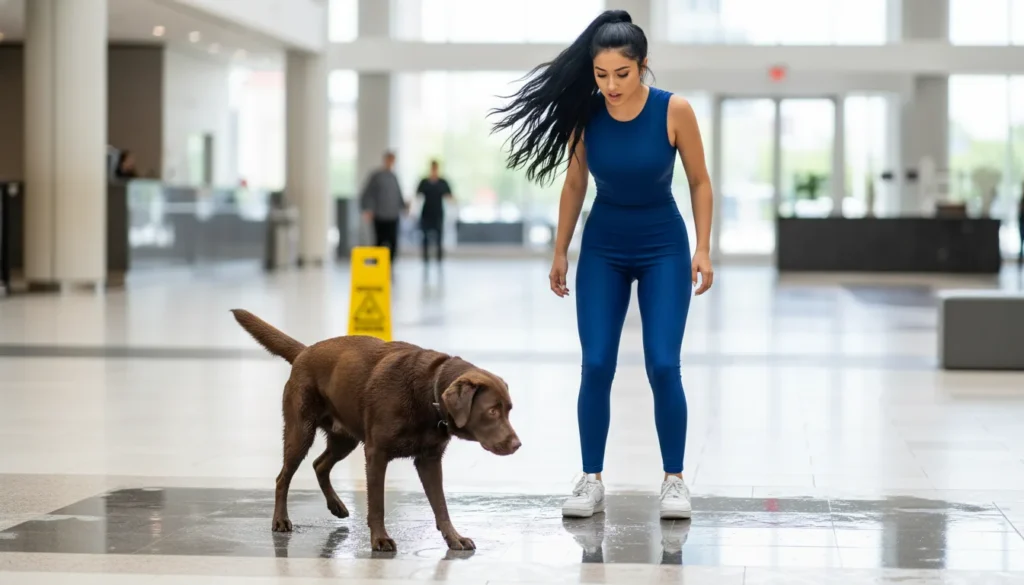
When the Floor Becomes the First Warning Sign
One day, your dog walks across the house like normal.
The next day…
They stop at the edge of the tile.
They hesitate on the hardwood.
They refuse the stairs they’ve used for years.
To many owners, this feels confusing.
“Is my dog being stubborn?”
“Are they scared?”
“Did something happen?”
But here’s the gentle truth:
Dogs often avoid certain surfaces when their body doesn’t feel as steady as it used to.
Floor hesitation is one of the quietest early clues that something may be changing—physically, emotionally, or both.
Dogs rarely announce discomfort with whining.
Sometimes, they communicate by simply not stepping forward.
Let’s explore why surfaces suddenly matter so much.
Dogs Experience Surfaces Differently Than Humans Do
We walk in shoes.
Dogs walk barefoot.
Every surface sends information directly through:
- Paw pads
- Nails
- Joint angles
- Balance systems
- Traction feedback
A floor is not just a floor to a dog.
It’s a sensory experience.
Hardwood can feel slippery.
Tile can feel cold and unstable.
Carpet can feel secure.
A helpful analogy:
For dogs, walking on different surfaces is like us walking on ice versus grass.
The body reacts instantly.
So avoidance often begins with comfort and stability—not attitude.
The Most Common Reason: Slipping Feels Scary and Unsafe
One of the biggest triggers is simple physics.
Smooth floors reduce grip.
When a dog slips even once, the brain remembers:
“That was unsafe.”
So dogs may begin avoiding:
- Tile
- Hardwood
- Polished concrete
- Wet pavement
You might notice:
- Short, careful steps
- Legs spread wider for balance
- Hesitation before crossing
- Looking to you for reassurance
This isn’t stubbornness.
It’s caution.
Dogs don’t want to fall.
And once confidence drops, surfaces become emotional boundaries.
Subtle Joint Stiffness Makes Hard Floors Feel Worse
Hard surfaces don’t absorb impact.
So when joints feel even slightly stiff, dogs often prefer softer ground.
A dog may suddenly seek:
- Rugs
- Carpet
- Grass
- Beds
Because softer surfaces reduce pressure.
Early joint discomfort often shows up as:
- Avoiding hard floors
- Hesitating before sitting
- Slower movement after rest
- Shorter play sessions
Owners often wait for limping.
But dogs often change terrain preference first.
It’s one of the earliest mobility adaptations.
Paw Sensitivity Can Make Certain Floors Unpleasant
Sometimes the issue isn’t joints—it’s paws.
Dogs may avoid surfaces if paw pads feel irritated or sensitive.
Common triggers include:
- Hot pavement
- Cold surfaces
- Rough textures
- Minor nail discomfort
- Debris caught between toes
Dogs rarely cry out.
Instead, they change behavior:
- Tiptoe walking
- Lifting paws
- Refusing certain ground
The paws are a dog’s contact with the world.
Even small sensitivity can change movement decisions dramatically.
Anxiety and Environmental Stress Can Be Surface-Linked
Not all avoidance is physical.
Dogs can associate certain surfaces with stressful experiences.
For example:
- Slipping near the stairs
- Loud noises in a hallway
- Being startled in a kitchen
So the floor becomes a memory trigger.
A dog may hesitate because they’re thinking:
“Something unpredictable happened here.”
This is why avoidance sometimes appears suddenly, even without obvious injury.
Dogs are context learners.
Surfaces become part of emotional geography.
Comparison Table: Surface Avoidance Causes at a Glance
| Cause | Common Signs | Often Avoided Surfaces |
|---|---|---|
| Low traction / slipping | Wide stance, cautious steps | Tile, hardwood, wet floors |
| Joint stiffness | Prefers rugs, slower movement | Hard floors, stairs |
| Paw sensitivity | Paw lifting, licking | Hot pavement, rough ground |
| Anxiety association | Freezing, scanning | Hallways, certain rooms |
| Vision changes (older dogs) | Hesitation in low light | Dark floors, shiny surfaces |
Older Dogs Often Become More Surface-Cautious
Senior dogs frequently become more careful walkers.
Not because they’re being picky…
But because balance and strength change with age.
Older dogs may:
- Struggle more with smooth floors
- Avoid jumping down
- Prefer predictable footing
- Take stairs slower
Their nervous system is adapting.
Think of it like an older person using handrails more often.
It’s not weakness.
It’s wisdom.
Surface avoidance can be one of the first visible signs of that shift.
Vision and Depth Perception Can Affect Floor Confidence
Some dogs hesitate because the floor looks different.
Shiny surfaces can reflect light.
Dark rugs can appear like holes.
Patterned flooring can confuse depth perception.
You might notice your dog:
- Staring before stepping
- Sniffing the ground more
- Walking around reflective spots
Dogs don’t interpret floors the way we do.
If vision changes slightly, surface confidence can change quickly.
Especially at night or in unfamiliar lighting.
Real-Life Examples Owners Commonly Describe
Many owners say:
- “He won’t walk on the kitchen tile anymore.”
- “She suddenly avoids the hallway.”
- “He’s fine outside, but hesitant inside.”
- “She sticks to the rugs like lava is on the floor.”
These are extremely common patterns.
Dogs aren’t being dramatic.
They are choosing what feels safest.
And that choice often carries information.
Hidden Tips: How to Observe Surface Avoidance Clearly
If your dog avoids certain floors, ask:
- Is it only indoors or also outdoors?
- Is it worse in the morning or evening?
- Does it happen more on smooth surfaces?
- Is your dog slipping or just hesitating?
- Are they licking paws afterward?
A powerful tip:
Watch your dog from the side while walking.
Small gait changes show up more clearly in profile than from above.
Patterns matter more than one moment.
Mistakes Owners Often Make
Here are common misunderstandings:
- Assuming it’s stubbornness
Most dogs avoid surfaces for a reason. - Forcing them to cross
This increases fear and instability. - Waiting for obvious limping
Terrain avoidance often comes first. - Ignoring traction at home
Rugs and grip make a huge difference. - Changing everything at once
Make small adjustments so you know what helps.
Surface avoidance is communication, not misbehavior.
Actionable Steps to Help at Home
Simple changes can restore confidence quickly:
- Add rugs or runners in slippery areas
- Keep nails trimmed for better grip
- Wipe paws after outdoor walks
- Provide ramps or steps for furniture
- Improve lighting in dark hallways
- Encourage calm, slow movement instead of rushing
If avoidance is new, persistent, or paired with stiffness, reduced activity, or posture changes, a veterinarian can help clarify what’s happening.
Early support often prevents bigger issues later.
Why This Matters Today (Evergreen)
Dogs are living longer, closer lives with humans.
That means subtle mobility and comfort clues show up in everyday routines:
Walking across the kitchen.
Climbing stairs.
Crossing a hallway.
Surface avoidance is one of the earliest signals that something has shifted—traction, comfort, confidence, or physical ease.
Noticing it early is not overreacting.
It’s attentive care.
Because dogs don’t always whine when something’s wrong…
Sometimes they simply stop stepping forward.
Key Takeaways
- Dogs experience floors through paws, traction, and balance
- Slipping is a major reason dogs begin avoiding smooth surfaces
- Joint stiffness often makes hard floors feel uncomfortable
- Paw sensitivity and anxiety can also trigger avoidance
- Older dogs commonly become more cautious with footing
- Small home changes like rugs and lighting can help immediately
FAQ: Common Owner Questions
1. Is it normal for dogs to avoid tile or hardwood?
Yes, especially if they’ve slipped before or feel unstable. Smooth floors are challenging for many dogs.
2. Does surface avoidance always mean pain?
Not always. It can also relate to traction fear, paw sensitivity, or anxiety associations.
3. Why does my dog avoid floors but walk fine outside?
Grass provides natural grip and softness, while indoor floors can feel slippery and hard.
4. Should I force my dog to walk across the surface?
No. Gentle support and traction improvements work better than forcing, which can increase fear.
5. When should I seek professional advice?
If avoidance is sudden, worsening, or paired with stiffness, posture changes, or reduced activity, a veterinary check is a smart next step.
Conclusion: When the Floor Becomes a Clue
Dogs don’t avoid surfaces randomly.
They avoid what feels unsafe, uncomfortable, or uncertain.
Sometimes it’s simple traction.
Sometimes it’s a confidence change.
Sometimes it’s an early comfort signal.
The most important thing is not panic.
It’s curiosity.
Because the way your dog walks through their world often reveals how they feel inside their body.
And sometimes the first sign that something’s wrong…
is the moment they stop at the edge of the floor.

Dr. Chaitanya Solanki is a licensed veterinarian with over 10 years of hands-on clinical experience in companion animal medicine. As the founder of Dr. C.M.’s Pet Clinic, he has treated thousands of dogs and cats, focusing on preventive care, behavior, nutrition, and early disease detection. His writing is evidence-based, clinically informed, and designed to help pet owners make confident, responsible care decisions.
Pingback: When a Small Limp Signals a Bigger Concern — Understanding Early Movement Changes in Dogs