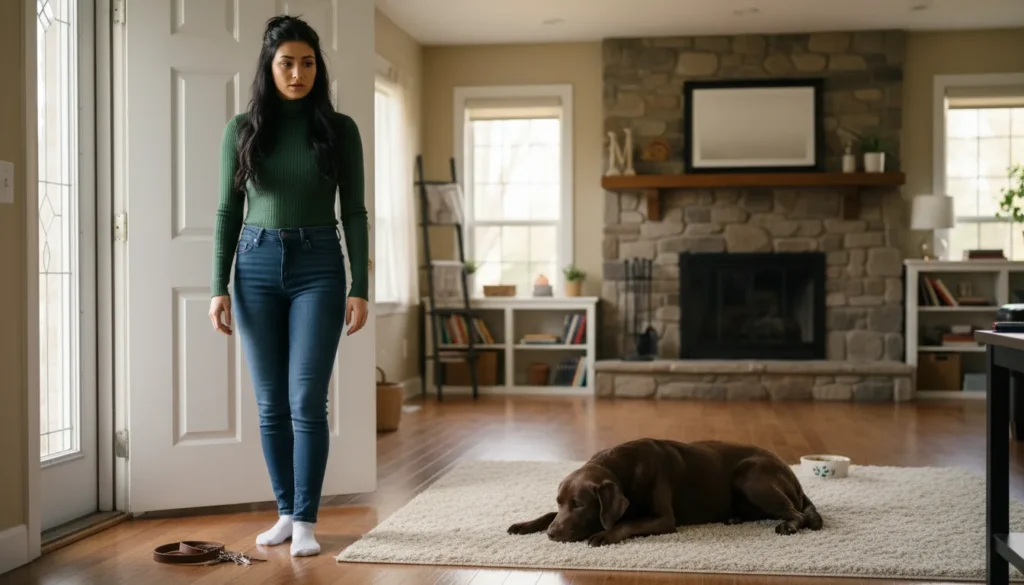
The Moment Every Dog Owner Notices—And Fears
You open the door.
Your keys jingle.
The lock clicks.
The familiar sound you’ve made thousands of times.
But this time…
There’s no scrambling of paws.
No excited whining.
No full-body wiggle waiting on the other side.
Your dog doesn’t greet you anymore.
And suddenly, a quiet question forms:
“Did I do something wrong?”
This change feels small—but emotionally, it hits hard. Because greeting at the door isn’t just a habit. For dogs, it’s a ritual tied to bonding, security, and emotional connection.
When it stops, it’s never meaningless.
Why This Behavior Matters More Than You Think
Greeting behavior is one of the strongest indicators of a dog’s emotional and physical state.
According to canine behavior research and organizations like the American Society for the Prevention of Cruelty to Animals, changes in routine social behaviors are often the earliest visible signs of internal shifts—long before obvious symptoms appear.
Dogs don’t announce discomfort or emotional changes.
They adjust quietly.
And greeting you at the door is often the first thing to fade.
The Most Common Reasons Dogs Stop Greeting You
Let’s break this down honestly—without panic, guilt, or assumptions.
1. Emotional Security Has Replaced Excitement
This is the most misunderstood reason—and often the most positive.
When dogs are younger, greetings are intense because:
- They fear separation
- They crave reassurance
- They rely on your presence for emotional regulation
As dogs mature and feel deeply secure, the urgency disappears.
Translation:
Your dog trusts you’ll come back.
That calm indifference can actually signal strong attachment, not emotional distance.
2. Aging Changes Energy—Not Love
As dogs age, their priorities shift.
Joint stiffness, reduced stamina, and slower reflexes make rushing uncomfortable—even if emotionally they still want to.
Older dogs often:
- Wait until you’re fully inside
- Greet you from a resting position
- Show affection later, not immediately
According to the American Kennel Club, behavioral slowing often appears before visible mobility issues.
3. Pain That Isn’t Obvious Yet
This is where attention matters.
Pain doesn’t always look dramatic. Subtle discomfort can cause dogs to avoid:
- Jumping
- Sudden movement
- Slippery floors near entrances
Early pain signs include:
- Hesitation instead of excitement
- Greeting you later, not at the door
- Reduced tail height during interaction
This is not disobedience.
It’s self-protection.
4. Stress or Environmental Changes You Might Have Missed
Dogs are extremely sensitive to shifts humans normalize quickly.
Examples:
- New work schedules
- Loud entry routines
- Multiple people entering at once
- New pets or family members
- Construction noise near entrances
What feels minor to you may feel unpredictable to your dog.
Stress doesn’t always create fear—it creates withdrawal.
5. Learned Behavior (Without You Realizing It)
Sometimes, dogs stop greeting because the behavior stopped being rewarding.
This can happen if:
- Excited greetings were ignored repeatedly
- Dogs were scolded for jumping
- You rushed past without interaction
- Phones replaced eye contact
Dogs adapt fast. If greeting no longer leads to connection, they conserve energy.
What’s Normal vs What Deserves Attention
Quick Comparison Table
| Behavior Change | Likely Meaning | Action Needed |
|---|---|---|
| Calm waiting, relaxed body | Emotional security | None |
| Slower greeting, stiff movement | Aging or joint discomfort | Monitor |
| Avoids door completely | Stress or pain | Investigate |
| Withdrawn overall behavior | Emotional or health issue | Vet consult |
| No greeting + appetite change | Possible illness | Act promptly |
Real-Life Example Many Owners Overlook
A middle-aged Labrador stopped greeting his owner after years of excitement.
No limping.
No whining.
No appetite loss.
A routine check revealed early hip discomfort. The dog avoided the door because the flooring made sudden turns painful.
Once rugs were added—and pain managed—the greeting returned.
The dog wasn’t less loving.
He was adapting silently.
Hidden Signals to Watch Alongside Door Greetings
Door behavior never changes alone. Watch for:
- Reduced tail wag height
- Less eye contact on entry
- Choosing distance over proximity
- Delayed engagement after you arrive
- Increased sleeping near entrances instead of excitement
These signals together tell a clearer story.
Mistakes Dog Owners Commonly Make
Avoid these reactions:
- ❌ Taking it personally
- ❌ Forcing excitement
- ❌ Assuming “they’re just being lazy”
- ❌ Ignoring subtle physical cues
- ❌ Overcorrecting with loud energy
Dogs don’t need performance.
They need understanding.
What You Can Do—Practical, Gentle Steps
1. Observe Patterns, Not One-Offs
Consistency matters more than isolated days.
2. Adjust the Entry Environment
- Add rugs for traction
- Lower noise levels
- Enter calmly
3. Rebuild Low-Pressure Connection
- Soft voice
- Eye contact
- Calm touch after entry
4. Schedule a Preventive Vet Check
Not urgent—but smart.
5. Respect Their New Rhythm
Dogs evolve. Relationships evolve too.
Why This Matters Today (More Than Ever)
Modern dogs live longer, experience more stimulation, and adapt to human-paced lives.
Behavioral changes are now early wellness indicators, not just training issues.
Understanding them early:
- Prevents bigger health problems
- Deepens trust
- Strengthens lifelong bonding
This isn’t about getting your old greeting back.
It’s about meeting your dog where they are now.
Key Takeaways
- Dogs stop greeting for emotional, physical, or environmental reasons
- Calm behavior often signals security—not detachment
- Subtle pain frequently shows up before obvious symptoms
- Stress doesn’t always look like fear—it often looks like withdrawal
- Gentle observation beats overreaction every time
Frequently Asked Questions
1. Should I be worried if my dog suddenly stops greeting me?
If it’s sudden and paired with other changes, yes—observe closely and consult a vet.
2. Can dogs fall out of love with their owners?
No. Dogs don’t withdraw affection randomly. Behavior changes are signals, not rejection.
3. Is this normal as dogs get older?
Very common. Energy shifts before affection does.
4. Can training fix this?
Only if the cause is behavioral—not emotional or physical.
5. How long should I monitor before acting?
If the change lasts more than two weeks, take it seriously.
A Quiet Truth Most Owners Learn Too Late
Dogs don’t stop loving you.
They stop expressing it the same way.
When you understand that, you don’t lose the greeting—you gain a deeper relationship.
Disclaimer: This article is for general educational purposes and does not replace professional veterinary advice. If you have concerns, consult a qualified veterinarian.

Dr. Chaitanya Solanki is a licensed veterinarian with over 10 years of hands-on clinical experience in companion animal medicine. As the founder of Dr. C.M.’s Pet Clinic, he has treated thousands of dogs and cats, focusing on preventive care, behavior, nutrition, and early disease detection. His writing is evidence-based, clinically informed, and designed to help pet owners make confident, responsible care decisions.