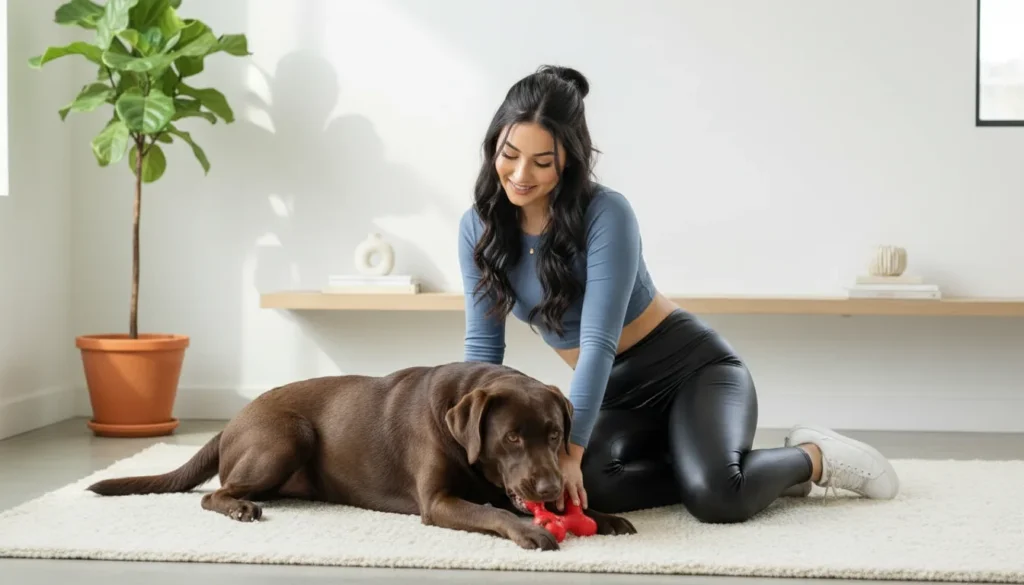
Your dog used to chew their favorite toy like it was a daily mission.
The squeaky bone.
The rope knot.
That stuffed animal they refused to sleep without.
Then one day… nothing.
They sniff it.
Walk away.
Or barely lift their head.
And suddenly you’re left wondering:
Why does my dog stop chewing toys when they’re unwell?
This change can feel small—but it often reveals something deeper happening inside your dog’s body and mind.
Chewing isn’t just play.
It’s comfort.
Stimulation.
Instinct.
So when it disappears, it can be one of the earliest behavioral clues that your dog isn’t feeling like themselves.
Let’s break down the real science, psychology, and biology behind this subtle shift—and what you should do next.
Chewing Isn’t Just a Hobby — It’s a Natural Biological Drive
Before understanding why dogs stop chewing, it helps to understand why they chew in the first place.
Chewing is deeply wired into canine biology.
Dogs chew for:
- Stress relief
- Mental stimulation
- Teething or oral comfort
- Instinctual satisfaction
- Boredom prevention
- Pleasure and play
Chewing triggers reward pathways in the brain, releasing calming chemicals like dopamine.
That’s why a dog can chew for hours and look completely relaxed.
So when chewing suddenly stops…
It often means the body is prioritizing something else.
The Core Reason: Illness Changes the Brain’s Priorities
When a dog feels unwell, their body shifts into survival mode.
Instead of focusing on play, their nervous system redirects energy toward healing and protection.
This is part of what scientists call sickness behavior—a biological response seen across mammals.
When sick, animals naturally become:
- Less playful
- Less active
- More withdrawn
- Less interested in normal pleasures
Chewing requires energy, attention, and comfort.
When the body doesn’t feel right, chewing becomes less important.
1. Pain Makes Chewing Uncomfortable
One of the most common reasons dogs stop chewing toys when sick is simple:
Chewing hurts.
Pain may come from:
- Dental inflammation
- Gum sensitivity
- Mouth ulcers
- Jaw soreness
- Head or neck tension
Even mild discomfort can make chewing feel irritating instead of soothing.
Real-life example
A dog with a sore tooth may still eat soft food but completely avoid hard chew toys.
That’s because toys require repetitive pressure—something an aching mouth can’t tolerate.
2. Low Energy Removes the Desire to Play
Chewing isn’t passive.
It’s a form of active engagement.
When dogs feel unwell, fatigue sets in.
The body conserves resources by reducing non-essential activity.
Instead of chewing, dogs often choose:
- Resting
- Sleeping more
- Lying in quiet places
- Avoiding stimulation
This isn’t laziness.
It’s biology.
Healing requires energy—and chewing becomes optional.
3. Nausea Can Reduce Toy Interest
Many dogs chew when they feel calm.
But nausea changes everything.
If a dog has an upset stomach, chewing may trigger discomfort or worsen queasiness.
Dogs experiencing nausea may also show:
- Lip licking
- Drooling
- Reduced appetite
- Avoidance of treats and toys
Even the smell of certain toys can become unpleasant when the digestive system feels off.
4. Stress and Illness Often Come Together
Feeling sick is stressful.
Dogs don’t always understand what’s happening in their bodies.
So illness can trigger emotional changes like:
- Anxiety
- Withdrawal
- Irritability
- Needing more comfort
Chewing is often a self-soothing activity.
But when stress becomes too high, dogs may shut down instead of coping through play.
5. Chewing Depends on Appetite and Motivation
Many dogs chew most when:
- They feel hungry
- They’re excited
- They’re mentally stimulated
When sickness reduces appetite or motivation, chewing naturally drops.
It’s similar to humans losing interest in snacks or hobbies when feeling unwell.
Your dog isn’t being “difficult.”
Their internal reward system is temporarily muted.
Behavioral Shift vs Normal Preference Change
It helps to distinguish between:
Normal toy boredom
and
Illness-related behavioral change
Comparison Table: Toy Boredom vs Feeling Unwell
| Behavior Change | Normal Toy Boredom | Possible Illness Sign |
|---|---|---|
| Stops chewing one toy | ✅ Yes | ✅ Sometimes |
| Still plays with other toys | ✅ Yes | ❌ Rare |
| Eats normally | ✅ Yes | ❌ Often reduced |
| Seems tired or withdrawn | ❌ No | ✅ Yes |
| Avoids interaction | ❌ No | ✅ Common |
| Chewing causes discomfort | ❌ No | ✅ Possible pain |
| Returns to chewing quickly | ✅ Yes | ❌ May persist |
6. Dogs Hide Discomfort Instinctively
Dogs are incredibly good at masking weakness.
In the wild, showing sickness could attract danger.
So instead of obvious symptoms, dogs often show subtle behavioral clues like:
- Ignoring toys
- Sleeping more
- Reduced excitement
- Less chewing
Owners often notice toy avoidance before anything else.
That’s why this matters.
7. Oral Sensory Sensitivity Changes During Illness
When unwell, dogs can become more sensitive to:
- Texture
- Pressure
- Sound
- Smell
Chew toys that once felt satisfying may feel overstimulating.
This sensory shift is common during fever, inflammation, or general discomfort.
8. Mental Fog Reduces Play Drive
Sickness affects the brain.
When immune signals increase, dogs may experience a kind of “mental slowdown.”
This reduces:
- Curiosity
- Engagement
- Focus
Chewing requires attention.
An unwell dog may simply not have the mental energy.
Mistakes Owners Often Make
Here are common misunderstandings:
❌ Forcing play
If your dog stops chewing, pushing toys can increase stress.
❌ Assuming it’s just aging
Sudden changes are more important than gradual ones.
❌ Ignoring subtle behavior shifts
Toy avoidance can be an early clue worth noticing.
❌ Switching toys repeatedly
Too many new toys won’t fix an underlying issue.
Hidden Tips to Support Your Dog Comfortably
If your dog isn’t chewing like usual, here are gentle supportive steps:
✅ Offer softer comfort options
Try plush toys instead of hard chews.
✅ Observe patterns
Ask:
- Is appetite also reduced?
- Are they sleeping more?
- Do they seem tense?
✅ Check the mouth gently
Look for:
- Redness
- Bad breath
- Drooling
- Swelling
✅ Create a calm environment
Quiet rest helps healing.
✅ Monitor duration
A brief change may resolve quickly, but persistent avoidance matters.
When This Behavioral Sign Becomes More Urgent
You should seek professional guidance if toy avoidance comes with:
- Refusing food
- Vomiting or diarrhea
- Excessive drooling
- Whining when chewing
- Swollen face or mouth
- Extreme lethargy
- Behavioral withdrawal lasting days
Chewing behavior is often a window into comfort and well-being.
Why This Matters Today (Evergreen Truth)
Dogs can’t say:
“I don’t feel right.”
Instead, they communicate through changes in habits.
One of the most overlooked habits is chewing.
That’s what makes this sign so important.
Not because chewing itself is life-or-death…
But because it reflects how your dog is feeling internally—often before bigger symptoms appear.
Key Takeaways
- Dogs chew for comfort, stimulation, and instinct
- Illness shifts the body into survival mode, reducing play behavior
- Pain, nausea, fatigue, and stress commonly stop chewing
- Toy avoidance can be an early behavioral clue of discomfort
- Look for patterns, not just one isolated moment
- Gentle observation and supportive care matter most
FAQ: Why Dogs Stop Chewing Toys When Unwell
1. Is it normal for a sick dog to stop chewing toys?
toggle answer
Yes. Reduced play and chewing are common sickness behaviors in mammals as the body focuses energy on healing.
2. Could dental pain be the reason my dog avoids chew toys?
Very possibly. Mouth sensitivity, inflamed gums, or tooth discomfort can make chewing unpleasant.
3. My dog still eats but won’t chew toys — why?
Soft food requires less jaw pressure than chew toys. Mild oral discomfort often shows up first during chewing.
4. How long should I wait before being concerned?
If chewing avoidance lasts more than a day or two, or comes with other symptoms like lethargy or appetite changes, it’s worth attention.
5. Should I try new toys to fix it?
Not immediately. If the cause is discomfort or illness, switching toys won’t solve the root issue. Focus on comfort and observation.
Chewing Is Comfort — And Its Absence Speaks Volumes
When dogs stop chewing toys when they’re unwell, it’s rarely random.
It’s often the body’s quiet way of saying:
“I need rest.”
“I don’t feel comfortable.”
“Something is off.”
Chewing is one of the most natural canine behaviors.
So when it disappears, it’s a subtle signal worth noticing—not with panic, but with awareness, care, and compassion.
Because sometimes, the smallest changes are the clearest messages.

Dr. Chaitanya Solanki is a licensed veterinarian with over 10 years of hands-on clinical experience in companion animal medicine. As the founder of Dr. C.M.’s Pet Clinic, he has treated thousands of dogs and cats, focusing on preventive care, behavior, nutrition, and early disease detection. His writing is evidence-based, clinically informed, and designed to help pet owners make confident, responsible care decisions.