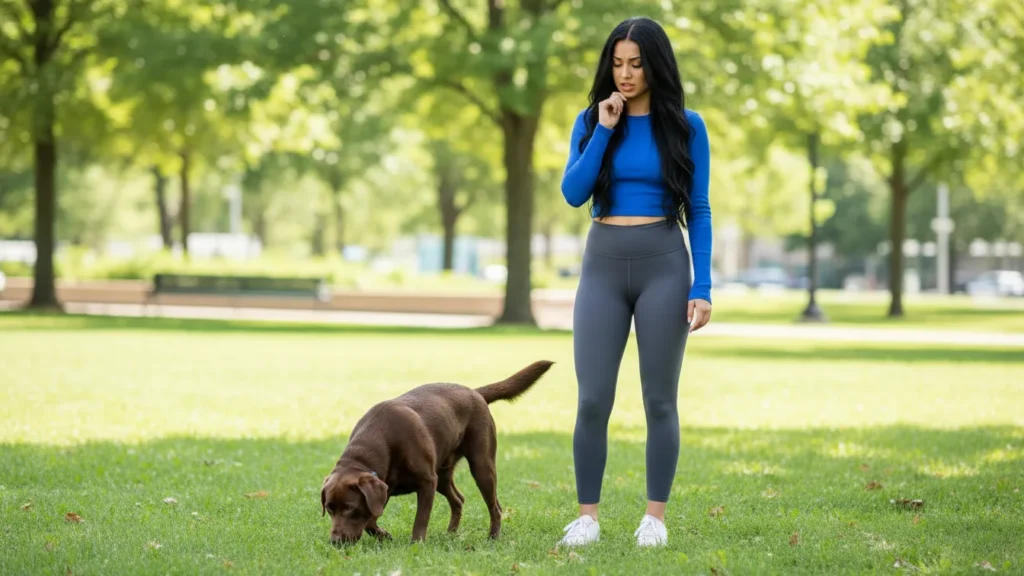
A Walk Paused by One Invisible Detail
You’re ready to keep moving.
Your dog… isn’t.
They stop.
Lower their head.
Sniff the same exact spot—again and again.
You tug the leash.
They resist.
To humans, it feels pointless.
To dogs, that patch of ground is a living message board, constantly updating.
And every pause tells you something important about how dogs experience the world.
Why Smell Is a Dog’s Primary Sense (Not Sight)
Humans experience the world visually.
Dogs experience it chemically.
A dog’s nose contains up to 300 million scent receptors (humans have about 6 million). Their brain devotes far more processing power to smell than ours ever could.
That means:
- Smells don’t fade quickly
- Scents layer over time
- One spot can hold hours—or days—of information
When a dog sniffs repeatedly, they’re not being distracted.
They’re reading.
1. That “Same Spot” Is Constantly Changing
Here’s what most people miss:
The spot isn’t the same to your dog.
Even if it looks unchanged, the scent profile shifts with:
- Wind direction
- Temperature
- Moisture
- Time
Every visit brings new chemical updates.
Your dog isn’t re-sniffing old information.
They’re checking what changed since last time.
2. Dogs Use Sniffing to Gather Social Information
Dogs communicate through scent the way humans use social media.
A single sniff can tell a dog:
- Who passed through
- Whether they were male or female
- If they were stressed or calm
- How recently they were there
Urine, paw pads, skin cells—all leave messages.
Sniffing the same spot repeatedly helps dogs layer information, not just detect it.
3. Sniffing Is Mental Stimulation, Not Just Curiosity
Sniffing isn’t passive.
It’s cognitively demanding.
Each deep sniff activates problem-solving regions of the brain. That’s why:
- Sniffing tires dogs out faster than walking
- Calm dogs sniff more deliberately
- Overstimulated dogs may sniff compulsively
That pause isn’t wasted time.
It’s mental exercise.
4. Dogs Smell in “3D,” Not a Single Moment
Humans smell in snapshots.
Dogs smell in timelines.
A repeated sniff helps dogs determine:
- Which scent is newest
- Which is fading
- Which overlaps others
Think of it like rereading a paragraph to understand nuance.
The more complex the scent, the longer the sniff.
5. Emotional States Change How Dogs Sniff
Dogs don’t sniff the same way all the time.
Their emotional state shapes it.
- Relaxed dogs sniff methodically
- Excited dogs sniff quickly
- Anxious dogs may fixate on one spot
Repeated sniffing can be a calming behavior—helping dogs regulate emotions and ground themselves.
This is why sniffing often increases in:
- New environments
- Stressful situations
- Unfamiliar routines
Sniffing vs. Stalling: How to Tell the Difference
| Behavior | What It Usually Means |
|---|---|
| Calm, rhythmic sniffing | Exploration |
| Deep focused sniffing | Information gathering |
| Rapid frantic sniffing | Overstimulation |
| Sniffing with stiff posture | Uncertainty |
| Refusing to move at one spot | Emotional regulation |
The body tells the real story, not the pause itself.
Common Smells Dogs Obsess Over (That Humans Miss)
Dogs are especially drawn to:
- Other dogs’ scent markings
- Wildlife trails
- Human foot traffic areas
- Recently disturbed soil
- Places with layered scents
To us, it’s just grass or concrete.
To dogs, it’s a crowded conversation.
Mistakes Owners Often Make (Without Realizing)
❌ Mistake 1: Constantly pulling the leash
Interrupting sniffing can increase frustration.
❌ Mistake 2: Assuming sniffing is misbehavior
It’s essential canine behavior, not defiance.
❌ Mistake 3: Rushing walks
Walks are for dogs—not just distance.
❌ Mistake 4: Stopping sniffing entirely
This removes mental enrichment and increases stress.
When Repeated Sniffing Can Signal Something Else
Most sniffing is healthy.
Pay attention if you notice:
- Sudden obsessive sniffing indoors
- Sniffing paired with anxiety behaviors
- Fixation without exploration elsewhere
Patterns matter more than moments.
Behavioral shifts often reflect emotional or environmental changes.
How to Support Healthy Sniffing Behavior
✔ Build sniff time into walks
Let dogs lead occasionally.
✔ Use long lines where safe
Freedom reduces frustration.
✔ Add scent games at home
Mental enrichment lowers fixation outdoors.
✔ Observe instead of interrupting
Your dog’s nose tells a story—listen.
Why This Matters More Than Most Owners Realize
Sniffing isn’t a delay.
It’s how dogs understand their world.
Dogs denied sniffing opportunities:
- Show more frustration
- Become less relaxed
- Lose vital mental outlets
Respecting sniffing builds:
- Better focus
- Calmer behavior
- Stronger trust
This isn’t indulgence.
It’s communication.
Real-Life Example Most Owners Miss
A dog that pulls on the leash all walk—but slows to sniff one spot repeatedly—isn’t stubborn.
They’re decompressing.
Once allowed to finish, many dogs walk more calmly afterward.
The sniff wasn’t the problem.
It was the solution.
Key Takeaways
- Dogs experience the world primarily through scent
- The “same spot” constantly changes for dogs
- Sniffing is mental work, not distraction
- Repeated sniffing often helps emotional regulation
- Respecting sniffing improves behavior and trust
FAQs
1. Is it normal for dogs to sniff the same spot repeatedly?
Yes. It’s a natural and essential behavior.
2. Should I let my dog sniff during walks?
Absolutely. Sniffing provides mental enrichment.
3. Why does my dog ignore me while sniffing?
Their brain is actively processing scent information.
4. Can too much sniffing be a problem?
Only if it’s sudden, obsessive, or paired with stress signs.
5. Does sniffing tire dogs more than walking?
Yes. Mental work can be more exhausting than physical movement.
A World You’ll Never Smell
Your dog isn’t being slow.
They’re exploring a world layered with stories you can’t see, smell, or imagine.
When you allow that pause, you’re not losing time.
You’re letting your dog be exactly what they are—a master of an invisible language.
Disclaimer: This article is for general educational purposes and does not replace personalized advice from a qualified pet professional.

Dr. Chaitanya Solanki is a licensed veterinarian with over 10 years of hands-on clinical experience in companion animal medicine. As the founder of Dr. C.M.’s Pet Clinic, he has treated thousands of dogs and cats, focusing on preventive care, behavior, nutrition, and early disease detection. His writing is evidence-based, clinically informed, and designed to help pet owners make confident, responsible care decisions.
Pingback: The Jekyll and Hyde Effect: Why Your Calm Indoor Dog Becomes a Stranger Outside