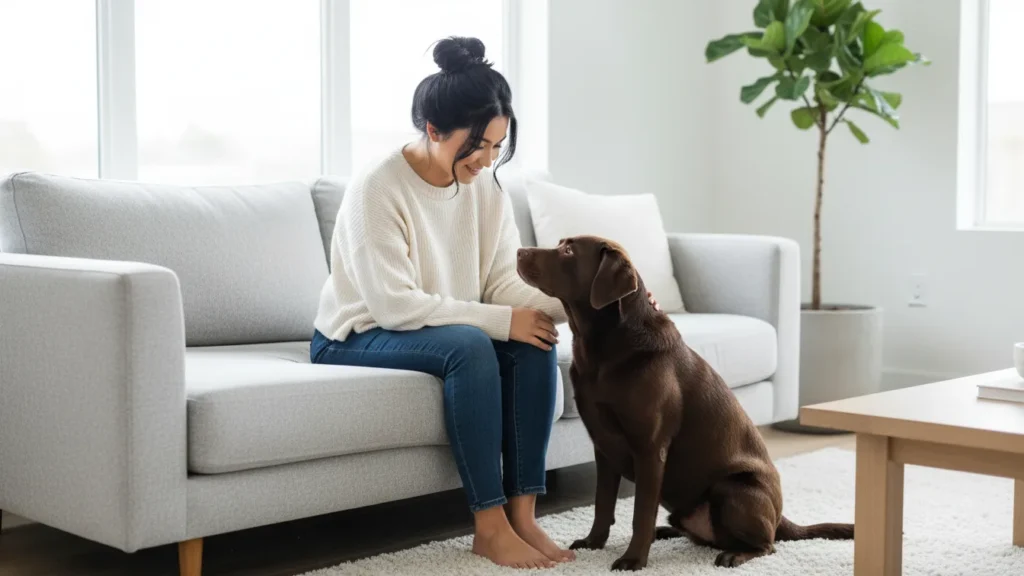
The Subtle Behavior Most Owners Don’t Question
You’re standing in the kitchen.
Or talking to someone.
Or waiting in line at the vet.
Suddenly, your dog walks over and plants themselves squarely on your feet.
Not beside you.
Not in front of you.
Directly on you.
It’s gentle.
Quiet.
Almost deliberate.
Most people laugh it off as clingy or funny.
But this behavior carries far more meaning than it appears.
This Isn’t Random — It’s Deeply Intentional
Dogs don’t waste physical contact.
When a dog chooses to sit on your feet, they’re making a decision based on:
- Emotional security
- Social structure
- Instinctive protection
- Trust and familiarity
Your feet may seem insignificant to you.
To your dog, they represent where you are rooted.
1. Sitting on Your Feet Creates a Sense of Safety
In the canine world, closeness equals security.
By sitting on your feet, your dog:
- Anchors themselves to you
- Reduces environmental uncertainty
- Feels grounded in your presence
Your feet don’t move much.
That stability matters.
Especially in:
- Busy environments
- New places
- Social gatherings
- Loud or unfamiliar settings
This behavior often increases when dogs feel slightly unsure—but not afraid.
2. It’s a Quiet Form of Protection
Dogs are natural guardians.
Sitting on your feet allows them to:
- Monitor surroundings
- Feel your movements instantly
- Respond quickly if needed
They’re not guarding aggressively.
They’re positioning strategically.
This is common in dogs that:
- Feel responsible for their humans
- Have strong bonding instincts
- Are socially attentive
Protection doesn’t always look dramatic.
Sometimes, it looks calm and still.
3. Physical Contact Helps Dogs Regulate Emotion
Just like humans hold hands or lean into someone, dogs use body contact to:
- Reduce stress
- Lower arousal
- Self-soothe
Your feet provide:
- Warmth
- Pressure
- Familiar scent
That gentle pressure against your legs helps their nervous system settle.
This is why dogs often sit on feet during:
- Long conversations
- Standing still
- Moments of waiting
4. Your Dog Is Claiming Social Belonging
Dogs are social animals with a strong sense of “group.”
Sitting on your feet is a way of saying:
“You’re with me.”
It’s not dominance.
This behavior often appears in:
- Multi-dog households
- Social settings
- New environments
Your dog is reinforcing connection without demanding attention.
5. Scent and Familiarity Play a Big Role
Your feet carry one of the strongest concentrations of your scent.
Dogs rely heavily on smell to feel oriented.
By sitting on your feet, your dog:
- Immerses themselves in your scent
- Reinforces familiarity
- Feels more at ease
This is especially common:
- Outside the home
- At vet clinics
- During travel
- Around unfamiliar people
Smell equals safety in the canine brain.
Normal Affection vs. Behavior Worth Noticing
Sitting on your feet is usually healthy and affectionate.
But context always matters.
Normal behavior looks like:
- Relaxed posture
- Loose muscles
- Calm breathing
- Easy disengagement
Behavior that deserves attention:
- Excessive reliance on contact
- Inability to settle without touching
- Signs of anxiety when separated
- Sudden increase in intensity
The action isn’t the issue — the emotional state is.
Comparison Table: Affectionate Sitting vs. Stress-Driven Behavior
| Behavior Feature | Affection & Bonding | Stress-Driven |
|---|---|---|
| Body tension | Relaxed | Stiff or rigid |
| Duration | Short to moderate | Prolonged |
| Ability to move away | Easy | Difficult |
| Environment | Any | Only stimulating spaces |
| Emotional tone | Calm | Anxious or alert |
Why This Behavior Often Appears in Certain Moments
Dogs sit on feet more frequently when:
- You’re standing still
- There’s social uncertainty
- They’re mildly overstimulated
- They’re waiting for cues
It’s a default grounding strategy.
Not attention-seeking.
Not manipulation.
Just connection.
Common Mistakes Owners Make
Avoid these reactions:
- ❌ Pushing the dog away abruptly
- ❌ Interpreting it as dominance
- ❌ Over-praising and reinforcing dependency
- ❌ Ignoring sudden changes in frequency
Neutral acceptance is often the best response.
Actionable Ways to Respond Supportively
1. Acknowledge Calmly
No need for big reactions. Calm presence reinforces security.
2. Encourage Independence Gently
Reward moments when your dog chooses to relax nearby without contact.
3. Watch Patterns, Not Moments
Occasional foot-sitting is normal. Sudden dependency deserves observation.
4. Maintain Predictable Routines
Consistency reduces the need for constant reassurance.
Real-Life Example
A dog began sitting on their owner’s feet every time guests arrived.
The owner thought it was possessive.
In reality, the dog felt socially unsure.
By:
- Providing a calm mat nearby
- Reducing chaotic greetings
- Maintaining structure
The behavior softened naturally—without correction.
The Emotional Layer Most People Miss
Dogs don’t sit on your feet because they’re small or needy.
They do it because:
- You feel safe
- You feel familiar
- You feel steady
It’s one of the quietest, most respectful ways dogs show trust.
No barking.
No jumping.
No demand.
Just presence.
Why This Matters Today
Modern dogs live in busy, unpredictable environments.
Understanding subtle behaviors like this helps:
- Reduce misinterpretation
- Prevent anxiety escalation
- Strengthen human-dog communication
Sometimes, the smallest actions say the most.
Key Takeaways
- Dogs sit on your feet to feel safe, connected, and grounded
- The behavior reflects trust, not dominance
- Physical contact helps dogs regulate emotions
- Context and emotional tone matter more than the action
- Calm understanding prevents unnecessary correction
Frequently Asked Questions
1. Is my dog being possessive by sitting on my feet?
Usually no. It’s more about comfort and connection than control.
2. Should I stop my dog from sitting on my feet?
Not unless it becomes excessive or stress-driven.
3. Why does my dog only do this in public places?
New environments increase the need for security and grounding.
4. Do some breeds do this more than others?
Yes. Social, people-oriented breeds may show this behavior more often.
5. Can this behavior indicate anxiety?
Only if paired with tension, restlessness, or inability to separate.
Conclusion: A Small Gesture With Big Meaning
When your dog sits on your feet, they’re not just being cute.
They’re choosing closeness.
They’re choosing trust.
They’re choosing you as their anchor.
Understanding that turns a simple habit into a powerful moment of connection.
Disclaimer: This article is for general informational purposes only and does not replace professional veterinary or behavioral advice.

Dr. Chaitanya Solanki is a licensed veterinarian with over 10 years of hands-on clinical experience in companion animal medicine. As the founder of Dr. C.M.’s Pet Clinic, he has treated thousands of dogs and cats, focusing on preventive care, behavior, nutrition, and early disease detection. His writing is evidence-based, clinically informed, and designed to help pet owners make confident, responsible care decisions.