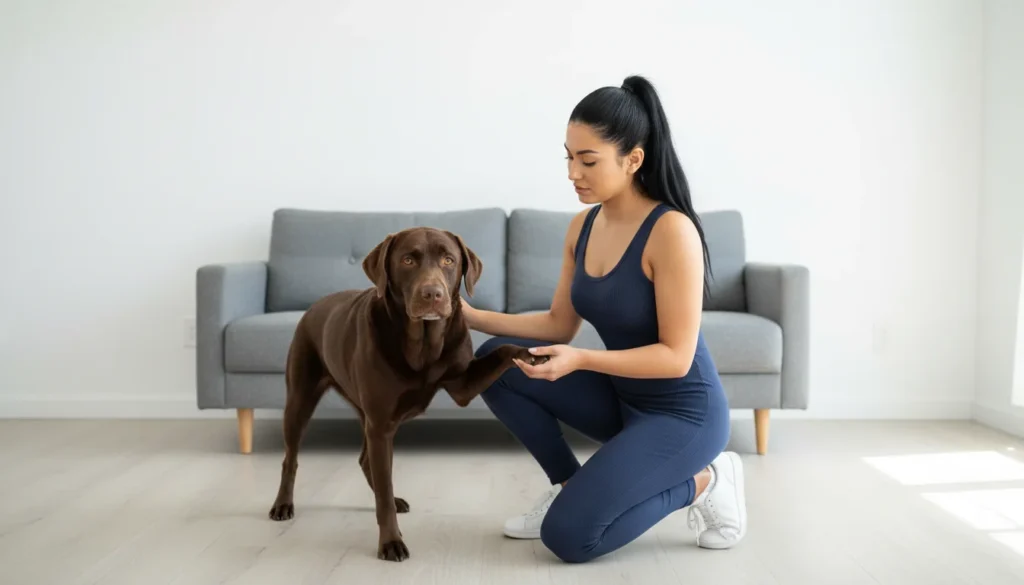
That Tiny Rocking Motion Might Not Be Random
You’re watching your dog stand quietly…
Maybe waiting for dinner.
Maybe looking out the window.
Maybe just lingering near you.
And then you notice it:
A small shift.
One paw lifts slightly.
Weight moves from side to side.
A subtle repositioning, like they can’t quite settle.
Most owners shrug it off.
“Just getting comfortable.”
And often, that’s true.
But sometimes, weight shifting is one of the earliest body-language clues a dog gives about comfort, balance, stress, or movement changes.
Dogs speak through posture long before they speak through symptoms.
So let’s explore why dogs shift weight when standing—and what that quiet signal can tell you.
Standing Isn’t Passive for Dogs — It’s Active Balance
Humans can lock into a standing posture fairly easily.
Dogs can’t stand the same way.
A dog’s stance requires constant muscular coordination because they stand on four narrow points of contact.
That means standing is a balancing act involving:
- Core muscles
- Shoulder and hip joints
- Paw grip
- Spine alignment
- Nervous system feedback
A helpful analogy:
A standing dog is like a table on uneven ground — small adjustments keep it stable.
So some shifting is perfectly normal.
But patterns matter.
The Most Common Reason: Simple Comfort Adjustment
Dogs shift weight for the same reason humans do:
Staying still too long feels uncomfortable.
A dog may subtly reposition to:
- Relieve pressure on one limb
- Adjust muscle tension
- Find a more stable footing
- Respond to a cold or hard surface
You might notice it most when your dog is:
- Waiting in one spot
- Standing on tile
- Standing after a long nap
- Standing on unfamiliar ground
Comfort shifting is usually smooth, relaxed, and temporary.
When the Floor Changes, the Stance Changes
Surface matters more than owners realize.
Dogs rely heavily on paw traction.
On slippery floors, many dogs shift weight because they feel unstable.
Common triggers include:
- Hardwood floors
- Tile
- Wet pavement
- Polished surfaces
A dog may:
- Spread their legs wider
- Shift back and forth
- Lift paws repeatedly
- Look hesitant to move
This isn’t stubbornness.
It’s physics.
Without grip, standing becomes stressful.
Subtle Joint or Muscle Stiffness Can Show Up as Weight Shifting
One of the quietest early mobility signals is stance adjustment.
If a joint feels mildly irritated or stiff, dogs often compensate by redistributing weight.
This can happen with:
- Hips
- Knees
- Elbows
- Wrists
Instead of limping dramatically, dogs often do something quieter:
They stand differently.
Owners may notice:
- Favoring one side
- Standing “camped under” (hind legs tucked)
- Shifting after a few seconds of standing
These are early compensation patterns.
The “Warm-Up” Effect After Rest
Many dogs shift weight most right after waking.
Why?
Because joints and muscles often feel stiffer after inactivity.
You may see:
- Slow standing
- Slight rocking
- Stretching before walking normally
This is similar to humans feeling stiff after sitting too long.
If the shifting improves after movement, it may simply be a warm-up need.
The key is whether it’s occasional or increasing over time.
Emotional Weight Shifting: Stress and Uncertainty
Not all stance changes are physical.
Dogs shift weight when emotionally unsure too.
Think of a dog at the vet office:
- Standing rigid
- Leaning back
- Repositioning repeatedly
Weight shifting can signal:
- Mild anxiety
- Alertness
- Uncertainty
- Waiting for something unpredictable
In dog body language, movement isn’t always about muscles.
Sometimes it’s about mood.
A dog who feels uncertain rarely stands perfectly still.
Comparison Table: Normal Shifting vs. Concerning Patterns
| Weight Shift Pattern | More Likely Normal | Worth Closer Attention |
|---|---|---|
| Occasional stance change while waiting | ✅ Yes | Rarely |
| Shifting mainly on slippery floors | ✅ Yes | If frequent |
| Repeatedly avoiding one leg | Sometimes | ✅ Yes |
| Shifting plus stiffness after rest | Common | ✅ If worsening |
| Shifting with tense posture or tucked tail | Sometimes | ✅ Possible stress |
| Sudden new weight shifting pattern | Rare | ✅ Always note |
Paw Lifting: A Common Companion Signal
Many dogs shift weight by lifting a paw briefly.
This can mean different things depending on context:
- Comfort adjustment
- Cold surface
- Mild soreness
- Focused attention
- Stress signal
A paw lift while relaxed is often harmless.
A paw lift combined with repeated weight avoidance may deserve attention.
Always look at the whole body, not just the paw.
Body Proportion and Breed Differences Matter
Some dogs shift weight more naturally due to structure.
Examples:
- Large breeds carry more weight on joints
- Deep-chested dogs may balance differently
- Senior dogs adjust posture more often
- Puppies shift constantly due to developing coordination
Breed and age influence stance.
A Great Dane’s posture habits will not match a Chihuahua’s.
So the most important comparison is:
Your dog today vs. your dog before.
Real-Life Examples Owners Notice at Home
Owners often describe it like this:
- “He keeps standing like he can’t get comfortable.”
- “She shifts back and forth when waiting for food.”
- “He lifts one paw a lot on tile.”
- “She stands wider now than she used to.”
These small observations are valuable.
Dogs rarely go from normal to limping overnight.
They usually go through quiet posture changes first.
Hidden Tips: How to Observe Stance More Clearly
Want to understand weight shifting better?
Try watching your dog during:
- Waiting at the door
- Standing on different surfaces
- After waking up
- During grooming
- While eating from a bowl
Look for:
- Consistency
- Side preference
- Tension vs. relaxation
- Environmental triggers
A helpful owner habit:
Take a short video once a month.
Subtle changes become obvious over time.
Mistakes Owners Often Make
Even loving owners commonly:
- Assume it’s just a quirky habit
Sometimes it is — but patterns matter. - Wait for limping
Dogs compensate long before limping shows. - Ignore flooring impact
Slippery surfaces cause many posture shifts. - Focus on one sign alone
Body language works in clusters. - Force stillness
Dogs shift because they need to.
Observation is better than correction.
Actionable Steps That Can Help Immediately
Here are practical, safe ways to support standing comfort:
- Add rugs or traction mats on slippery floors
- Keep nails trimmed for better grip
- Provide supportive resting areas
- Encourage gentle daily movement
- Watch for repeated side favoritism
If weight shifting becomes frequent, new, or paired with other changes (hesitation, reduced play, stiffness), a veterinary conversation can offer clarity.
Early awareness often leads to simpler solutions.
Why This Matters Today (Evergreen)
Dogs live longer, closer lives with humans than ever.
That means we notice subtle movement changes earlier.
And that’s a good thing.
Because mobility and comfort are built on tiny daily patterns:
- How dogs stand
- How they sit
- How they rise
- How they shift weight
Understanding these quiet signals helps owners respond with care, not confusion.
Your dog isn’t being strange.
They may be communicating.
Key Takeaways
- Dogs shift weight while standing for balance, comfort, and traction
- Slippery floors are a common and overlooked cause
- Subtle stiffness or joint changes can show up as stance adjustments
- Anxiety and alertness can also trigger weight shifting
- Patterns over time matter more than one moment
- Small home adjustments can improve stability and confidence
FAQ: Common Owner Questions
1. Is it normal for dogs to shift weight while standing?
Yes. Occasional shifting is normal, especially during waiting or on uncomfortable surfaces.
2. Why does my dog shift more on tile or hardwood?
Slippery floors reduce traction, making dogs adjust stance to stay stable.
3. Do senior dogs shift weight more often?
Often, yes. Aging dogs may redistribute weight due to stiffness or balance changes.
4. Should I worry if my dog keeps favoring one leg?
Repeated avoidance of one limb is worth noting and discussing with a veterinarian.
5. What’s the best way to tell if it’s comfort or something more?
Look for patterns, side preference, stiffness, or additional changes like hesitation or reduced activity.
Conclusion: A Small Shift Can Be a Useful Clue
Weight shifting is one of those behaviors that seems tiny…
…but can tell a bigger story.
Sometimes it’s simple comfort.
Sometimes it’s surface traction.
Sometimes it’s your dog adjusting quietly to changes in mobility or stress.
The best approach isn’t panic.
It’s gentle awareness.
Because dogs don’t always communicate with loud signals.
Sometimes they speak through the smallest movements—
like the way they shift their weight while standing beside you.

Dr. Chaitanya Solanki is a licensed veterinarian with over 10 years of hands-on clinical experience in companion animal medicine. As the founder of Dr. C.M.’s Pet Clinic, he has treated thousands of dogs and cats, focusing on preventive care, behavior, nutrition, and early disease detection. His writing is evidence-based, clinically informed, and designed to help pet owners make confident, responsible care decisions.