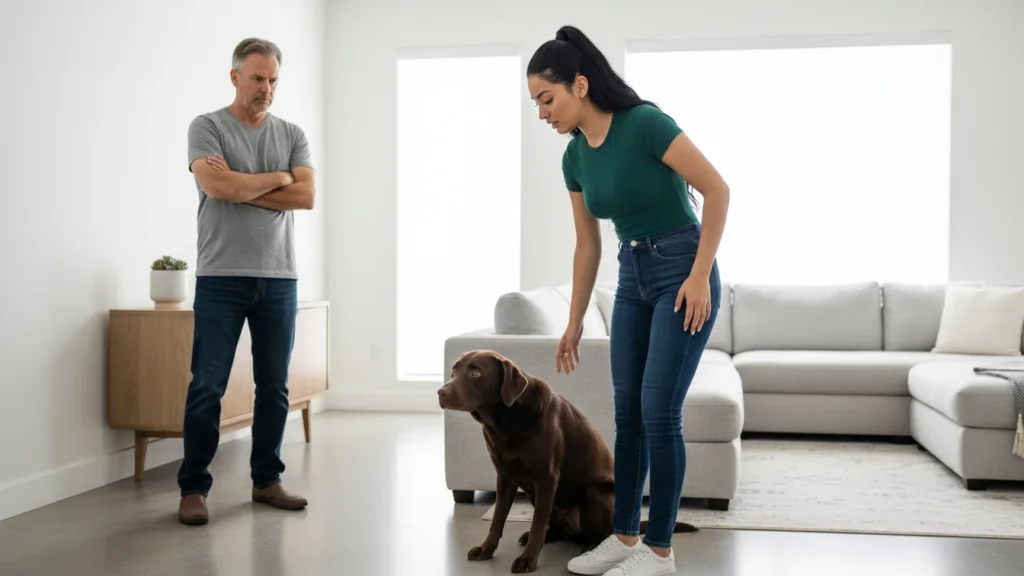
A Small Moment That Raises a Big Question
Your dog rushes to greet one person at the door, tail wagging wildly.
For another, the reaction is polite… or barely there.
Same house. Same dog. Same family.
So why does it feel like your dog has different personalities depending on who they’re with?
Most people assume it’s favoritism, jealousy, or mood.
In reality, it’s something far more fascinating—and far more revealing.
Dogs don’t react to who you are.
They react to how your presence makes them feel.
Once you understand that, your dog’s behavior starts making perfect sense.
Why This Matters More Than You Think
Selective reactions aren’t just cute quirks.
They’re communication signals.
They reveal:
- How safe your dog feels
- Who they trust most under stress
- Who they look to for guidance
- How well the household energy aligns with their instincts
Ignoring these signals means missing early emotional and behavioral clues that shape your dog’s long-term well-being.
Dogs Don’t Bond Emotionally Like Humans Do
Humans bond through shared history and emotional intention.
Dogs bond through predictability, safety, and reinforcement.
Your dog’s brain constantly asks:
“Who makes my world feel stable?”
That answer can be different for every family member.
The 5 Core Reasons Dogs React Differently to Each Person
1. Energy and Body Language Speak Louder Than Words
Dogs read:
- Posture
- Muscle tension
- Walking rhythm
- Facial micro-expressions
They don’t hear “I’m tired.”
They see it.
Someone who moves calmly, bends sideways, and avoids looming gestures often feels safer—even if they’re quieter or less playful.
Hidden tip:
People who ignore dogs slightly often become their favorites.
2. Tone of Voice Shapes Emotional Memory
Dogs don’t understand sentences.
They understand patterns of tone.
A voice that’s:
- Sharp when stressed
- Loud when excited
- Inconsistent day to day
…creates uncertainty.
A steady, predictable tone builds trust—even without treats.
3. Reinforcement History Is Everything
Dogs remember:
- Who feeds them
- Who walks them
- Who trains them
- Who disciplines them
But more importantly, they remember how those things happen.
Two people can do the same task with very different emotional outcomes.
| Action | Calm & Predictable | Rushed & Frustrated |
|---|---|---|
| Feeding | Builds trust | Creates anxiety |
| Training | Encourages learning | Causes avoidance |
| Discipline | Creates clarity | Creates fear |
Dogs always choose emotional safety over excitement.
4. Dogs Sense Stress Even When You Hide It
Dogs can detect:
- Elevated cortisol
- Irregular breathing
- Subtle tension shifts
You may think you’re “acting normal.”
Your dog knows otherwise.
This is why dogs often:
- Avoid stressed individuals
- Follow anxious family members
- Act protective around emotionally vulnerable people
They’re not being dramatic.
They’re responding to biology.
5. Your Dog Assigns Roles—Not Equality
In your dog’s mind, the family isn’t equal.
They subconsciously assign:
- The protector
- The caretaker
- The playmate
- The safe observer
This role-based bonding explains why your dog:
- Plays wildly with one person
- Sleeps near another
- Listens only to one voice
It’s strategy, not preference.
Real-Life Example Most Homes Recognize
A child climbs all over the dog.
The dog tolerates it—but never seeks it.
A quieter adult sits nearby.
The dog chooses to lie beside them.
This isn’t rejection.
It’s energy alignment.
Dogs choose environments where:
- Boundaries are respected
- Movements are predictable
- Emotional signals are consistent
Mistakes Most Families Make (Without Realizing It)
- Forcing equal affection
- Labeling the dog as “jealous” or “stubborn”
- Punishing avoidance behaviors
- Assuming treats alone build bonds
- Ignoring subtle stress signals
These mistakes don’t break trust instantly—but they slowly erode it.
How Dogs Show Different Bonds (Subtle Signals)
Watch for:
- Eye contact duration
- Sleeping proximity
- Following behavior
- Reaction during loud noises
- Who they approach when unsure
These are trust indicators—not obedience markers.
What You Can Do to Balance Family Bonds
Actionable Steps That Work
- Let the dog choose interactions
- Match their energy instead of raising yours
- Avoid forced affection
- Keep tone and reactions consistent
- Respect their withdrawal signals
Important:
Bonding deepens fastest when the dog feels in control of contact.
Comparison: Human Interpretation vs Dog Reality
| Human Assumption | Dog Reality |
|---|---|
| “My dog loves them more” | “I feel safer with them” |
| “My dog ignores me” | “Your energy feels unpredictable” |
| “They’re being moody” | “I’m processing emotional signals” |
| “They need more discipline” | “I need more clarity” |
Why Dogs Change Reactions Over Time
As household dynamics shift, so does your dog’s behavior.
Life changes that affect reactions:
- New jobs
- Emotional stress
- Schedule changes
- Aging
- Health shifts
Dogs constantly recalibrate safety.
This adaptability is intelligence—not inconsistency.
Key Takeaways
- Dogs react to emotional safety, not favoritism
- Energy, tone, and predictability shape bonding
- Selective behavior is communication, not attitude
- Forced affection weakens trust
- Calm consistency builds the strongest bond
FAQs
1. Why does my dog listen to one family member more than others?
Dogs respond best to voices and behaviors that feel predictable and emotionally safe.
2. Is my dog choosing a “favorite person”?
Not exactly. Dogs choose the person who best meets their emotional needs in that moment.
3. Can family members change their relationship with the dog?
Yes—by adjusting tone, energy, and interaction style.
4. Why does my dog avoid someone who loves them?
Love can feel overwhelming if it’s loud, fast, or inconsistent.
5. Should I be worried if my dog acts differently with everyone?
No. This is normal canine behavior and often a sign of emotional intelligence.
A Simple Conclusion
Your dog isn’t playing favorites.
They’re navigating emotional landscapes with remarkable precision.
Once you stop asking, “Why doesn’t my dog react the same to everyone?”
…and start asking, “How does my presence feel to my dog?”
Everything changes.
Disclaimer: This article is for general educational purposes and does not replace personalized advice from a qualified veterinary or animal behavior professional.

Dr. Chaitanya Solanki is a licensed veterinarian with over 10 years of hands-on clinical experience in companion animal medicine. As the founder of Dr. C.M.’s Pet Clinic, he has treated thousands of dogs and cats, focusing on preventive care, behavior, nutrition, and early disease detection. His writing is evidence-based, clinically informed, and designed to help pet owners make confident, responsible care decisions.