
The Moment That Shocks Most Pet Parents
The diagnosis comes as a surprise.
Your dog was eating.
Walking.
Sleeping normally.
Then suddenly, the vet says:
“This has likely been developing for quite some time.”
Almost every pet parent responds the same way:
“But he never showed he was sick.”
In my clinical experience, this reaction is incredibly common—and deeply understandable.
Dogs don’t lie about how they feel.
They hide it.
And they do so not out of stubbornness or confusion, but because their biology and instincts are designed that way.
The Core Reason Dogs Hide Illness
Dogs evolved to survive, not to signal vulnerability.
In natural social groups, showing weakness could mean:
- Being challenged
- Losing access to food
- Becoming a target
So dogs developed an instinct to function normally for as long as possible, even when something inside isn’t right.
That instinct never disappeared.
It’s why many illnesses don’t become obvious until the body can no longer compensate.
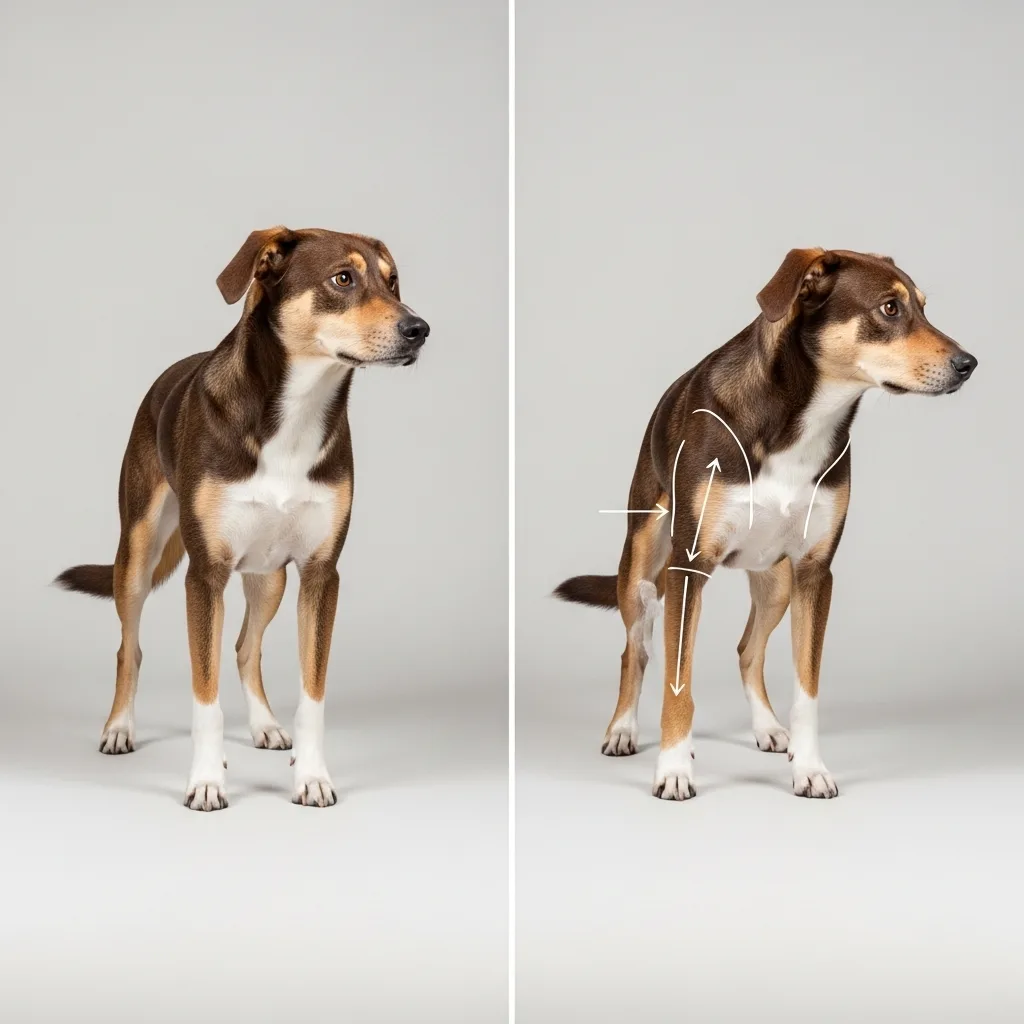
Compensation: The Body’s Quiet Survival Strategy
Dogs don’t ignore illness.
They adapt to it.
This process is called compensation.
Compensation means:
- Other muscles work harder
- Movement patterns change
- Energy is conserved elsewhere
- Pain signals are internally suppressed
To an observer, the dog still looks “normal.”
Internally, the body is working overtime.
Why Appetite and Activity Can Stay Normal
One of the biggest misconceptions is:
“If my dog eats and walks, he must be fine.”
Eating is a survival behavior.
So is movement.
Many dogs will:
- Eat through discomfort
- Play in short bursts
- Walk despite pain
These behaviors don’t mean absence of illness.
They mean motivation overrides discomfort—temporarily.
Illness in Dogs Starts Quiet, Not Dramatic
Most diseases don’t begin with emergencies.
They begin with:
- Mild inflammation
- Subtle organ stress
- Gradual hormonal shifts
- Low-grade discomfort
These early stages often produce behavioral and emotional changes, not obvious physical symptoms.
That’s why illness feels sudden—when it’s actually been silent.
Early Signs Owners Commonly Miss
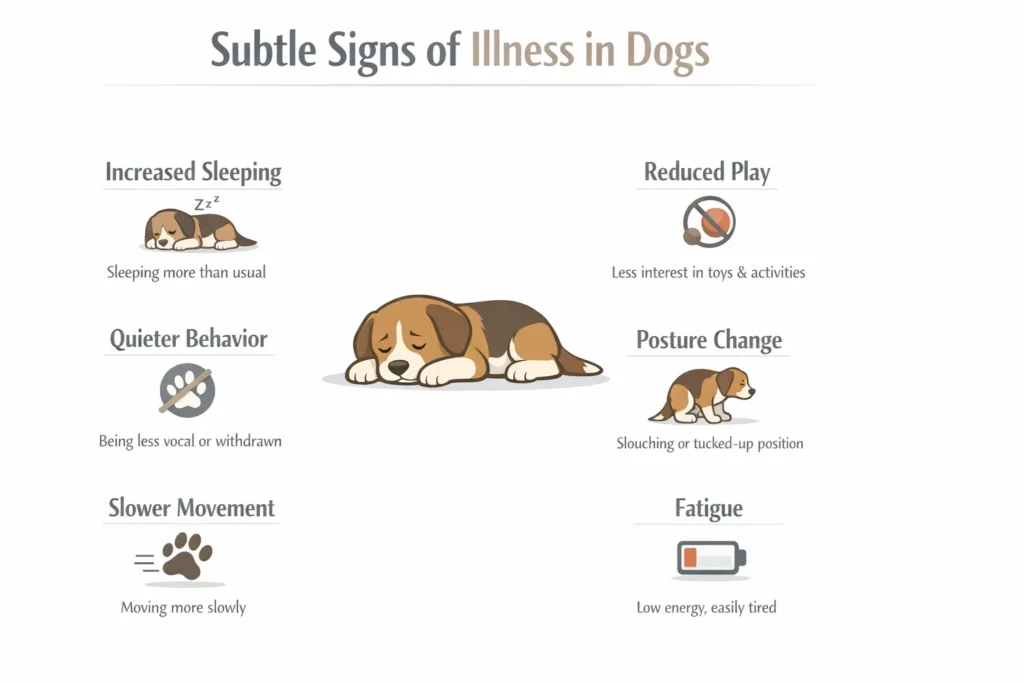
These signs rarely trigger concern at first.
Subtle changes include:
- Sleeping a bit more
- Playing a bit less
- Standing differently
- Being quieter than usual
- Needing more rest between activities
Individually, they seem harmless.
Together, they often tell a story.
Emotional Shifts: One of the Earliest Clues
Pain and illness affect mood.
Dogs may become:
- Less expressive
- Slightly withdrawn
- More clingy
- Less tolerant of noise or activity
Owners often describe this as:
“He seems calmer lately.”
In reality, this “calmness” can be fatigue, discomfort, or internal stress.
Why Tests Can Look Normal Early On
Another frustrating reality:
Early illness doesn’t always show up on tests.
Blood work and imaging detect structural or measurable changes.
Early disease often causes functional changes first.
That’s why:
- Tests may look normal
- The dog still feels “off”
- Owners feel confused or dismissed
Behavior often changes before lab values do.
Dogs vs. Humans: A Critical Difference
| Humans | Dogs |
|---|---|
| Verbalize pain | Hide discomfort |
| Seek rest | Maintain routine |
| Reduce activity | Compensate movement |
| Express emotions | Internalize stress |
| Ask for help | Stay quiet |
Dogs don’t lack awareness.
They lack the instinct to reveal weakness.
Why Illness Appears “Sudden”
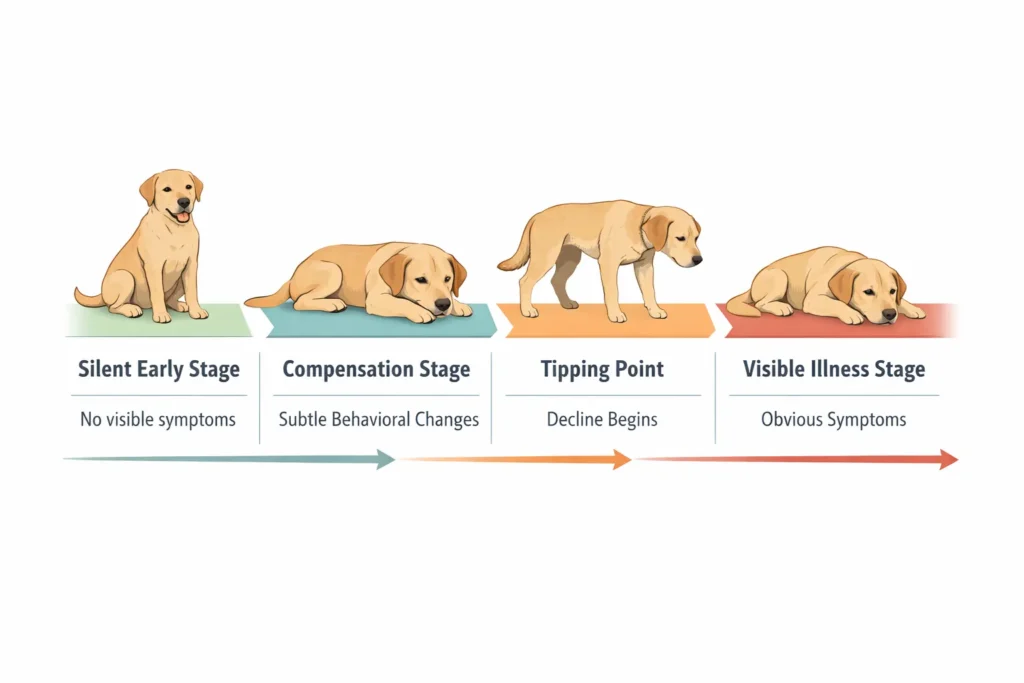
From the outside, it looks like:
“Everything was fine… and then it wasn’t.”
What actually happened:
- The body compensated for weeks or months
- Systems slowly lost balance
- A tipping point was reached
Once compensation fails, signs escalate quickly.
That’s when illness becomes visible.
Why This Matters More Than Ever
Dogs live longer now.
That’s a gift—but it comes with:
- More chronic disease
- Longer compensation periods
- More subtle early stages
Modern veterinary care depends on early observation, not just emergency response.
Understanding this instinct helps owners notice changes sooner—without panic.
Real-Life Pattern Vets See Often
A typical case sounds like this:
On examination, we often uncover:
- Early arthritis
- Kidney or liver stress
- Dental pain
- Hormonal imbalance
- Chronic inflammation
These dogs weren’t “fine.”
They were coping.
Practical Ways to Catch Illness Earlier
You don’t need medical training.
You need comparison.
Watch for:
- Changes from your dog’s normal
- Patterns lasting more than 7–10 days
- Emotional or behavioral shifts
- Subtle posture or movement changes
- Reduced recovery after activity
Your observations are often the earliest diagnostic tool.
A Hidden Tip From Clinical Practice
Short home videos matter.
Dogs behave differently at clinics.
At home, compensation is clearer.
Recording:
- Standing posture
- Walking naturally
- Getting up from rest
Can reveal changes that exams alone may miss.
Common Mistakes That Delay Detection
Even loving owners often:
- Wait for dramatic symptoms
- Assume eating equals health
- Blame age too quickly
- Ignore emotional changes
- Compare their dog to others
The best comparison is your dog now vs. your dog before.
Frequently Asked Questions
1. Is it normal for dogs to hide illness?
Yes. It’s an instinctive survival behavior, not stubbornness.
2. Does this mean owners can’t detect illness early?
No. Behavioral and routine changes often appear early if you know what to watch for.
3. Are some dogs better at hiding illness than others?
Yes. Stoic breeds and confident personalities often mask discomfort more effectively.
4. Should I worry about every small change?
No—but persistent or repeated changes deserve attention.
5. Can early detection really change outcomes?
Very often, yes. Early care is usually simpler, safer, and more effective.
Key Takeaways
- Dogs hide illness by instinct
- Compensation keeps them looking “normal”
- Behavior often changes before tests do
- Illness feels sudden but develops quietly
- Early observation protects long-term health
A Calm, Honest Conclusion
Dogs don’t show illness the way humans do.
They don’t complain.
They don’t exaggerate.
They adapt.
Understanding this doesn’t mean worrying more.
It means watching better.
Because noticing early isn’t fear.
It’s informed, compassionate care.
Disclaimer: This article is for general educational purposes and does not replace personalized veterinary advice. If you’re concerned about your dog’s health, consult your veterinarian.

Dr. Chaitanya Solanki is a licensed veterinarian with over 10 years of hands-on clinical experience in companion animal medicine. As the founder of Dr. C.M.’s Pet Clinic, he has treated thousands of dogs and cats, focusing on preventive care, behavior, nutrition, and early disease detection. His writing is evidence-based, clinically informed, and designed to help pet owners make confident, responsible care decisions.
Pingback: Why Pets That Look Perfectly Healthy Still Struggle With Gut Problems
Pingback: Your Old Dog Isn’t Just Slowing Down — These Signs Often Mean Pain
Pingback: The Preventive Care Mistake Most Pet Owners Don’t Realize They’re Making
Pingback: The Real Reason Dogs Follow You Everywhere — It’s Deeper Than Love or Attention
Pingback: Your Dog Looks Fine — But These Quiet Changes Often Mean Something Isn’t
Pingback: The Quiet Way Dogs Show Pain — Why Most Owners Miss the Earliest Signs
Pingback: What Your Dog’s Stool Quietly Reveals About Their Health — The Hidden Signals Most Owners Overlook
Pingback: Why Dogs Stare at You Without Blinking — The Emotional Signals Most Owners Misread
Pingback: When “Just Sleeping More” Is a Health Warning in Pets — The Quiet Sign Many Owners Miss
Pingback: The Early Pain Signs Dogs Never Cry About — The Quiet Signals Most Owners Miss Until It’s Late
Pingback: The Silent Health Clue in Your Dog’s Daily Routine — The Small Change That Often Means More
Pingback: When “Just Old Age” Isn’t the Real Reason — The Hidden Health Problems We Mistake for Aging in Pets
Pingback: This Small Behaviour Change Can Signal Internal Disease — What Vets Notice Before Symptoms Appear
Pingback: What Vets Notice First When a Dog Is Unwell — The Silent Clues Most Owners Miss Until It’s Too Late
Pingback: Why Dogs Act Normal Even When Something Is Wrong — The Survival Instinct That Hides Illness Until It’s Serious
Pingback: The Quiet Signs of Chronic Inflammation in Pets — Why “Nothing Obvious” Is Often the Biggest Clue
Pingback: Why Dogs Bark More at Night — The Quiet Reasons Darkness Changes Everything
Pingback: Why Dogs Spin Before Lying Down — The Ancient Instinct Still Guiding Them Today
Pingback: Why Dogs Sit on Your Feet — The Quiet Signal of Trust, Protection, and Belonging
Pingback: The Hidden Gut Signals Most Pet Owners Miss — And Why They Often Appear Long Before Illness
Pingback: Why Preventive Care Saves More Than It Costs—For Pets, Wallets, and Peace of Mind
Pingback: Why Dogs Slow Down Before Owners Feel Concerned — The Early Signals Most People Miss
Pingback: The Quiet Signs of Internal Discomfort Most People Ignore — What Dogs Show Long Before It Looks Serious
Pingback: Why Skipping Annual Exams Leads to Bigger Emergencies — The Hidden Cost Most Pet Parents Don’t See Coming
Pingback: The Diseases That Progress Quietly Without Warning — The Hidden Illnesses Vets Worry About Long Before Symptoms Appear
Pingback: Aging Dogs Don’t Always Cry — The Hidden Signs of Internal Pain