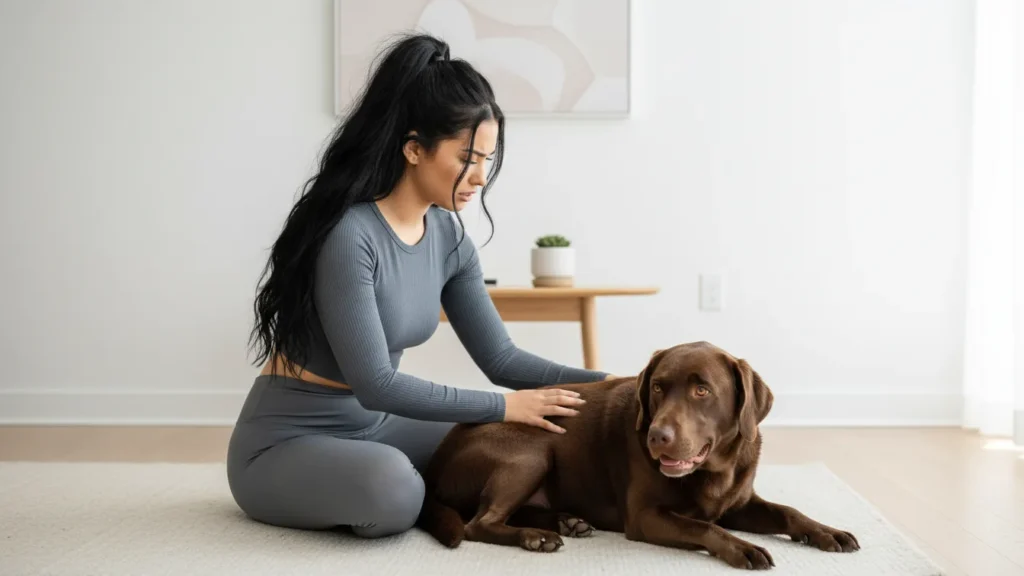
The Moment That Feels Small — But Isn’t
You reach out to pet your dog.
They shift away.
They stiffen.
They move to another spot.
No growling.
No yelp.
No aggression.
Most owners pause for a second… then think:
- “Maybe he’s not in the mood.”
- “She wants space.”
- “He’s becoming independent.”
But in veterinary behavior and medicine, avoidance of touch is one of the earliest and clearest signals that something hurts inside — even when nothing looks wrong on the outside.
Why Dogs Avoid Touch Before They Show Illness
Dogs don’t communicate pain the way humans do.
They are biologically wired to:
- Mask weakness
- Avoid drawing attention
- Protect vulnerable areas instinctively
Touch stimulates nerves, muscles, joints, and internal pressure.
When something inside is uncomfortable, the safest response isn’t to cry —
it’s to avoid contact altogether.
This behavior often appears weeks or months before visible symptoms.
What Touch Means to a Healthy Dog
For a healthy dog, touch is:
- Comfort
- Social bonding
- Safety
- Emotional regulation
Most dogs lean into touch.
They relax.
They sigh.
They settle.
So when a dog starts avoiding touch, it’s not a personality shift —
it’s a protective response.
How Touch Avoidance Usually Shows Up
Avoidance is often subtle.
Common signs include:
- Moving away when petted
- Standing up when touched while lying down
- Avoiding being picked up
- Turning the head away
- Tensing instead of relaxing
- Choosing sleeping spots out of reach
- Leaving the room when people approach
Because the dog isn’t aggressive or vocal, the signal is easy to miss.
The Difference Between Mood and Medical Avoidance
Dogs can want space sometimes — that’s normal.
But medical avoidance has patterns.
Mood-based avoidance:
- Happens occasionally
- Depends on situation
- Resolves quickly
- Doesn’t escalate
Medical avoidance:
- Appears consistently
- Increases over time
- Happens even during calm moments
- Is linked to specific body areas
💡 Hidden clue:
If your dog avoids touch even from favorite people, pain should be considered.
The Most Common Internal Reasons Dogs Avoid Touch
1. Low-Grade Pain (The #1 Cause)
Pain doesn’t need to be severe to change behavior.
Early pain causes:
- Guarding behavior
- Muscle tension
- Sensitivity to pressure
Common hidden sources:
- Early arthritis
- Spinal discomfort
- Hip or elbow strain
- Muscle micro-injuries
- Neck or back tension
Dogs avoid touch because touch increases sensation in already irritated areas.
2. Abdominal or Digestive Discomfort
Internal discomfort often makes dogs avoid being touched around the torso.
You may notice:
- Pulling away from belly rubs
- Shifting when pressure is applied
- Avoiding being lifted
- Curled or guarded posture
This can occur with:
- Mild gastritis
- Gas or bloating
- Early organ stress
- Food intolerance
Dogs often eat normally — which is why this gets dismissed.
3. Dental or Oral Pain
Dogs with mouth pain often:
- Avoid head or face touch
- Pull away when ears or cheeks are touched
- Stop enjoying cuddling
Dental discomfort radiates — it doesn’t stay localized.
Because dogs continue eating, owners assume the mouth is fine.
4. Skin Sensitivity and Nerve Irritation
Even when the skin looks normal, nerve sensitivity can exist.
This causes:
- Flinching
- Sudden movement
- Discomfort when stroked
Early nerve irritation may come from:
- Spinal compression
- Inflammation
- Metabolic imbalance
Touch feels “too loud” to the nervous system.
5. Internal Organ Stress
Organs don’t hurt sharply at first — they create deep discomfort.
Early stress affecting the:
- Liver
- Kidneys
- Pancreas
can make pressure or handling feel unpleasant.
Dogs respond by limiting interaction.
Touch Avoidance vs Fear-Based Behavior (Comparison Table)
| Behavior | Pain-Related Avoidance | Fear-Based Avoidance |
|---|---|---|
| Onset | Gradual | Situational |
| Consistency | Persistent | Variable |
| Trigger | Physical contact | Environment or memory |
| Body tension | Yes | Sometimes |
| Escalation | Increases over time | Fluctuates |
Real-Life Pattern Vets See Repeatedly
A friendly dog slowly stops enjoying cuddles.
No limping.
No appetite loss.
No visible injury.
Months later, early arthritis or spinal pain is diagnosed.
Owners often say:
“We thought he just didn’t like touch anymore.”
In reality, he was protecting himself.
Mistakes Owners Commonly Make
These mistakes are extremely common — and understandable.
- Assuming the dog is being moody
- Respecting space without investigating change
- Waiting for obvious pain signs
- Forcing affection to “reassure” the dog
- Interpreting avoidance as behavioral regression
⚠️ Important:
Avoidance isn’t rejection — it’s self-preservation.
How to Observe Touch Sensitivity Safely
Instead of pushing contact, observe reactions.
Ask yourself:
- Which areas cause withdrawal?
- Is one side more sensitive?
- Does avoidance increase after activity?
- Is it worse at night or after meals?
Patterns provide more information than pressure.
What You Can Do Right Now
- Stop forcing touch
- Forced contact increases stress
- Note specific triggers
- Head, back, belly, lifting, hugging
- Watch for secondary signs
- Restlessness
- Sleep changes
- Reduced play
- Mention touch avoidance clearly to your vet
- Don’t wait for visible pain
- Ask about pain and internal screening
- Especially for adult and senior dogs
Why This Matters Today
Dogs live longer lives now.
That means:
- More slow-developing conditions
- More subtle early warning signs
- More opportunity to intervene early
Touch avoidance is one of the earliest opportunities to catch discomfort before it becomes chronic pain.
Key Takeaways
- Dogs avoid touch to protect internal discomfort
- Touch avoidance often appears before visible illness
- Pain doesn’t need to be severe to change behavior
- Patterns matter more than intensity
- Early attention improves comfort and outcomes
Frequently Asked Questions (FAQs)
1. Can a dog avoid touch without being in pain?
Occasionally, yes — but persistent avoidance should always be investigated.
2. Should I respect my dog’s space or seek help?
Respect the space and seek evaluation if the change is new or increasing.
3. Is this common in older dogs?
Yes, but it’s not “normal aging” — it often reflects treatable discomfort.
4. Can stress cause touch avoidance?
Stress can contribute, but medical causes should be ruled out first.
5. Does avoidance mean my dog doesn’t trust me?
No. It usually means your dog is trying to protect themselves.
Conclusion
When dogs avoid touch, they’re not pulling away emotionally.
They’re pulling away physically.
It’s one of the quietest, most respectful signals a dog gives:
“I’m not comfortable.”
Listening to that signal early is one of the kindest things an owner can do.
Disclaimer: This article is for general pet health education and does not replace individualized veterinary advice. If touch avoidance persists or worsens, consult your veterinarian.

Dr. Chaitanya Solanki is a licensed veterinarian with over 10 years of hands-on clinical experience in companion animal medicine. As the founder of Dr. C.M.’s Pet Clinic, he has treated thousands of dogs and cats, focusing on preventive care, behavior, nutrition, and early disease detection. His writing is evidence-based, clinically informed, and designed to help pet owners make confident, responsible care decisions.
Pingback: The Early Pain Signs Most Senior Pets Never Show — What They Hide Until It Hurts the Most
Pingback: Why Avoidance Is One of the Earliest Signs of Pain in Dogs
Pingback: Why Sick Dogs Lose Interest Before They Show Other Symptoms