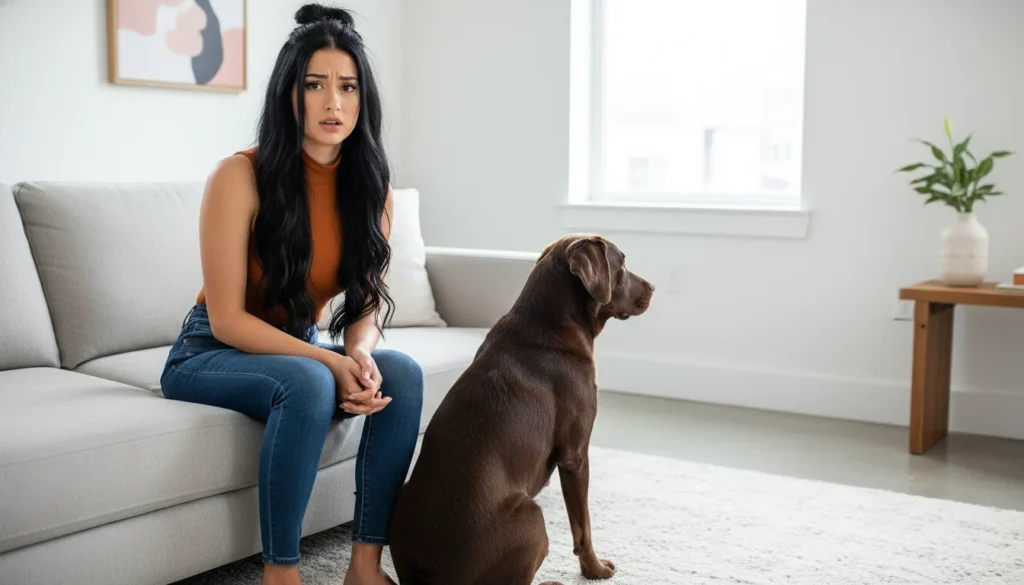
Have you ever tried to look into your dog’s eyes…
Only for them to turn their head away?
Maybe you called their name.
Maybe you leaned in with love.
And instead of meeting your gaze, they looked down… or to the side… or blinked slowly.
It can feel confusing.
Even a little hurtful.
You might think:
“Is my dog mad at me?”
“Are they scared?”
“Are they ignoring me?”
But here’s the truth:
Dogs don’t use eye contact the way humans do.
In the canine world, eye contact is powerful.
Sometimes affectionate.
Sometimes uncomfortable.
Sometimes a signal of respect.
So when dogs avoid eye contact, it’s rarely rejection.
It’s communication.
Let’s explore the hidden psychology, instincts, and emotional meaning behind why dogs look away—so you can understand what your dog is really saying.
Eye Contact Means Something Very Different to Dogs
For humans, eye contact is connection.
We’re taught that looking someone in the eyes shows:
- Confidence
- Love
- Attention
- Trust
But dogs evolved with a different social language.
In the dog world, direct staring can mean:
- Challenge
- Tension
- Pressure
- Conflict
So avoiding eye contact is often a way of keeping peace.
Not pulling away.
Just staying safe emotionally.
Avoiding Eye Contact Is Often a Calming Signal
Animal behavior experts describe certain body cues as calming signals.
These are subtle gestures dogs use to reduce tension, such as:
- Looking away
- Blinking slowly
- Licking lips
- Yawning
- Turning the head
When your dog avoids eye contact, they may be saying:
“I’m not a threat.”
“I want things to stay calm.”
“Let’s keep this peaceful.”
This is especially common in sensitive or gentle dogs.
Real-Life Example: The Dog Who Looks Away During Scolding
Imagine you raise your voice slightly:
“Hey! Don’t do that!”
Your dog immediately looks away.
Many owners think this means guilt.
But more often, it means discomfort.
Your dog is trying to calm the situation.
Looking away is their way of saying:
“I’m not challenging you. Please relax.”
Sometimes It’s a Sign of Respect and Trust
In dog social structure, direct eye contact can be intense.
So many dogs naturally avoid prolonged staring as a sign of politeness.
A dog who trusts you may not feel the need to constantly “watch” you.
They feel safe enough to soften their gaze.
In this way, looking away can actually mean:
“I’m comfortable with you.”
Not distant—secure.
Dogs May Avoid Eye Contact When They Feel Overwhelmed
Dogs take in a massive amount of sensory information:
- Sounds
- Movement
- Smells
- Human emotions
Sometimes, eye contact adds pressure.
Especially in busy or unfamiliar environments.
A dog may look away because they are overstimulated and trying to regulate themselves.
Think of it as:
A mental pause.
Too much input.
They need space.
Anxiety or Uncertainty Can Cause Eye Contact Avoidance
In some cases, avoiding eye contact can signal mild anxiety.
Common situations include:
- Meeting strangers
- New homes
- Loud environments
- Unpredictable routines
A nervous dog may avoid eyes to protect themselves.
Direct eye contact feels too intense.
They’re not being rude.
They’re coping.
Eye Contact Can Feel Threatening to Some Dogs
This is especially true for:
- Rescue dogs
- Dogs with trauma backgrounds
- Dogs who were harshly punished
- Naturally shy breeds
For these dogs, direct gaze may trigger old fear pathways.
So they look away as self-protection.
Patience matters deeply here.
Trust builds slowly through gentle interactions.
Dogs Avoid Eye Contact During Conflict Avoidance
Dogs are surprisingly peace-oriented animals.
They prefer to avoid confrontation.
If something feels tense—another dog nearby, a stressed owner, unfamiliar energy—
Looking away is a de-escalation tool.
It’s like saying:
“No fight. No conflict. I’m calm.”
It’s a social skill, not a flaw.
Puppies Often Avoid Eye Contact Naturally
Young dogs are learning social rules.
Puppies may look away because:
- They’re unsure
- They’re still building confidence
- Direct gaze feels intense
This is developmentally normal.
As trust grows, eye contact often increases.
Breed Personality Plays a Role
Some breeds naturally offer more eye contact than others.
Dogs bred for close human partnership, like:
- Labradors
- Golden Retrievers
- Border Collies
often make more eye connection.
More independent breeds, like:
- Shiba Inu
- Afghan Hounds
- Some sighthounds
may avoid prolonged gaze more often.
It’s not emotional distance.
It’s temperament.
Hidden Tip: Eye Contact Can Also Be About Training History
Dogs learn what eye contact leads to.
If looking at you has been associated with:
- Commands
- Pressure
- Correction
they may avoid it.
If looking at you has been rewarded with:
- Treats
- Praise
- Calm attention
they may seek it more.
Eye contact is shaped by experience.
Why Dogs Look Away When You Hug or Lean In
Humans hug to show affection.
Dogs often experience hugging as:
- Restriction
- Pressure
- Intensity
So when you lean close and they look away, they may be saying:
“I love you… but this is a bit much.”
Respecting that builds trust.
Mistakes Owners Make About Eye Contact
1. Taking It Personally
Your dog isn’t rejecting you.
They’re communicating comfort levels.
2. Forcing Eye Contact
Holding their face or demanding they “look at you” can increase anxiety.
Trust is invited, not forced.
3. Mislabeling It as Guilt
Dogs don’t feel guilt the way humans do.
Avoiding gaze after a mistake is usually stress response, not moral shame.
4. Ignoring Other Body Signals
Eye contact is just one piece.
Look at the full picture:
- Tail position
- Ear posture
- Muscle tension
- Breathing
- Movement
Context matters.
Actionable Steps: How to Respond When Your Dog Avoids Eye Contact
Here’s what helps most.
✅ Stay Soft and Calm
Relax your body.
Use a gentle tone.
A calm presence invites connection.
✅ Reward Voluntary Eye Contact
When your dog naturally looks at you:
- Smile
- Praise softly
- Offer a treat
This teaches:
“Eye contact is safe.”
✅ Avoid Staring Contests
Direct staring can feel intense to dogs.
Instead, use soft glances.
Blink slowly.
Let them approach.
✅ Build Trust Through Predictability
Dogs offer more eye connection when they feel secure.
Consistent routines, gentle handling, and patience matter more than anything.
✅ Respect Their Space During Stress
If your dog looks away in certain situations, don’t push closeness.
Give distance.
Support confidence slowly.
When Eye Contact Avoidance Might Need Extra Attention
Most of the time, this behavior is normal.
But consider professional help if avoidance comes with:
- Extreme fear
- Trembling
- Aggression
- Sudden personality change
- Withdrawal from interaction
A veterinarian or qualified behaviorist can help explore causes safely.
Why This Matters Today (Evergreen Insight)
Modern dogs live in human worlds…
But they still speak canine language.
Eye contact is not just a look.
It’s an emotional signal.
Understanding it prevents miscommunication.
And it helps you respond with empathy instead of confusion.
The Beautiful Truth
When your dog avoids eye contact…
They might not be ignoring you.
They might be saying:
“I’m gentle.”
“I’m unsure.”
“I want peace.”
“I trust you enough to soften.”
In the quiet world of dogs, looking away is often love in a different dialect.
And when you learn that dialect…
Your bond becomes deeper than words.

Dr. Chaitanya Solanki is a licensed veterinarian with over 10 years of hands-on clinical experience in companion animal medicine. As the founder of Dr. C.M.’s Pet Clinic, he has treated thousands of dogs and cats, focusing on preventive care, behavior, nutrition, and early disease detection. His writing is evidence-based, clinically informed, and designed to help pet owners make confident, responsible care decisions.