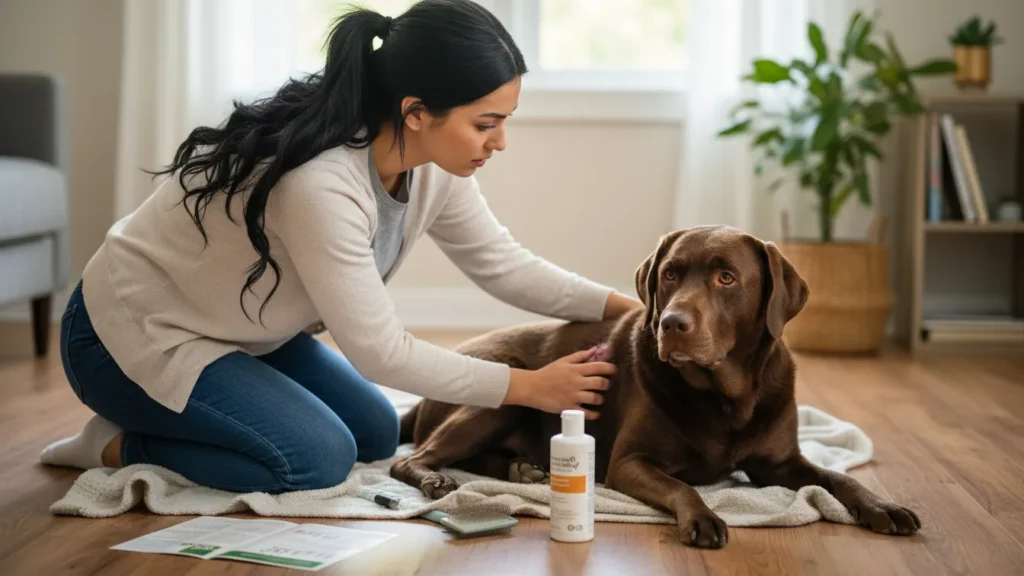
When Shine Disappears Quietly
Most owners notice it slowly.
The coat doesn’t look bad—just… tired.
Less shine. More dryness. A rougher texture than before.
It’s easy to blame:
- Seasonal shedding
- Age
- Weather
- Grooming products
So the shampoo changes.
The brush gets upgraded.
Maybe a conditioner is added.
And yet—nothing really improves.
Here’s the part many people don’t realize:
👉 A dull coat is very often the skin’s earliest sign of nutritional imbalance—not a cosmetic issue.
Long before weight loss, illness, or bloodwork abnormalities appear, the coat starts reflecting what the body isn’t getting enough of.
And once you understand why, that dullness stops being mysterious.
Why This Matters Today (Even When Diets Look “Complete”)
Modern commercial diets are more available than ever. Labels say complete and balanced. Marketing promises skin and coat support.
Yet veterinarians continue to see coat quality decline in pets eating diets that look fine on paper.
Why?
Because:
- Nutrient minimums are not the same as optimal levels
- Absorption matters as much as ingredient lists
- Chronic low-grade deficiencies don’t cause emergencies—but they do leave clues
Organizations like Association of American Feed Control Officials and National Research Council set baseline requirements—not individualized needs.
And the coat is often the first system to feel that gap.
The Coat Is a Luxury Tissue (And That’s the Key Insight)
Here’s an important biological principle:
The body prioritizes survival over appearance.
When nutrients are limited, they’re directed first to:
- Vital organs
- Immune function
- Muscle and nerve activity
The skin and coat come later.
So when nutrition is slightly inadequate—not enough to cause illness—the coat quietly pays the price.
That’s why dullness often appears:
- Months before other symptoms
- Even when appetite is normal
- Even when energy seems fine
The Most Common Nutritional Gaps Behind a Dull Coat
1. Inadequate or Poor-Quality Protein
Hair is made primarily of protein (keratin).
Not just any protein—but highly digestible, amino acid–balanced protein.
What goes wrong
- Diets high in fillers but low in usable protein
- Protein sources with poor digestibility
- Increased needs during growth, stress, or illness
What you see
- Dry, brittle coat
- Slow regrowth after shedding
- Texture changes before hair loss
Hidden tip:
Two diets can list the same protein percentage—but deliver very different results depending on quality.
2. Omega-3 and Omega-6 Imbalance
Fats are not optional for coat health—they are structural.
Omega fatty acids help:
- Maintain skin barrier integrity
- Reduce micro-inflammation
- Preserve shine and softness
Common mistake
Too much omega-6, not enough omega-3.
This imbalance fuels inflammation rather than calming it.
Result
- Dull appearance
- Increased dandruff
- Coat that feels harsh despite grooming
3. Zinc Deficiency (More Common Than Most Think)
Zinc plays a central role in:
- Skin cell turnover
- Hair follicle function
- Immune regulation
Even mild zinc deficiency can show up as:
- Dull coat
- Scaling
- Delayed hair regrowth
Certain breeds, life stages, and diets increase risk—especially homemade or poorly supplemented foods.
4. Vitamin E Shortfalls
Vitamin E is a powerful antioxidant for skin health.
When levels are insufficient:
- Oxidative damage increases
- Skin barrier weakens
- Coat loses its reflective quality
This doesn’t cause sudden shedding—but it slowly dulls the coat over time.
5. Biotin and B-Complex Gaps
B vitamins support:
- Fat metabolism in skin
- Hair shaft strength
- Oil production balance
Deficiencies are subtle—but cumulative.
You won’t see bald patches.
You’ll see lifeless fur.
Dull Coat vs Healthy Coat: What the Difference Really Means
| Coat Feature | Healthy Nutrition | Nutritional Gap |
|---|---|---|
| Shine | Natural, reflective | Flat, matte |
| Texture | Soft, flexible | Dry, coarse |
| Shedding | Predictable cycles | Excessive or uneven |
| Regrowth | Quick and full | Slow, thin |
| Skin | Calm, hydrated | Flaky or tight |
Real-Life Example: When Grooming Wasn’t the Problem
A middle-aged dog with no medical diagnosis, normal appetite, and routine grooming presented with a progressively dull coat.
No itching.
No infections.
No weight loss.
Diet review revealed:
- Adequate calories
- Borderline protein quality
- No omega-3 supplementation
After targeted nutritional correction—not medication—the coat improved noticeably within 8–10 weeks.
The body didn’t need treatment.
It needed building blocks.
Mistakes That Keep the Coat Dull (Even With “Good” Food)
- Assuming all premium foods are nutritionally equal
- Adding supplements blindly without correcting the base diet
- Expecting topical products to fix internal deficiencies
- Ignoring absorption issues
- Switching diets too frequently
Consistency matters more than novelty.
Actionable Steps to Restore Coat Health Naturally
Start with these fundamentals:
- Review protein quality, not just percentage
- Balance omega-6 to omega-3 intake
- Avoid over-supplementation without purpose
- Give nutritional changes 6–10 weeks to show results
- Track coat texture—not just shedding volume
Hidden insight:
A improving coat often signals that deeper metabolic balance is returning too.
Why Supplements Sometimes Help—and Sometimes Don’t
Supplements work best when they:
- Fill a real gap
- Are dosed correctly
- Complement the diet—not replace it
They fail when used as shortcuts.
A dull coat isn’t a deficiency guessing game—it’s a pattern recognition problem.
Key Takeaways
- A dull coat is often the earliest visible sign of nutritional imbalance
- Protein quality matters more than protein percentage
- Fatty acid balance directly affects shine and texture
- Zinc and vitamin E deficiencies are commonly overlooked
- External grooming can’t fix internal shortages
FAQs
1. Can a dull coat appear even if blood tests are normal?
Yes. Mild deficiencies often don’t show up in routine bloodwork.
2. How long does it take for coat quality to improve after diet changes?
Typically 6–10 weeks, depending on hair growth cycles.
3. Does age always cause coat dullness?
No. Aging increases sensitivity to deficiencies—but nutrition still matters.
4. Are supplements always necessary?
Not always. Many cases improve by correcting the base diet.
5. Is a dull coat ever “just cosmetic”?
Rarely. The coat usually reflects internal health long before other signs appear.
Conclusion: The Coat Reflects What the Body Can Spare
A shiny coat isn’t vanity.
It’s evidence that the body has enough resources to invest beyond survival.
When the coat dulls, it’s not asking for better shampoo—it’s asking for better support.
Listen early, and the solution is often simple.
Ignore it, and the message just gets louder.
Disclaimer: This article is for educational purposes only and does not replace individualized veterinary or medical guidance. Always seek professional advice for persistent coat or skin changes.

Dr. Chaitanya Solanki is a licensed veterinarian with over 10 years of hands-on clinical experience in companion animal medicine. As the founder of Dr. C.M.’s Pet Clinic, he has treated thousands of dogs and cats, focusing on preventive care, behavior, nutrition, and early disease detection. His writing is evidence-based, clinically informed, and designed to help pet owners make confident, responsible care decisions.
Pingback: Skin and Coat Supplements: Why Results Take Weeks, Not Days
Pingback: Biotin for Pets: When It Helps — and When It Doesn’t
Pingback: That Flaky Skin Might Not Be Dryness — When Dandruff Is a Warning Sign of Hidden Disease
Pingback: Your Pet’s Hair Loss Might Not Be a Skin Problem — The Hormonal Cause Most Owners Completely Miss