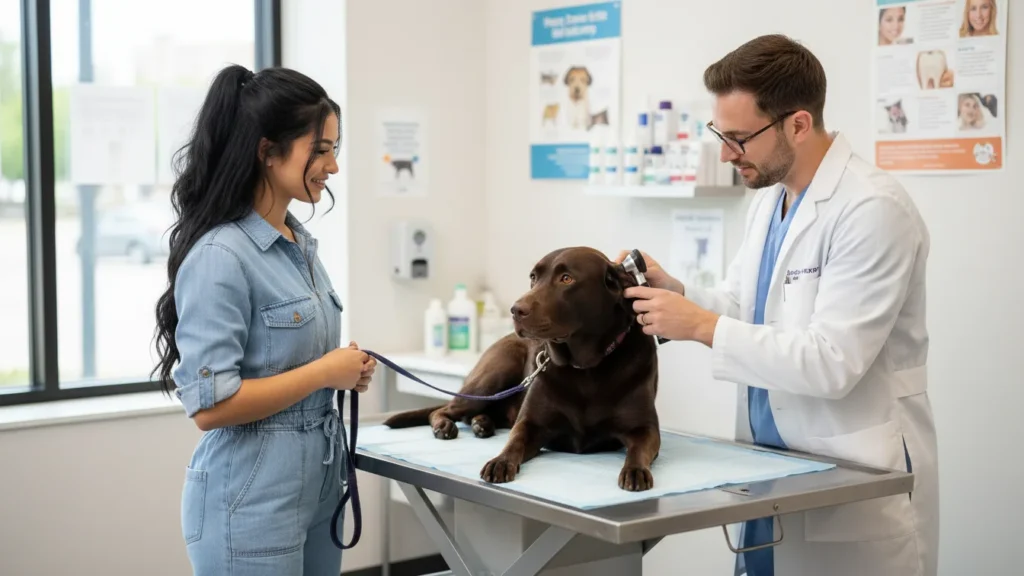
The Moment Vets Know Something Isn’t Right
Most pet parents believe illness announces itself clearly.
Vomiting.
Limping.
Loss of appetite.
But in veterinary clinics, something else happens far more often.
A dog walks in.
The owner says, “He’s been normal.”
And within seconds, the vet already feels uneasy.
Not because of lab reports.
Not because of X-rays.
Because of small, silent changes most owners don’t know how to read.
This article breaks down what veterinarians actually notice first when a dog is unwell, why these signals matter so much, and how you can start seeing your dog the way a vet does—before problems escalate.
1. The First Thing Vets Watch: How a Dog Enters the Room
Before hands touch the dog, before questions begin, vets observe movement and posture.
They notice:
- Is the dog walking smoothly or cautiously?
- Does the head hang slightly lower than normal?
- Is weight shifted off one leg—even subtly?
- Is the tail position different than usual?
Why this matters
Dogs instinctively mask pain.
Instead of limping dramatically, they redistribute weight, stiffen muscles, or move slower.
To an owner, it looks like:
“He’s just calm today.”
To a vet, it looks like:
“Something hurts, and he’s compensating.”
2. Facial Expression: The Clue Owners Rarely Notice
Dogs communicate discomfort through their faces long before they cry or whine.
Vets look at:
- Tension around the eyes
- Slight squinting
- Flattened ears or ears held asymmetrically
- Tight lips instead of relaxed panting
These micro-expressions often indicate:
- Internal pain
- Nausea
- Early fever
- Stress from discomfort
Real-life example
A dog with pancreatitis may still wag its tail.
But the eyes look dull, the blink rate changes, and facial muscles tighten.
Owners miss this because:
“He’s still happy to see people.”
3. Breathing Pattern (Not Just Speed)
One of the fastest red flags for vets is how a dog breathes while resting.
They assess:
- Chest vs abdominal movement
- Shallow or guarded breaths
- Breathing pauses
- Excessive panting without heat or exertion
What abnormal breathing can signal
- Pain (especially abdominal or spinal)
- Heart issues
- Early respiratory disease
- Fever or systemic infection
Even before stethoscopes come out, breathing tells a story.
4. The Energy That Doesn’t Match the Situation
Vets mentally compare context vs response.
For example:
- A young dog acting unusually subdued
- An excited breed staying overly still
- A normally calm dog appearing restless
Dogs don’t lose energy randomly.
Common owner misinterpretation
“He’s just having a lazy day.”
Veterinary interpretation
“This behavior doesn’t match his baseline.”
This mismatch is often the earliest indicator of internal illness.
5. Coat Quality and Skin Feel
While owners focus on shine, vets feel texture and elasticity.
They check:
- Dryness or oiliness
- Dandruff or flaking
- Patchy roughness
- Subtle hair thinning
Why this matters
Changes in coat can reflect:
- Hormonal imbalance
- Chronic inflammation
- Digestive absorption issues
- Long-term stress on the body
These changes often start weeks before visible symptoms.
6. Body Temperature… Without a Thermometer
Experienced vets can sense temperature changes through:
- Ear warmth
- Paw pads
- Nose texture
- Belly heat
While not diagnostic alone, it triggers further investigation.
Owners often assume:
“Warm ears mean fever.”
Vets know:
Temperature patterns matter more than isolated warmth.
7. Muscle Tone and Tension
During gentle handling, vets assess:
- Muscle stiffness
- Guarded reactions
- Flinching
- Resistance to certain movements
Dogs rarely cry out.
Instead, they:
- Brace muscles
- Freeze momentarily
- Pull away subtly
These responses guide vets toward pain sources even before imaging.
8. The Smell Most People Don’t Notice
Yes—vets notice smell.
Not bad breath alone, but:
- Sweet or metallic mouth odors
- Unusual ear scent
- Skin smell changes
These can indicate:
- Dental infections
- Kidney or liver stress
- Yeast overgrowth
- Metabolic changes
Smell is often an early chemical signal of imbalance.
9. Interaction With the Owner
A surprising clue: how the dog behaves around you in the clinic.
Vets watch:
- Does the dog seek reassurance excessively?
- Is it unusually detached?
- Does it guard one side when you touch?
Dogs in pain often become:
- Clingy
- Withdrawn
- Overly tolerant (which is not a good sign)
What Owners Notice vs What Vets Notice First
| What Owners Usually Watch | What Vets Notice Immediately |
|---|---|
| Eating habits | Posture & gait |
| Obvious pain | Facial tension |
| Vomiting/diarrhea | Breathing patterns |
| Lethargy | Energy-context mismatch |
| Limping | Muscle guarding |
| Coat shine | Coat texture & skin feel |
Hidden Tip: The 60-Second Rule at Home
You can copy a vet’s approach.
Once a day, casually observe your dog for 60 seconds:
- How they get up
- How they stand
- How they breathe at rest
- How their eyes and ears sit
No touching. No testing.
Just watching without distraction.
Patterns matter more than moments.
Mistakes Owners Commonly Make
- Waiting for obvious symptoms
- Dismissing behavior changes as “mood”
- Assuming age explains everything
- Comparing only appetite and activity
- Ignoring subtle changes because the dog still wags its tail
Dogs are masters of hiding weakness.
That’s evolution—not stubbornness.
Why This Matters Today
Dogs live longer now than ever before.
That means:
- More chronic conditions
- More subtle early warning signs
- Greater benefit from early detection
Catching illness earlier often means:
- Less invasive treatment
- Lower costs
- Better quality of life
- Less suffering for your dog
Key Takeaways
- Vets notice movement, posture, and expression before symptoms
- Subtle changes often appear weeks before illness is obvious
- Behavior mismatches are powerful warning signs
- Owners can learn to observe like vets
- Early awareness saves pain, time, and lives
Frequently Asked Questions
1. Can a dog be sick even if it’s eating normally?
Yes. Appetite often remains normal in early illness stages while other systems are already affected.
2. Why don’t dogs show pain clearly?
Dogs evolved to hide weakness to survive. Pain masking is instinctive, not behavioral.
3. Are behavior changes more important than physical symptoms?
Often yes. Behavior shifts usually appear before physical signs become obvious.
4. Should I visit a vet for subtle changes alone?
If changes persist, worsen, or feel “off,” a check-up is always safer than waiting.
5. How often should I observe my dog closely?
Daily casual observation plus focused weekly checks is ideal.
A Quiet Conclusion
Veterinarians don’t rely on magic.
They rely on listening to what the body whispers before it screams.
When you learn to see those whispers—posture, breath, expression—you stop waiting for emergencies and start protecting health proactively.
Your dog has always been communicating.
Now, you know how to listen.
Disclaimer: This article is for educational awareness only and does not replace professional veterinary examination or diagnosis. If you’re concerned about your dog’s health, consult a qualified veterinarian.

Dr. Chaitanya Solanki is a licensed veterinarian with over 10 years of hands-on clinical experience in companion animal medicine. As the founder of Dr. C.M.’s Pet Clinic, he has treated thousands of dogs and cats, focusing on preventive care, behavior, nutrition, and early disease detection. His writing is evidence-based, clinically informed, and designed to help pet owners make confident, responsible care decisions.
Pingback: The Silent Diseases Preventive Care Catches Early—Before Pets Show Any Signs
Pingback: Why Waiting for Symptoms Is the Most Expensive Mistake Most Pet Parents Make
Pingback: Why “My Pet Seems Fine” Isn’t a Health Strategy—and Never Was
Pingback: The Quiet Signs of Cognitive Decline in Pets — What Changes First and Why They’re Easy to Miss
Pingback: Hot Spots in Dogs: The Skin Emergency Most Owners Delay Until It Gets Worse