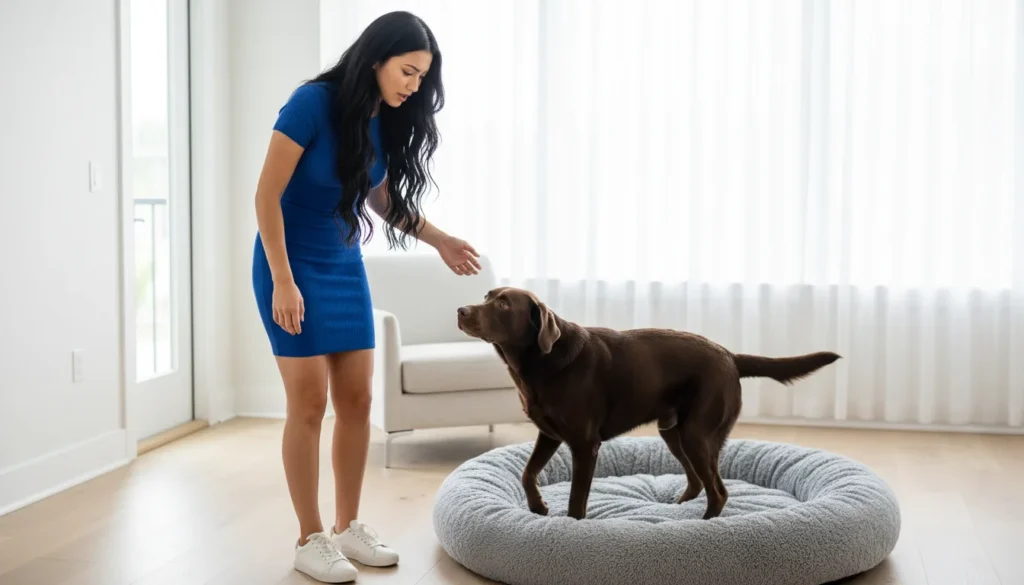
You’ve seen it a hundred times.
Your dog is clearly tired.
They walk toward their bed…
Then suddenly:
They circle.
They paw.
They reposition.
They spin once… twice… sometimes three times.
Only then do they finally lie down.
And you may have wondered:
Why can’t dogs just lie down right away?
Why do they always adjust their body before resting?
It looks almost ceremonial.
Like a tiny pre-sleep routine.
And the truth is…
It is.
This behavior isn’t random.
It’s deeply instinctive, biologically meaningful, and emotionally comforting.
Let’s explore what’s really happening in your dog’s mind and body when they do this—and why it matters more than most people realize.
This Isn’t Just “Being Picky” — It’s an Ancient Survival Habit
Dogs didn’t always have plush beds.
For thousands of years, their ancestors slept outdoors in:
- Tall grass
- Dirt and leaves
- Snowy ground
- Rocky terrain
- Forest underbrush
Before resting, they needed to prepare the area.
That meant:
- Flattening vegetation
- Checking for danger
- Creating warmth
- Making a safe sleeping spot
Even though modern dogs live indoors…
the ritual remains.
This is one of the clearest examples of ancient instinct living inside a household pet.
1. They’re Creating Comfort and Pressure Balance
One of the simplest reasons dogs adjust before lying down is physical comfort.
Dogs have sensitive pressure points:
- Hips
- Shoulders
- Spine
- Elbows
By shifting and rotating, they’re trying to find the perfect spot where their body feels supported.
This is especially common in:
- Older dogs
- Large breeds
- Dogs with joint stiffness
- Dogs recovering from soreness
Real-life example
A senior Labrador may turn several times before resting because certain angles reduce pressure on sore hips.
2. Circling Helps Them Feel Secure
Many dogs circle before lying down as a calming ritual.
This repetitive motion activates a sense of control.
Think of it like humans:
- Adjusting pillows
- Pulling up blankets
- Finding the “right position”
The body relaxes when it feels settled.
Dogs do the same.
Circling is often a signal of:
- Comfort-seeking
- Nervous system regulation
- Transition into rest
3. They’re Checking the Environment for Safety
Even in safe homes, dogs still scan instinctively.
Before lying down, a dog may adjust position to ensure:
- No threats nearby
- A clear view of the room
- A protected back side
- A comfortable escape path
Dogs are naturally both predators and prey in evolutionary terms.
So even at rest, safety matters.
That’s why many dogs position themselves:
- Facing doorways
- Near family members
- Against walls or furniture
4. Nesting Behavior Is Still Hardwired
Some dogs paw, scratch, or dig at bedding before lying down.
This behavior comes from wild nesting instincts.
In nature, dogs would “dig” to:
- Create a hollow for warmth
- Remove sharp objects
- Build a soft surface
- Mark a resting spot
It’s not misbehavior.
It’s biology.
Even fluffy dog beds can trigger this instinct.
5. Temperature Regulation Plays a Big Role
Dogs adjust their body based on warmth or coolness.
They may:
- Curl tightly to conserve heat
- Stretch out to release warmth
- Rotate to find a cooler patch
Dogs don’t sweat like humans.
Body positioning helps control temperature.
Common signs
- Circling more on hot days
- Digging into blankets in winter
- Switching spots often during seasonal changes
6. Scent Marking and Territory Comfort
Dogs have scent glands in their paws.
When they circle or scratch lightly, they may be leaving scent cues:
- “This is my resting spot.”
- “I feel safe here.”
- “This belongs to me.”
It’s subtle, but comforting.
Scent is a dog’s strongest sensory anchor.
Instinct vs Comfort: What’s Driving the Behavior?
Here’s a helpful breakdown:
Comparison Table: Why Dogs Adjust Before Lying Down
| Behavior | Instinctual Purpose | Modern Meaning |
|---|---|---|
| Circling | Flatten grass, scan for predators | Settling ritual, comfort |
| Pawing/digging | Build a nest or hollow | Bedding adjustment |
| Repositioning repeatedly | Avoid discomfort or danger | Joint comfort, anxiety relief |
| Facing a doorway | Stay alert while resting | Security instinct |
| Curling into a ball | Preserve body heat | Warmth + emotional safety |
7. Dogs Have Sleep Rituals Just Like Humans
Humans don’t just “drop” into sleep.
We:
- Adjust blankets
- Turn off lights
- Shift positions
- Follow routines
Dogs also have transition rituals.
Body adjustment signals:
“I’m entering rest mode now.”
It helps their nervous system shift from alertness to relaxation.
8. When It Might Signal Discomfort Instead of Normal Behavior
Most circling and adjusting is healthy.
But sometimes, excessive repositioning can be a clue.
Watch for:
- Struggling to lie down
- Whimpering while adjusting
- Restlessness lasting minutes
- Avoiding beds entirely
- Stiff movement afterward
These may indicate physical discomfort.
Especially in older dogs.
Mistakes Owners Often Make
❌ Assuming circling means anxiety every time
Most of the time, it’s instinct.
❌ Stopping natural nesting behaviors
As long as it’s not destructive, it’s normal.
❌ Ignoring sudden changes
If a dog suddenly circles much more than usual, it’s worth noticing.
❌ Buying beds that don’t support their body
Flat or unsupportive bedding can increase repositioning.
Hidden Tips to Support Your Dog’s Rest Routine
Here are practical ways to make resting easier:
✅ Provide supportive bedding
Orthopedic beds help joints.
✅ Let them complete the ritual
Circling is calming.
✅ Keep rest spaces predictable
Dogs relax more with consistency.
✅ Watch for changes over time
Patterns matter more than one night.
✅ Offer quiet, secure sleeping zones
Away from loud disruptions.
Why This Behavior Matters (Evergreen Insight)
Dogs don’t adjust before lying down just because they’re quirky.
They do it because:
- Their instincts remember the wild
- Their bodies seek comfort
- Their minds seek safety
- Their nervous systems seek calm
It’s a small ritual with deep evolutionary roots.
A reminder that even the most modern dogs still carry ancient wisdom in their movements.
Key Takeaways
- Dogs adjust before lying down due to instinct, comfort, and safety
- Circling comes from ancient survival behaviors
- Pawing and digging reflect nesting instincts
- Positioning also helps regulate temperature and security
- Sudden excessive restlessness may signal discomfort
- Most of the time, it’s completely normal and healthy
FAQ: Why Dogs Adjust Before Resting
1. Why does my dog spin in circles before lying down?
It’s an instinctive behavior from wild ancestors who flattened grass and checked safety before sleeping.
2. Is pawing at the bed normal?
Yes. It’s nesting behavior—dogs naturally “prepare” a resting spot.
3. Why does my dog reposition so many times?
They may be finding the most comfortable pressure balance, especially if joints are sensitive.
4. Should I worry if my dog suddenly circles more than usual?
If it’s paired with stiffness, whining, or difficulty lying down, it may indicate discomfort.
5. Do all dogs do this?
Most dogs show some form of pre-rest adjustment. It’s one of the most universal canine behaviors.
A Tiny Ritual With Thousands of Years Behind It
The next time your dog circles, shifts, and carefully adjusts before lying down…
Remember:
They aren’t being dramatic.
They’re being a dog.
A creature shaped by instinct, comfort, and survival memory.
It’s one of the quietest, most fascinating reminders that beneath the softness of modern life…
Your dog still carries the ancient rhythm of the wild.

Dr. Chaitanya Solanki is a licensed veterinarian with over 10 years of hands-on clinical experience in companion animal medicine. As the founder of Dr. C.M.’s Pet Clinic, he has treated thousands of dogs and cats, focusing on preventive care, behavior, nutrition, and early disease detection. His writing is evidence-based, clinically informed, and designed to help pet owners make confident, responsible care decisions.