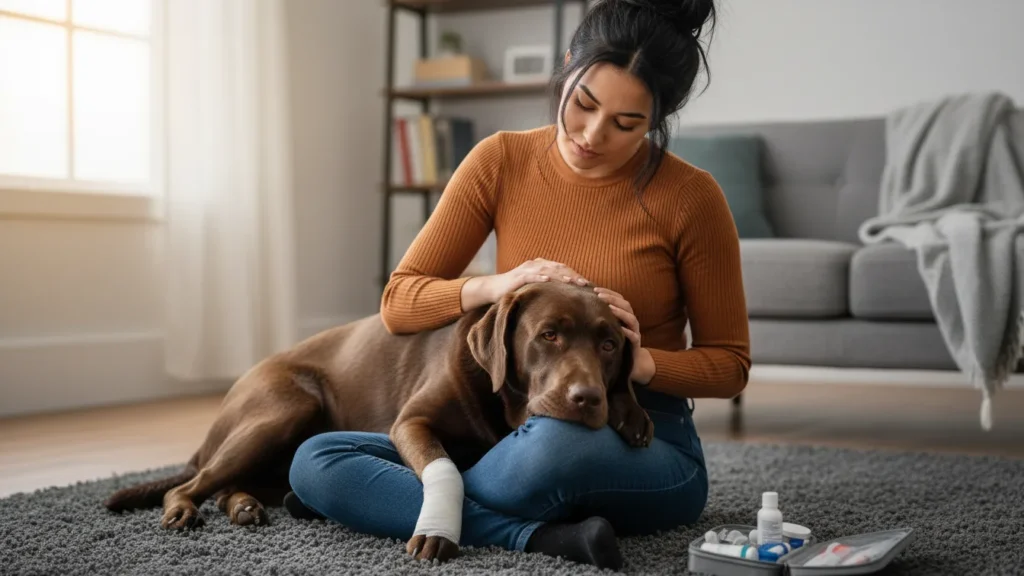
The Moment Most Dog Owners Don’t Recognize
Your dog still eats.
Still greets you.
Still wags their tail.
But something feels different.
They hesitate before standing up.
They sleep longer.
They don’t rush to the door anymore.
You tell yourself the same thing most loving owners do:
In veterinary medicine, this phrase often delays relief — because pain in senior dogs is rarely loud.
It’s quiet.
Adaptive.
Easy to miss.
And incredibly common.
Why Senior Dogs Hide Pain So Well
Dogs evolved to survive, not complain.
Showing pain once meant vulnerability.
That instinct never disappeared — it softened.
Instead of crying out, senior dogs:
- Move less
- Adjust posture
- Avoid triggering discomfort
- Change routines quietly
Pain becomes invisible not because it’s mild — but because dogs adapt to it.
What Normal Aging Actually Looks Like
True aging is gentle.
Healthy senior dogs may:
- Take longer to get going
- Need more rest after activity
- Move slower but willingly
- Remain curious and engaged
Normal aging does not cause:
- Persistent stiffness
- Reluctance to move
- Behavioral withdrawal
- Irritability or snapping
- Loss of interest in once-loved activities
Those changes almost always involve pain.
The Most Common Cause of Hidden Pain: Arthritis
Arthritis affects a large percentage of senior dogs — yet many remain undiagnosed.
Why?
Because arthritis pain often looks like:
- Laziness
- Calmness
- Reduced energy
Instead of limping, dogs simply stop doing what hurts.
Jumping.
Running.
Climbing stairs.
Silence doesn’t mean comfort.
Subtle Behavioral Signs That Often Mean Pain
These changes are frequently overlooked:
- Hesitating before standing or sitting
- Sleeping in unusual positions
- Avoiding stairs or furniture
- Slower walking pace
- Less enthusiasm for walks
- Avoiding slippery floors
Each is a quiet adaptation to discomfort.
Emotional and Personality Changes Matter Too
Pain doesn’t only affect the body.
It affects mood.
Senior dogs in pain may:
- Become withdrawn
- Seek isolation
- Appear depressed
- Show irritability
- Avoid touch in certain areas
Many owners assume this is cognitive decline.
Often, it’s pain.
Appetite Changes Can Be a Pain Signal
Pain alters hormones and stress levels.
This can lead to:
- Reduced appetite
- Eating slower
- Becoming picky
- Leaving food unfinished
Dental pain, joint pain while standing, or chronic inflammation can all affect eating — even if food interest remains.
The “Good Days and Bad Days” Pattern
One of the clearest signs of chronic pain is inconsistency.
Owners often say:
“Some days he seems fine, other days he’s off.”
This fluctuation is classic for:
- Arthritis
- Spine discomfort
- Chronic inflammation
Pain waxes and wanes — aging does not fluctuate this way.
Real-Life Example From the Clinic
A 12-year-old dog comes in “for slowing down.”
Owner says:
“He’s old. We don’t expect much anymore.”
On exam:
- Joint stiffness
- Muscle loss
- Pain response on hip extension
After pain management:
- Energy improves
- Walks lengthen
- Personality brightens
The dog wasn’t old.
He was uncomfortable.
Why Senior Pain Often Gets Missed at Home
Owners expect:
- Crying
- Limping
- Obvious injury
But chronic pain looks like avoidance, not reaction.
This is why routine senior exams are so important.
Veterinary organizations such as the American Veterinary Medical Association emphasize early pain recognition as a cornerstone of senior pet welfare.
Common Conditions That Cause Ongoing Pain in Senior Dogs
- Arthritis
- Hip dysplasia
- Degenerative joint disease
- Spinal disc disease
- Dental disease
- Chronic ear infections
- Undiagnosed injuries
Many are manageable — when recognized.
Pain vs. “Just Old Age”: A Simple Comparison
| Often Called Old Age | More Likely Cause |
|---|---|
| Sleeping all day | Chronic pain |
| Avoiding stairs | Joint discomfort |
| Slower walks | Arthritis or heart strain |
| Irritability | Pain sensitivity |
| Less play | Pain avoidance |
| Isolation | Discomfort or anxiety |
Age explains time.
Pain explains change.
Mistakes That Delay Pain Relief
Even caring owners may:
- Wait for limping
- Avoid testing due to age
- Assume treatment isn’t worthwhile
- Accept decline as inevitable
Pain management isn’t about prolonging life.
It’s about improving comfort today.
Why This Matters More Than Ever
Dogs live longer now.
Longer lives mean:
- More chronic conditions
- More years where comfort matters
- Greater benefit from early pain control
Pain doesn’t have to be dramatic to matter.
And relief often restores joy faster than expected.
Actionable Steps to Help Your Senior Dog
- Watch how your dog moves — not just if they move
- Compare behavior to last year, not yesterday
- Note avoidance patterns
- Mention subtle changes during vet visits
- Ask about pain assessment and management options
Small interventions often make a big difference.
Key Takeaways
- Senior dogs rarely show pain clearly
- Behavior changes are often pain signals
- “Just old age” is frequently a mislabel
- Pain management improves quality of life
- Early recognition restores comfort and joy
Your dog doesn’t need to suffer quietly.
Frequently Asked Questions
1. Can a dog be in pain without limping?
Yes. Many painful conditions don’t cause limping.
2. Is pain normal in old dogs?
Common, yes. Normal, no.
3. Can pain treatment really help senior dogs?
Absolutely. Many show rapid improvement in comfort and mood.
4. Should I avoid treatment because my dog is old?
Age increases the importance of comfort — it doesn’t reduce it.
5. When should I talk to my vet?
When changes persist, progress, or affect daily enjoyment.
A Calm, Honest Conclusion
Your senior dog may not cry.
They may not whine.
They may not limp.
But they are communicating — quietly, patiently, and consistently.
When we learn to see those subtle signs for what they are, we don’t just manage aging.
We restore comfort, dignity, and the simple joys that still matter most.
Disclaimer: This article is for general educational purposes and does not replace individualized veterinary advice. Please consult your veterinarian if you notice ongoing changes in your dog’s comfort or behaviour.

Dr. Chaitanya Solanki is a licensed veterinarian with over 10 years of hands-on clinical experience in companion animal medicine. As the founder of Dr. C.M.’s Pet Clinic, he has treated thousands of dogs and cats, focusing on preventive care, behavior, nutrition, and early disease detection. His writing is evidence-based, clinically informed, and designed to help pet owners make confident, responsible care decisions.
Pingback: When “Just Old Age” Isn’t the Real Reason — The Hidden Health Problems We Mistake for Aging in Pets
Pingback: Your Dog Looks Fine — But These Quiet Changes Often Mean Something Isn’t
Pingback: Why Senior Dogs Act Confused at Night — The Hidden Reasons Behind Night-time Disorientation
Pingback: How to Tell Normal Aging From Treatable Disease — The Line Most Pet Owners Don’t Realize They’ve Crossed
Pingback: How Dogs Show Discomfort Without Whining — The Quiet Signs Loving Owners Often Miss
Pingback: Why Your Dog Keeps Stretching Over and Over — The Subtle Body Signal Owners Often Miss
Pingback: The Surprising Reason Dogs Circle and Shift Before They Rest