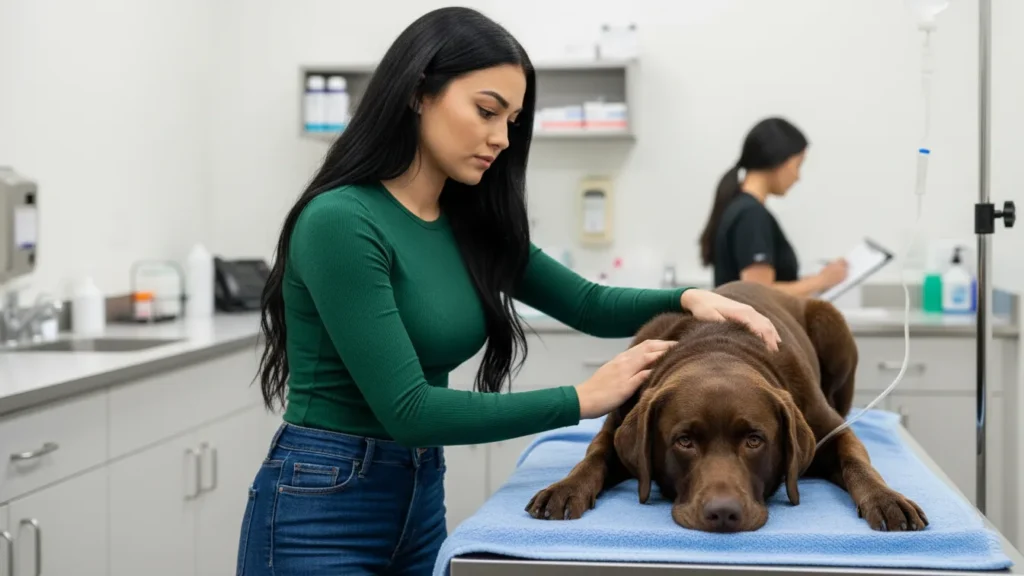
The Moment That Often Triggers a Vet’s Concern
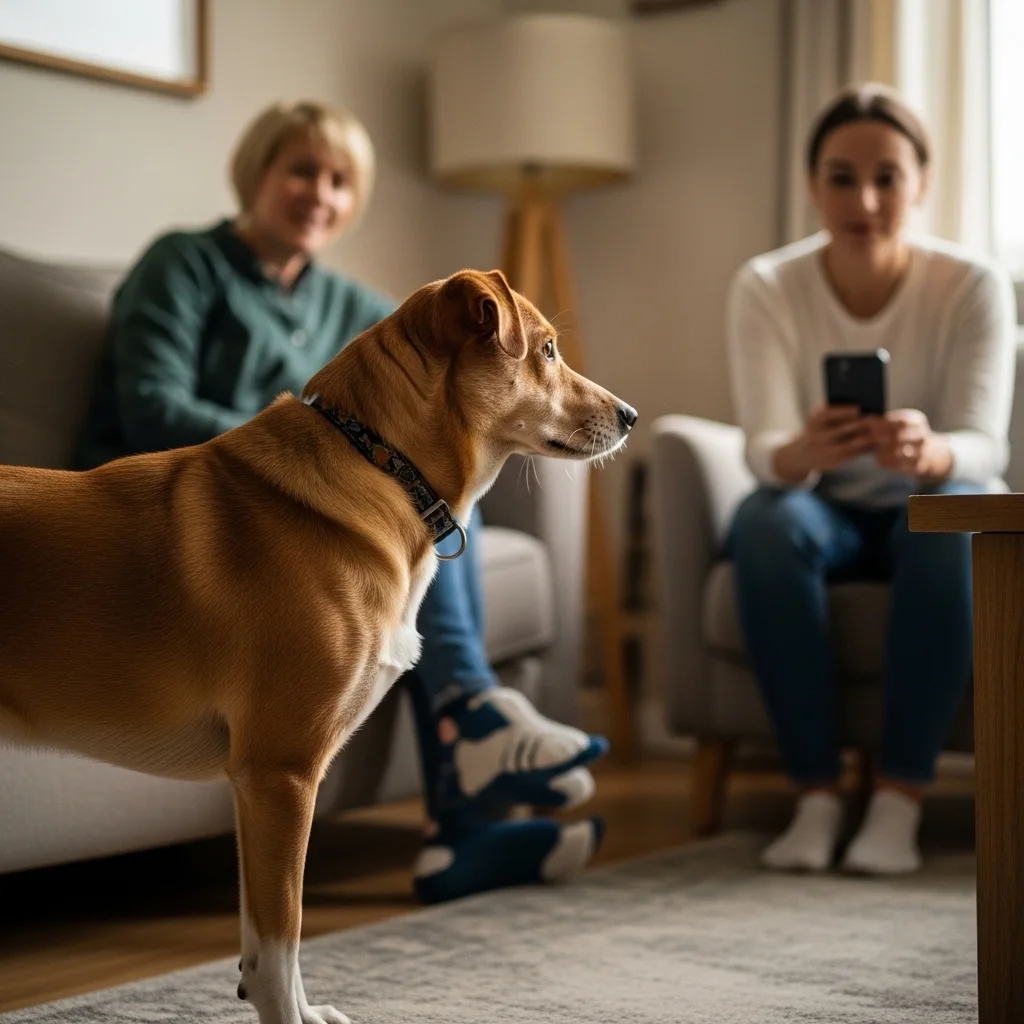
Your dog is standing still.
Not limping.
Not whining.
Not refusing to move.
Most owners see nothing unusual.
But in the exam room, this is often the moment when experienced veterinarians pause.
Because there’s a quiet body shift happening—one that doesn’t look dramatic but tells us something important is going on.
In my clinical experience, some of the earliest and most reliable signs of pain aren’t found in blood tests or X-rays. They’re found in how a dog stands, balances, and distributes weight when they think no one is paying attention.
This article explains that shift—why it happens, what it means, and why so many loving owners miss it.
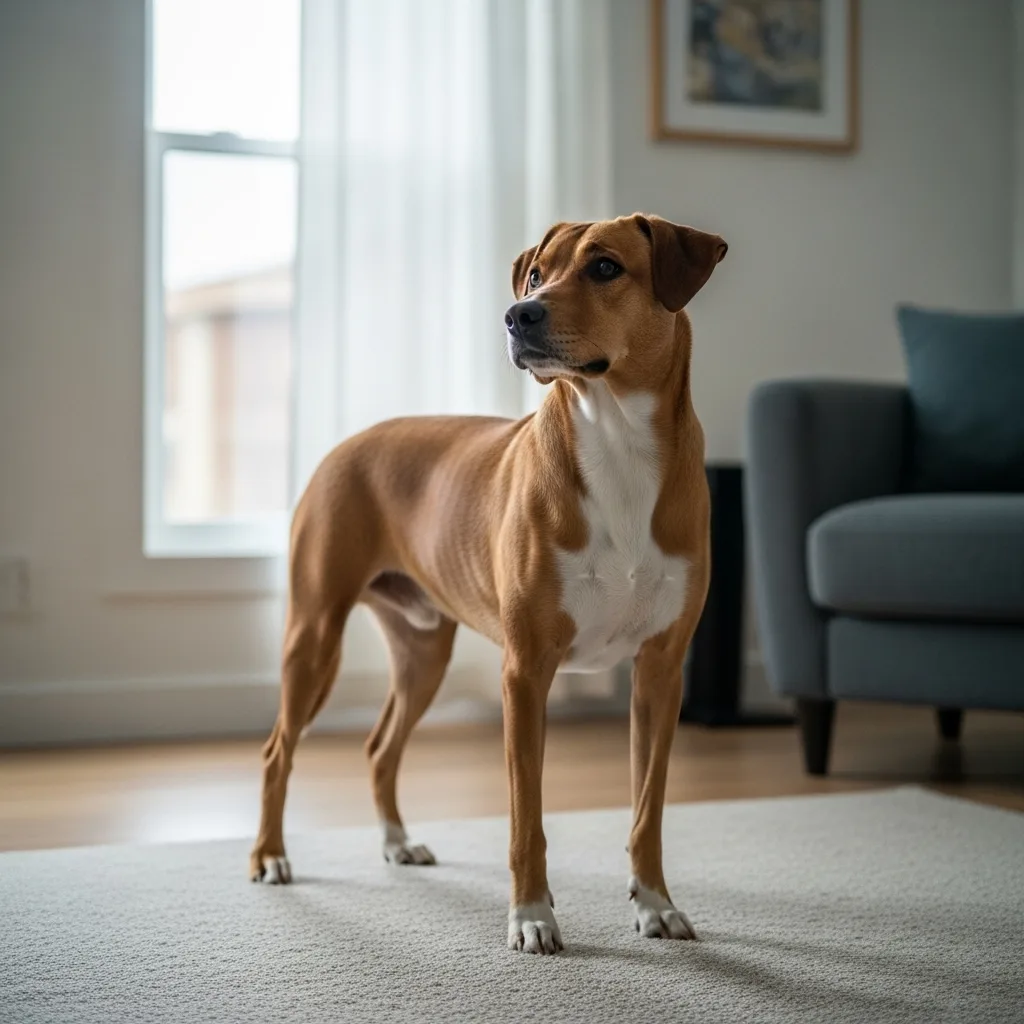
Why Pain Shows Up in the Body Before It Shows Up in Behavior
Pain is a physical sensation first.
Before it affects mood, appetite, or activity, it affects how the body protects itself.
Dogs instinctively adjust posture to:
- Reduce pressure on painful areas
- Stabilize joints or muscles
- Avoid movements that trigger discomfort
These adjustments are automatic. They’re not learned behaviors. And they often appear weeks or months before obvious symptoms.
That’s why posture is such a powerful early clue.
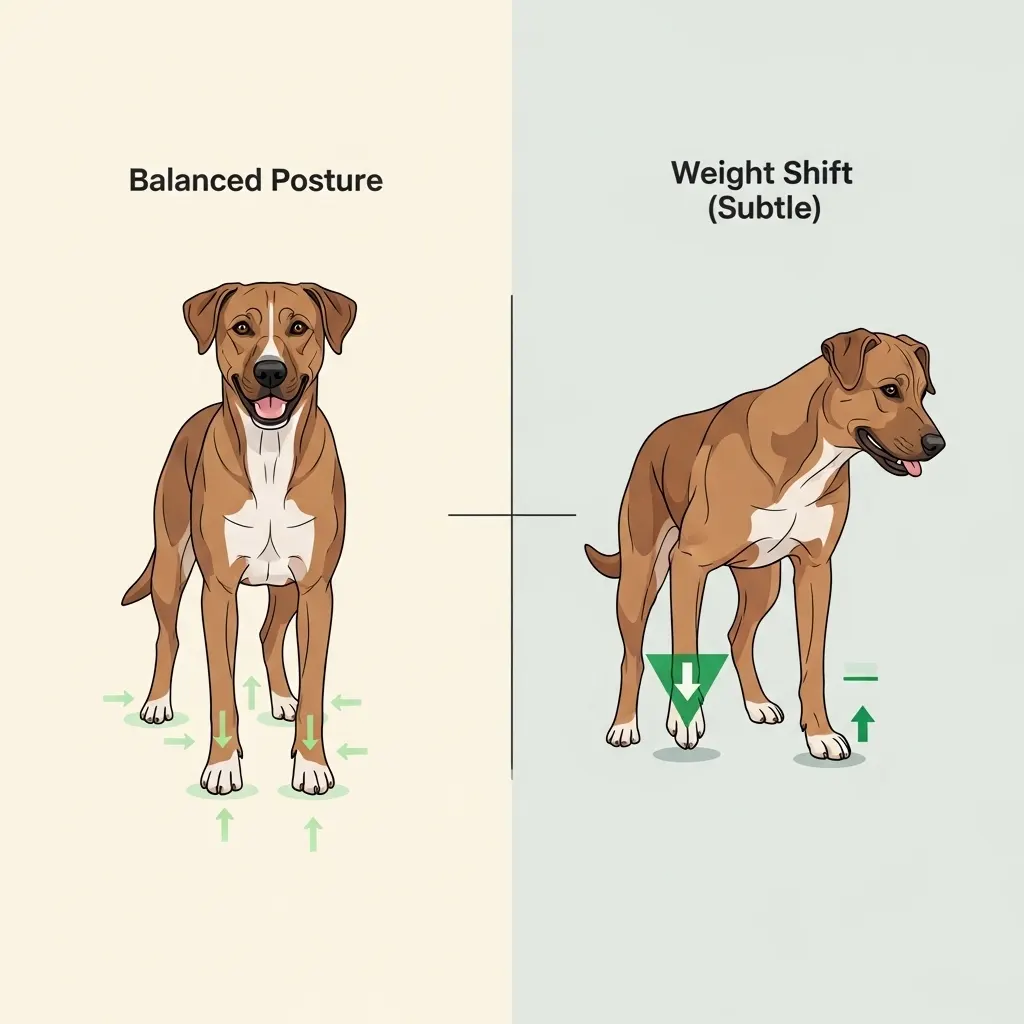
The Subtle Body Shift Vets Watch For
So what exactly are veterinarians noticing?
It’s usually a combination of small changes, not one dramatic movement.
Common patterns include:
- Shifting weight slightly off one limb
- Standing with a widened stance
- Holding the head or neck lower than usual
- Tucking the abdomen subtly
- Leaning more on one side while resting
Individually, these seem insignificant. Together, they tell a clear story.
The body is compensating.
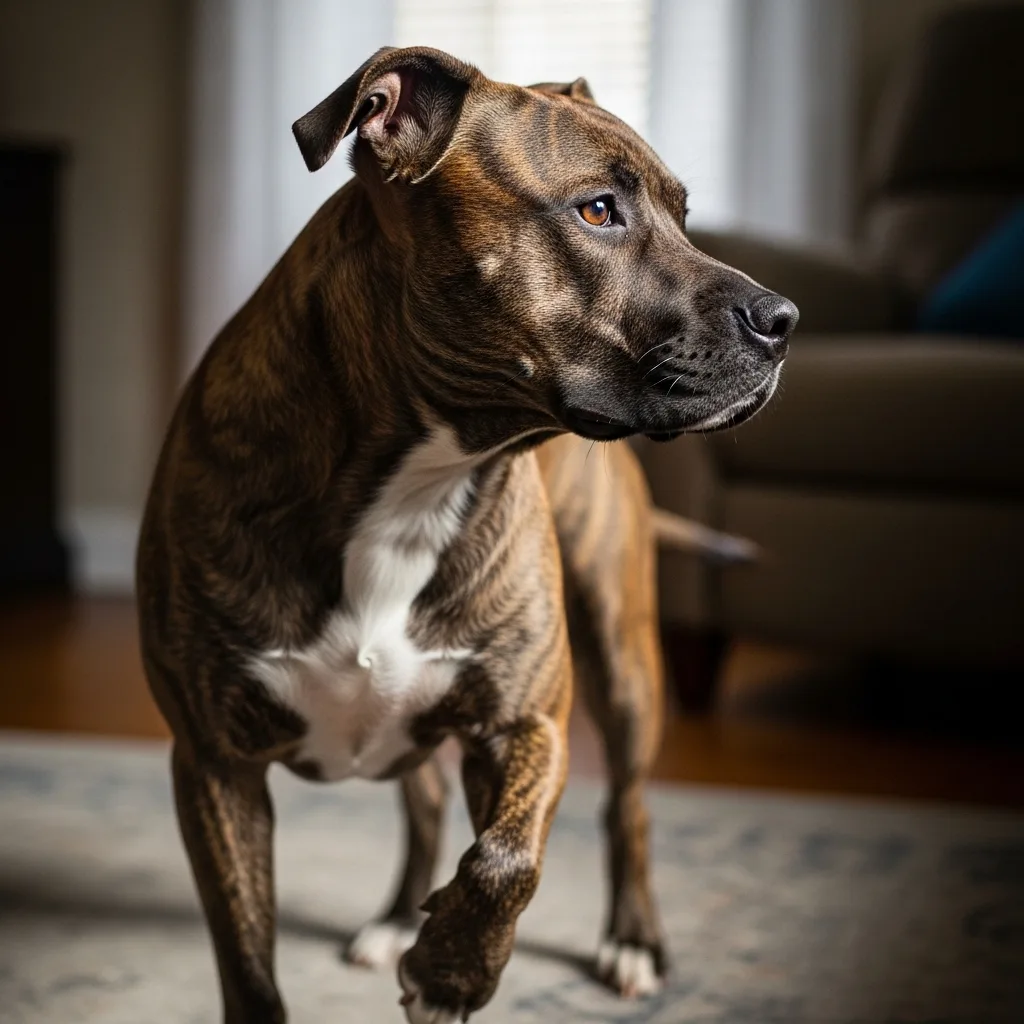
Why Owners Rarely Notice These Changes
This isn’t because owners aren’t attentive.
It’s because:
- The changes are gradual
- Dogs still function “normally”
- The posture looks comfortable, not painful
Most owners are watching for limping, crying, or refusal to move. But early pain doesn’t announce itself that way.
Instead, it whispers through posture.
Standing Still Reveals More Than Walking
One surprising thing we learn in practice: standing posture is often more revealing than movement.
When walking, dogs are distracted and adrenaline helps them push through discomfort.
When standing still, compensation becomes visible.
Watch your dog when:
- Waiting for food
- Standing before sitting
- Pausing during a walk
- Standing after waking up
These quiet moments are when posture tells the truth.
Common Early Pain Postures Vets Recognize
Here are some of the most frequent ones we see.
1. Weight Shifting Without Limping
Your dog may:
- Frequently adjust foot placement
- Alternate which leg bears more weight
- Stand unevenly without lifting a paw
This often points to early joint, ligament, or soft tissue discomfort.
2. A Wider or Stiffer Stance
Dogs may stand with their legs farther apart than before.
This increases stability and reduces strain—but it’s also a sign the body doesn’t feel fully secure.
This is commonly seen with:
- Hip discomfort
- Spinal strain
- Core or abdominal pain
3. Subtle Head or Neck Position Changes
A slightly lowered head.
A neck that doesn’t turn fully.
A preference for looking one direction.
These can be early signs of neck tension, dental pain, or spinal sensitivity.
4. The Quiet Abdominal Tuck
A mild tightening or pulling in of the abdomen—especially when standing—can indicate internal discomfort or musculoskeletal strain.
It’s often mistaken for alertness or focus.
Pain vs. Normal Posture Changes: A Helpful Comparison
| Posture Change | Often Assumed | What It May Signal |
|---|---|---|
| Uneven standing | Habit | Early joint pain |
| Wider stance | Balance issue | Hip or spine strain |
| Lowered head | Calmness | Neck or dental discomfort |
| Frequent repositioning | Restlessness | Muscle or ligament pain |
| Stiff stillness | Obedience | Pain avoidance |
Context and consistency are key.
Why This Matters Long Before Limping Starts
By the time a dog limps, pain is no longer early.
It’s established.
Early posture changes mean:
- The body is already compensating
- Muscles are working unevenly
- Secondary strain may begin
Catching pain at this stage often allows:
- Simpler treatment plans
- Better long-term mobility
- Less progression into chronic issues
This is prevention—not overreaction.
A Real-Life Clinical Pattern
Many consultations start like this:
“He’s walking fine. I just noticed he stands a bit differently sometimes.”
On examination, we often find:
- Early arthritis
- Muscle imbalance
- Spinal sensitivity
- Post-injury compensation
These dogs are still active. Still playful. Still eating.
But their bodies are already adapting.
Why This Is More Important Than Ever
Dogs today live longer, fuller lives.
That also means:
- More wear on joints and spine
- More low-grade, long-term discomfort
- Longer periods where pain is present but subtle
Posture is one of the earliest, clearest ways the body communicates this.
Learning to notice it protects quality of life—not just lifespan.
Actionable Steps You Can Take at Home
You don’t need veterinary training.
Try this:
- Watch your dog stand naturally, not on command
- Observe from the side and front
- Note weight distribution and symmetry
- Compare posture over weeks, not days
- Pay attention after rest or sleep
Small differences over time matter more than single moments.
A Hidden Tip Vets Use
We often observe dogs before touching them.
At home, you can do the same.
Watch your dog when they think no one is watching—especially when transitioning between rest and movement. That’s when compensation shows most clearly.
Common Mistakes to Avoid
Even caring owners often:
- Focus only on walking or running
- Ignore standing posture
- Assume “comfortable” means “pain-free”
- Dismiss changes as aging too quickly
Pain doesn’t require drama to be real.
Frequently Asked Questions
1. Can posture really indicate pain without limping?
Yes. Posture changes often appear weeks or months before limping develops.
2. How long should I monitor posture changes?
If a change persists beyond 1–2 weeks or becomes more consistent, it’s worth discussing with your veterinarian.
3. Is this always a joint issue?
Not always. Posture changes can reflect muscle strain, spinal discomfort, abdominal pain, or even dental issues.
4. My dog is older—aren’t posture changes normal?
Gradual change can occur with age, but noticeable shifts or asymmetry often signal discomfort, not just aging.
5. Should I restrict activity if I notice this?
Avoid sudden restrictions without guidance. Instead, observe closely and seek professional advice.
Key Takeaways
- Early pain often appears in posture before behavior
- Subtle weight shifts are meaningful
- Standing still reveals important clues
- Dogs compensate quietly
- Early recognition protects long-term comfort
A Calm, Clear Conclusion
Dogs don’t tell us pain with words.
They tell us with posture.
With how they stand.
How they balance.
How they quietly protect their bodies.
Noticing these small shifts isn’t being anxious.
It’s being attentive.
And in many cases, it’s the difference between early care and long-term discomfort.
Disclaimer: This article is for general educational purposes and does not replace personalized veterinary advice. If you’re concerned about your dog’s posture or comfort, consult your veterinarian.

Dr. Chaitanya Solanki is a licensed veterinarian with over 10 years of hands-on clinical experience in companion animal medicine. As the founder of Dr. C.M.’s Pet Clinic, he has treated thousands of dogs and cats, focusing on preventive care, behavior, nutrition, and early disease detection. His writing is evidence-based, clinically informed, and designed to help pet owners make confident, responsible care decisions.
Pingback: This Small Behavior Change Can Signal Internal Disease — What Vets Notice Before Symptoms Appear
Pingback: The Silent Health Clue in Your Dog’s Daily Routine — The Small Change That Often Means More
Pingback: The Hidden Gut Signals Most Pet Owners Miss — And Why They Often Appear Long Before Illness
Pingback: Why Dogs Avoid Touch When Something Hurts Inside — The Silent Pain Signal Most Owners Miss
Pingback: Small Posture Changes That Can Signal Bigger Health Problems
Pingback: This Subtle Sitting Change in Dogs Often Signals Pain
Pingback: Why Dogs Shift Their Weight on Their Feet — Comfort, Stress, and Early Mobility Signals Explained