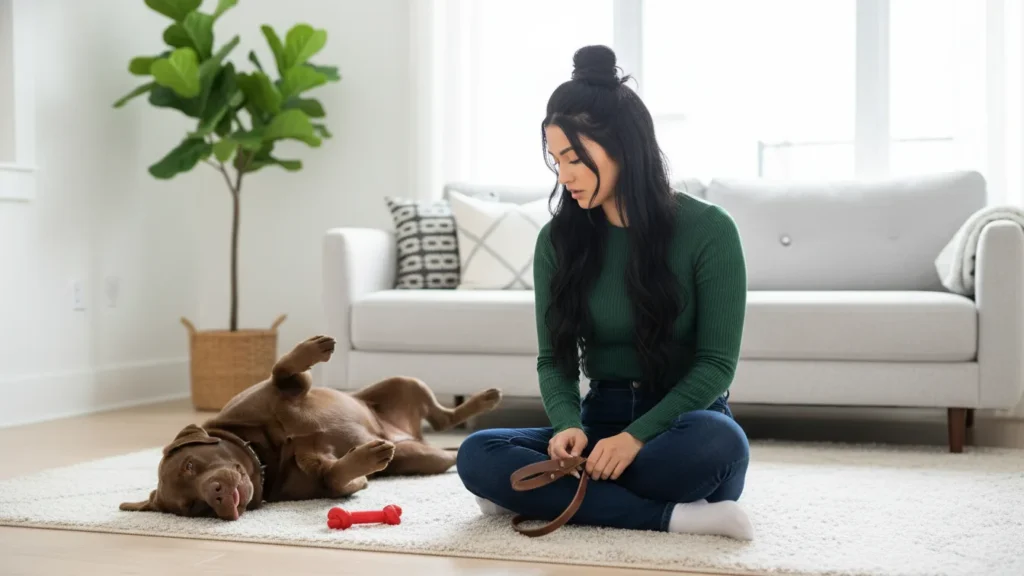
It Rarely Looks Like a Problem at First
Your dog still eats.
Still follows you around.
Still wags their tail.
Nothing about them looks “sick.”
But something feels… slightly off.
They lie down differently.
They pause before moving.
They seem less settled than usual.
Most owners dismiss this stage.
Veterinarians don’t.
Because this is often where internal discomfort first shows itself—quietly, subtly, and easy to ignore.
What “Internal Discomfort” Really Means
Internal discomfort doesn’t mean emergency or severe illness.
It often refers to:
- Low-grade inflammation
- Digestive strain
- Musculoskeletal tension
- Organ-related pressure
- Metabolic or hormonal imbalance
These don’t cause dramatic pain.
They cause constant mild stress inside the body.
Dogs respond not by crying—but by adjusting how they move, rest, and behave.
Why Dogs Hide Internal Discomfort So Well
Dogs evolved to survive, not to signal weakness.
In the wild, showing pain meant vulnerability.
That instinct still exists.
Instead of obvious symptoms, dogs:
- Reduce movement
- Modify posture
- Change routines
- Conserve energy
By the time discomfort becomes visible, it’s usually no longer mild.
The First Quiet Clue: Changes in Resting Behavior
One of the earliest signs is how a dog rests.
Look for:
- Difficulty settling into one position
- Frequent shifting while lying down
- Sleeping more lightly or restlessly
- Choosing unusual resting spots
These aren’t preferences.
They’re adjustments.
The body is searching for a position that feels “less uncomfortable.”
Subtle Movement Changes That Often Go Unnoticed
Dogs with internal discomfort don’t limp dramatically.
Instead, they:
- Move slower from lying to standing
- Avoid sudden turns or jumps
- Walk more carefully on stairs
- Stop activity earlier than before
Owners often think:
“They’re just calming down.”
But this slowing is often protective behavior, not aging.
Digestive Discomfort Without Obvious Stomach Signs
Internal discomfort frequently starts in the gut.
But it doesn’t always look like vomiting or diarrhea.
Early digestive stress may show up as:
- Increased gas
- Occasional bloating
- Restlessness after meals
- Stretching or repositioning post-eating
- Reduced enthusiasm for food without true appetite loss
These signs are easy to miss because they’re inconsistent—but they repeat.
Behavioral Shifts That Are Often Misread
Internal discomfort affects mood.
Dogs may become:
- Slightly irritable
- Less tolerant of touch
- More withdrawn
- Clingier than usual
- Less interested in play
These changes are often blamed on mood, environment, or routine.
But when they persist, they often point inward—not outward.
A Real-Life Example Vets See Frequently
A dog who:
- Eats normally
- Has normal blood work
- Shows no lameness
But:
- Sleeps differently
- Plays less intensely
- Seems unsettled at night
Months later, a diagnosis reveals chronic internal inflammation.
The discomfort didn’t appear suddenly.
It was present all along—just quiet.
Why Internal Discomfort Shows Up in Patterns, Not Events
Acute problems cause events.
Chronic internal discomfort creates patterns.
That’s why isolated incidents rarely matter.
What matters is:
- Frequency
- Consistency
- Gradual progression
One odd day means little.
Three subtle changes repeating daily mean a lot.
Comparison Table: Normal Variation vs Internal Discomfort
| Subtle Change | Often Assumed To Be | When It May Signal Discomfort |
|---|---|---|
| Restless sleep | Bad night | Ongoing inability to settle |
| Slower movement | Aging | Progressive caution or stiffness |
| Less play | Maturity | Avoidance without fatigue |
| Position changes | Comfort | Seeking pressure relief |
| Mood shifts | Personality | Reduced tolerance consistently |
The clue isn’t intensity.
It’s persistence.
Why This Matters Today
Dogs are living longer lives.
That’s a gift—but it comes with more slow-developing internal issues rather than sudden illness.
These conditions:
- Don’t cause emergencies
- Don’t show obvious pain early
- Respond best to early awareness
Veterinary guidelines from organizations like the American Animal Hospital Association emphasize watching behavioral and functional changes as early indicators of internal imbalance.
Common Mistakes Well-Meaning Owners Make
Most missed signs happen because of love—not neglect.
Common mistakes include:
- Waiting for visible pain
- Focusing only on eating and bathroom habits
- Assuming subtle changes are “normal”
- Treating each change in isolation
Internal discomfort lives in the spaces between obvious symptoms.
Hidden Tip: Blood Tests Don’t Always Show Early Discomfort
Many internal issues:
- Fluctuate early
- Stay within “normal” lab ranges
- Affect comfort before chemistry
This is why vets rely heavily on owner observations.
Your day-to-day awareness fills the diagnostic gap.
What Owners Can Do Without Panicking
You don’t need to assume the worst.
You need to observe calmly.
Actionable steps:
- Notice how your dog rests and settles
- Watch transitions between positions
- Track activity tolerance over time
- Observe behavior after meals
- Share trends—not single events—with your vet
Early support often prevents later suffering.
When Internal Discomfort Deserves Attention
Consider a proactive vet discussion if:
- Changes persist for weeks
- Multiple subtle signs appear together
- Comfort seems reduced even without pain
- Your dog no longer relaxes deeply
Early conversations are about preserving comfort, not diagnosing disease.
Key Takeaways
- Internal discomfort in dogs often starts quietly
- Subtle behavior and posture changes are early clues
- Patterns matter more than dramatic symptoms
- Owners play a critical role in early detection
- Awareness allows gentler, more effective care
Frequently Asked Questions
1. Does internal discomfort always mean illness?
No. But persistent discomfort should never be ignored.
2. Can internal discomfort resolve on its own?
Sometimes—but recurring patterns deserve attention.
3. Are senior dogs the only ones affected?
No. Dogs of any age can experience internal discomfort.
4. Should I restrict activity if I notice changes?
Modify intensity, not movement, unless advised otherwise.
5. When should I speak to a vet?
If subtle changes last more than a few weeks or gradually worsen.
A Simple, Honest Conclusion
Dogs rarely tell us they’re uncomfortable.
They show us—quietly.
In how they sleep.
In how they move.
In how they behave when no one is looking.
When owners learn to notice those small signals, they don’t overreact.
They respond earlier.
And for dogs living with internal discomfort, that awareness can change everything.
Disclaimer: This article is for general educational awareness and does not replace personalized veterinary advice. If changes persist or concern you, consult your veterinarian.

Dr. Chaitanya Solanki is a licensed veterinarian with over 10 years of hands-on clinical experience in companion animal medicine. As the founder of Dr. C.M.’s Pet Clinic, he has treated thousands of dogs and cats, focusing on preventive care, behavior, nutrition, and early disease detection. His writing is evidence-based, clinically informed, and designed to help pet owners make confident, responsible care decisions.
Pingback: Your Dog Looks Fine — Why Tick-Borne Diseases Often Go Unnoticed for Weeks
Pingback: Why Dogs Lick One Area Repeatedly — The Medical Reasons Behind a Behavior Most Owners Misread