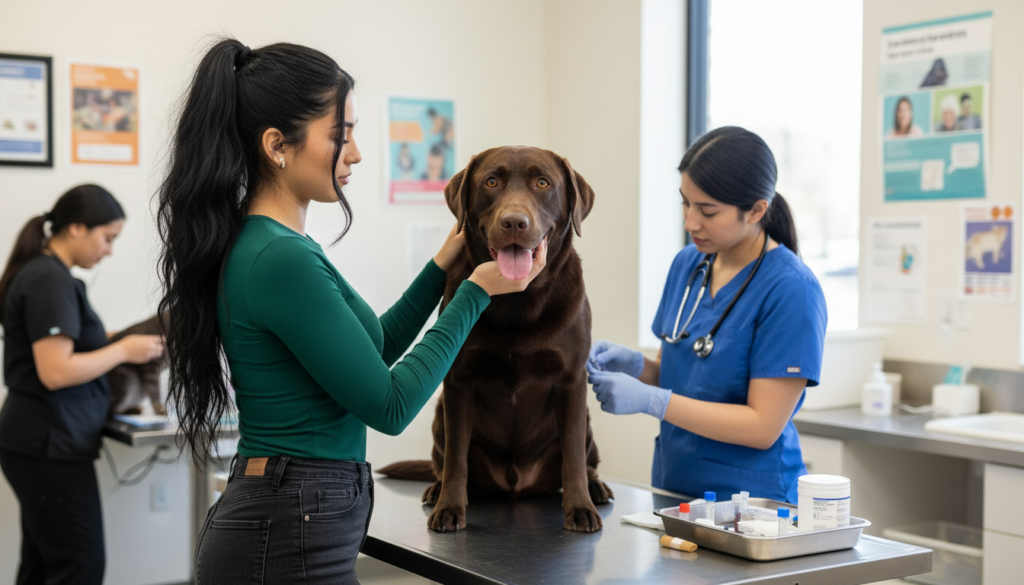
The most reassuring words that often come too late
“They’re acting normal.”
“They’re eating fine.”
“They don’t seem sick.”
These words bring relief—but in veterinary medicine, they often appear right before a serious diagnosis.
That’s because organ stress doesn’t announce itself with pain or drama.
It builds quietly, slowly, and efficiently.
Preventive tests exist for one reason:
to reveal what the body is struggling with before symptoms force action.
Why Organ Stress Is Invisible at Home
Organs are designed to compensate.
When one system begins to struggle, others work harder to keep the body functioning.
This survival feature keeps pets feeling “normal”—even as internal strain increases.
Early organ stress rarely causes:
- Pain
- Appetite loss
- Limping
- Crying
- Obvious distress
By the time symptoms appear, damage is often well established.
Veterinary groups such as the American Veterinary Medical Association emphasize preventive diagnostics because visible illness is usually a late-stage signal, not an early one.
What “Hidden Organ Stress” Actually Means
Hidden organ stress is the phase before disease becomes obvious.
It can involve:
- Reduced kidney filtration
- Early liver inflammation
- Hormonal imbalance
- Subtle electrolyte shifts
- Compensated heart strain
At this stage:
- Pets still behave normally
- Pain receptors are not triggered
- Owners see no red flags
Only testing can uncover it.
The Core Preventive Tests That Matter Most
Preventive testing isn’t about “running everything.”
It’s about selecting high-yield tests that reveal early dysfunction across vital systems.
The most commonly recommended tests include:
- Blood chemistry panels
- Complete blood counts (CBC)
- Urinalysis
- Blood pressure measurement
- Thyroid testing (age-dependent)
Together, these create a physiological snapshot that behavior alone can’t provide.
Blood Chemistry Panels: The Early Warning System
Blood chemistry panels assess how organs are functioning—not how the pet feels.
They evaluate markers related to:
- Kidney filtration
- Liver enzymes
- Blood glucose
- Electrolyte balance
- Protein levels
Early abnormalities are often mild and easy to dismiss—but trends matter.
A value creeping upward year after year signals ongoing stress, not a fluke.
Kidney Stress: Detected Long Before Symptoms Appear
Kidneys are the clearest example of silent strain.
A pet can lose over half of kidney function before showing symptoms like:
- Increased thirst
- Vomiting
- Weight loss
Preventive testing detects:
- Rising creatinine or SDMA
- Dilute urine
- Early protein loss
At this stage, simple interventions can slow progression dramatically.
Without testing, the first sign is often crisis.
Liver Stress: When Enzymes Whisper Before Damage Shouts
The liver performs hundreds of functions—and compensates exceptionally well.
Early liver stress may show:
- Mild enzyme elevation
- Normal appetite
- No pain
Preventive tests reveal inflammation or cellular strain before scarring or failure develops.
Catching this phase allows:
- Diet adjustments
- Medication review
- Monitoring instead of emergency intervention
Complete Blood Count (CBC): Stress Beyond Organs
A CBC doesn’t evaluate organs directly—but it reveals how the body is responding internally.
It detects:
- Early anemia
- Infection or inflammation
- Immune system changes
These findings often precede organ disease or signal systemic stress that hasn’t localized yet.
Urinalysis: The Most Underrated Preventive Test
Urinalysis is one of the most powerful—and skipped—tests in preventive care.
It provides insight into:
- Kidney concentration ability
- Early protein loss
- Inflammation or infection
- Hydration status
Bloodwork may look normal while urine reveals early kidney compromise.
This is why urine testing is a cornerstone of early detection.
Comparison Table: What Owners See vs What Preventive Tests Reveal
| At Home Observation | Preventive Test Finding |
|---|---|
| Normal appetite | Early kidney filtration decline |
| Good energy | Mild liver enzyme elevation |
| No pain | Compensated organ stress |
| Stable behavior | Hormonal imbalance |
| Normal drinking | Subtle urine concentration loss |
This gap explains why testing matters even when nothing seems wrong.
Real-Life Example: The “Healthy” Senior Dog
A senior dog comes in for a routine wellness visit.
At home:
- Eating well
- Active on walks
- No pain
Preventive testing reveals:
- Early kidney stress
- Mild blood pressure elevation
Outcome:
- Diet change
- Monitoring plan
- Slowed disease progression
Without testing, the first sign might have been collapse or emergency hospitalization.
Why These Tests Are Preventive—Not Optional Extras
Preventive tests are often misunderstood as:
- “Just screening”
- “Extra reassurance”
- “Optional add-ons”
In reality, they are how modern veterinary medicine prevents crisis care.
Animal health organizations such as the ASPCA consistently highlight early detection as a major factor in longer, healthier pet lives.
Hidden Tip: Trends Matter More Than Single Results
One test result rarely tells the full story.
Preventive power comes from:
- Year-to-year comparison
- Pattern recognition
- Rate of change
A “normal” value that’s trending upward is often more important than a single abnormal spike.
This is why consistency matters more than perfection.
Common Mistakes That Delay Detection
- Skipping testing because the pet “looks healthy”
- Declining baseline labs
- Waiting for pain as confirmation
- Testing only during illness
- Treating labs as optional during routine exams
These decisions are understandable—but they remove the early-warning advantage.
Actionable Steps to Use Preventive Tests Wisely
You don’t need every test, every time.
You need a strategy.
Do this:
- Establish baseline bloodwork in healthy pets
- Repeat tests at intervals your vet recommends
- Ask which organs each test evaluates
- Track trends, not just pass/fail results
- Act early on mild changes
Preventive testing is about timing, not fear.
Why This Matters Today (And Always Will)
Pets are living longer.
Longer life increases:
- Chronic disease risk
- Slow organ wear
- Benefit of early intervention
Preventive tests turn veterinary care from reaction into protection.
They don’t predict the future—but they reduce surprises.
Key Takeaways
- Organ stress often causes no early symptoms
- Preventive tests reveal dysfunction before damage becomes severe
- Bloodwork and urinalysis are powerful early-warning tools
- Trends over time matter more than single results
- Early detection allows simpler, gentler intervention
- Preventive testing protects quality of life—not just longevity
Frequently Asked Questions
1. If my pet seems healthy, do we really need preventive tests?
Yes. Many serious conditions progress silently long before symptoms appear.
2. How often should preventive testing be done?
This depends on age, species, and health history, but annual or semiannual testing is common.
3. Are preventive tests expensive?
They are usually far less costly than emergency diagnostics and advanced disease treatment.
4. Can preventive tests prevent all illness?
No—but they significantly reduce severity, cost, and surprise.
5. What if a test shows only mild changes?
Mild changes are often the most valuable—they allow early, low-impact intervention.
Conclusion: What You Can’t See Is Often What Matters Most
Organ stress doesn’t announce itself.
It doesn’t hurt at first.
It doesn’t change behavior dramatically.
And it doesn’t wait for the “right time.”
Preventive tests exist to give pets a voice before their bodies are forced to shout.
When you test early, you don’t create problems—you create options.
And in pet health, options make all the difference.
Disclaimer: This article is for general educational purposes only and does not replace guidance from a licensed veterinarian. Always consult your veterinarian about your pet’s health and testing needs.

Dr. Chaitanya Solanki is a licensed veterinarian with over 10 years of hands-on clinical experience in companion animal medicine. As the founder of Dr. C.M.’s Pet Clinic, he has treated thousands of dogs and cats, focusing on preventive care, behavior, nutrition, and early disease detection. His writing is evidence-based, clinically informed, and designed to help pet owners make confident, responsible care decisions.