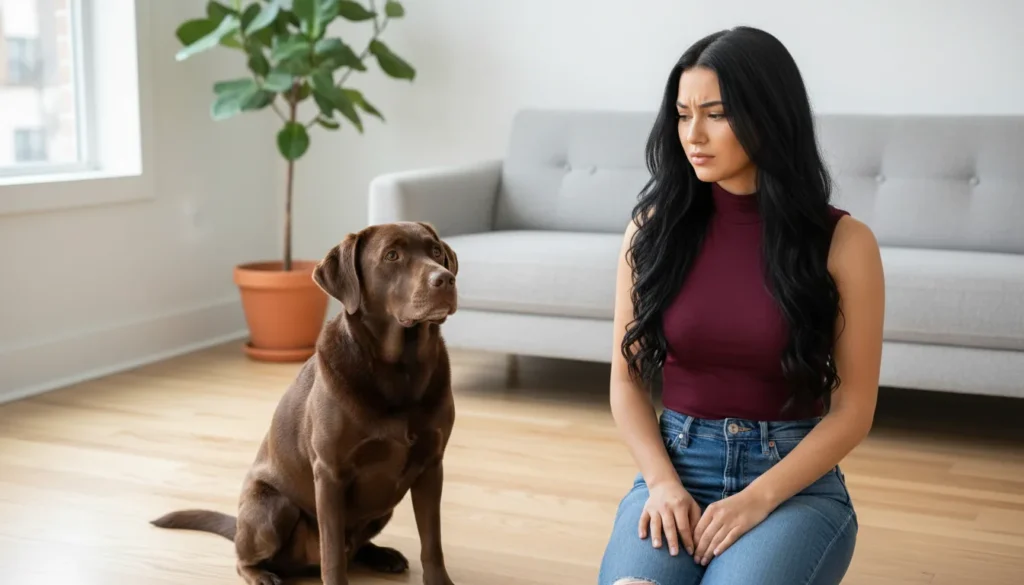
Dogs Rarely “Tell” Us—They Show Us
Most dogs don’t cry out when something feels off.
They don’t sit you down for a conversation.
Instead, they communicate the way they always have:
Through movement.
Posture.
Stillness.
Tiny changes in expression.
The truth is, your dog is speaking all day long—just not with words.
A slightly stiff pause.
A turned head.
A tail held lower than usual.
These aren’t random.
They are often the earliest, quietest warnings that your dog is stressed, uncomfortable, unsure, or simply not feeling like themselves.
And because these signals are subtle, loving owners miss them all the time.
Let’s explore what your dog’s body language might be quietly telling you—before bigger problems appear.
Why Dog Body Language Is Often the First Signal
Dogs evolved to communicate without sound.
In the wild, being loud can attract danger.
So dogs became experts in subtle messaging:
- A look
- A shift in weight
- A slow step backward
- A freeze instead of a bark
Body language is your dog’s first and most natural form of expression.
A helpful analogy:
Think of body language as your dog’s early notification system—like a low-battery icon before the phone shuts down.
You don’t need to panic when you see it.
You just need to notice.
The Most Overlooked Warning: Stillness and “Freezing”
Many owners expect stress to look energetic:
Pacing. Barking. Whining.
But one of the clearest silent warning signs is the opposite:
Sudden stillness.
A dog who freezes is often processing something uncomfortable.
This can look like:
- Stopping mid-walk
- Holding perfectly still when touched
- Pausing before sitting or lying down
- Becoming unusually quiet in a busy space
Stillness is not always calm.
Sometimes, it’s caution.
Sometimes, it’s discomfort.
Sometimes, it’s your dog deciding what to do next.
Subtle Posture Shifts That Reveal More Than You Think
Dogs carry emotion and comfort in their posture.
Even small changes can matter.
Watch for:
- A slightly hunched back
- Weight shifted off one leg
- Standing wider than normal
- Sitting crooked instead of straight
- Head held lower than usual
These are not always dramatic.
But they are informative.
Just like humans adjust posture when a chair feels uncomfortable, dogs adjust posture when something doesn’t feel quite right.
The body speaks before the bark does.
Tail Position Isn’t Just “Happy or Sad”
Most people think:
Tail wagging = happy.
But tails are more like emotional antennas.
Tail signals depend on:
- Height
- Speed
- Stiffness
- Context
A high, stiff wag can mean alertness, not friendliness.
A low, slow wag can mean uncertainty.
A tucked tail often suggests discomfort or fear.
The key is not the wag itself…
It’s the whole body that comes with it.
Tail language is punctuation, not the full sentence.
The Face Tells Quiet Stories Too
Dogs communicate with micro-expressions.
Owners often miss them because they happen quickly.
Common silent facial signals include:
- Lip licking when no food is present
- Yawning in stressful moments
- “Whale eye” (showing whites of the eyes)
- Tight mouth corners
- Avoiding direct gaze
These are often calming signals—ways dogs regulate themselves emotionally.
They don’t mean your dog is misbehaving.
They mean your dog is communicating.
A dog licking their lips may be saying:
“I’m not fully comfortable right now.”
Comparison Table: Relaxed Signals vs. Silent Warnings
| Body Language Cue | Relaxed, Comfortable Dog | Possible Silent Warning Sign |
|---|---|---|
| Posture | Loose, balanced stance | Stiff, weight-shifted stance |
| Tail | Soft wag, neutral height | Low, tucked, or stiff wag |
| Eyes | Gentle blinking | Wide eyes, whale eye |
| Movement | Smooth transitions | Hesitation or freezing |
| Mouth | Open, relaxed | Lip licking, tight mouth |
| Social behavior | Curious, engaged | Withdrawn, avoiding contact |
Quiet Avoidance: The Dog Version of “No Thanks”
Dogs rarely say “no” loudly.
They usually say it quietly.
Avoidance behaviors include:
- Turning the head away
- Moving behind furniture
- Sitting farther from people
- Leaving the room when touched
- Choosing isolation over interaction
This is often mistaken for independence.
But avoidance is communication.
It can reflect:
- Stress
- Overstimulation
- Discomfort
- Uncertainty
Dogs don’t always growl first.
They often retreat first.
Changes in Resting Behavior Can Be a Signal
One of the quietest body language shifts happens during rest.
Watch for:
- Hesitation before lying down
- Frequent repositioning
- Sleeping in unusual places
- Avoiding stairs to reach favorite spots
- Resting with tense limbs instead of loose sprawl
Dogs rest where they feel safe and comfortable.
Changes in resting patterns often come before bigger visible issues.
Your dog’s sleep posture is a clue, not just a habit.
“Velcro Dog” or Suddenly Distant: Both Can Be Signals
Behavioral closeness can shift when dogs feel off.
Some dogs become clingier:
- Following you everywhere
- Seeking constant contact
- Resting closer than usual
Others become distant:
- Less social
- More quiet
- Less interested in play
Both are forms of communication.
Dogs adjust social behavior based on internal state.
It’s not always emotional drama.
Sometimes it’s simply: “Something feels different.”
Real-Life Examples Owners Recognize Too Late
Many owners say:
- “He stopped jumping up, but I thought he was just calming down.”
- “She became quiet around guests, and I assumed she was being polite.”
- “He started licking his lips when hugged, but I thought it was cute.”
- “She would freeze when touched near her back, but I didn’t realize that mattered.”
Body language is easy to misread when you love your dog.
That’s why education is so powerful.
Hidden Tips to Read Your Dog More Clearly
Here are simple ways to become more fluent:
- Watch transitions (standing to sitting, sitting to lying)
- Notice patterns, not one-off moments
- Observe your dog in different environments
- Look at the whole body, not one feature
- Compare today’s behavior to their personal normal
A helpful practice:
Ask: Is my dog loose or tense? Engaged or withdrawn? Smooth or hesitant?
Those answers reveal more than any single wag.
Mistakes Owners Commonly Make
Even great owners make these mistakes:
- Assuming silence means happiness
Quiet dogs may still be stressed or uncomfortable. - Focusing only on the tail
Body language is a full-body conversation. - Missing “small” signals
Early clues are subtle by nature. - Punishing warning signs
Growls and retreats are communication, not bad behavior. - Expecting dogs to be obvious
Dogs often whisper before they shout.
Awareness prevents misunderstandings.
Actionable Steps to Support Your Dog
You don’t need to become a trainer overnight.
Small steps help immediately:
- Give your dog space when they show avoidance
- Provide calm resting areas away from noise
- Avoid forcing hugs or physical contact
- Use gentle observation during daily routines
- If behavior changes persist, consult a trusted professional
Your dog’s body language is not a problem.
It’s information.
Why This Matters Today (Evergreen)
Dogs live closer to humans than ever.
They share our homes, routines, and emotional lives.
That makes understanding body language more important than ever—not because dogs are fragile…
…but because communication builds trust.
When owners recognize subtle signals early:
- Stress reduces
- Comfort improves
- Relationships deepen
- Problems are prevented instead of corrected later
Dog body language isn’t just behavior.
It’s connection.
Key Takeaways
- Dogs communicate early warnings through posture, expression, and movement
- Stillness and freezing are often overlooked stress or discomfort signals
- Tail wagging is complex and must be read with the whole body
- Facial calming signals like lip licking or yawning carry meaning
- Avoidance is often a polite canine “no,” not misbehavior
- Observing patterns early helps owners respond with care and clarity
FAQ: Common Questions Owners Ask
1. Does tail wagging always mean a dog is happy?
No. Tail wagging depends on stiffness, height, and context. Dogs wag for many emotional reasons.
2. Why does my dog lick their lips when I pet them?
Lip licking can be a calming signal, often meaning mild stress or uncertainty.
3. Is a quiet dog always a calm dog?
Not necessarily. Sudden quietness or freezing can signal discomfort or alertness.
4. How can I tell if my dog is stressed at home?
Look for subtle signs like avoidance, tense posture, frequent yawning, or changes in resting behavior.
5. What’s the best way to get better at reading body language?
Watch your dog’s whole-body patterns over time, especially during transitions and social moments.
Conclusion: Your Dog Is Always Communicating—Even in Silence
Dogs may not speak with words…
…but they are never silent.
Their bodies are constantly expressing:
Comfort.
Uncertainty.
Stress.
Trust.
Change.
The most loving thing an owner can do is notice the whispers early:
The pause.
The posture shift.
The turned head.
Because dogs don’t always ask loudly.
Sometimes the most important message is the one they send quietly.
When you learn to listen with your eyes, you become the kind of person every dog feels safe with.

Dr. Chaitanya Solanki is a licensed veterinarian with over 10 years of hands-on clinical experience in companion animal medicine. As the founder of Dr. C.M.’s Pet Clinic, he has treated thousands of dogs and cats, focusing on preventive care, behavior, nutrition, and early disease detection. His writing is evidence-based, clinically informed, and designed to help pet owners make confident, responsible care decisions.
Pingback: Why Dogs Shift Their Weight on Their Feet — Comfort, Stress, and Early Mobility Signals Explained
Pingback: Why Dogs Avoid Eye Contact Sometimes (The Quiet Emotional Signal Most Owners Misread)