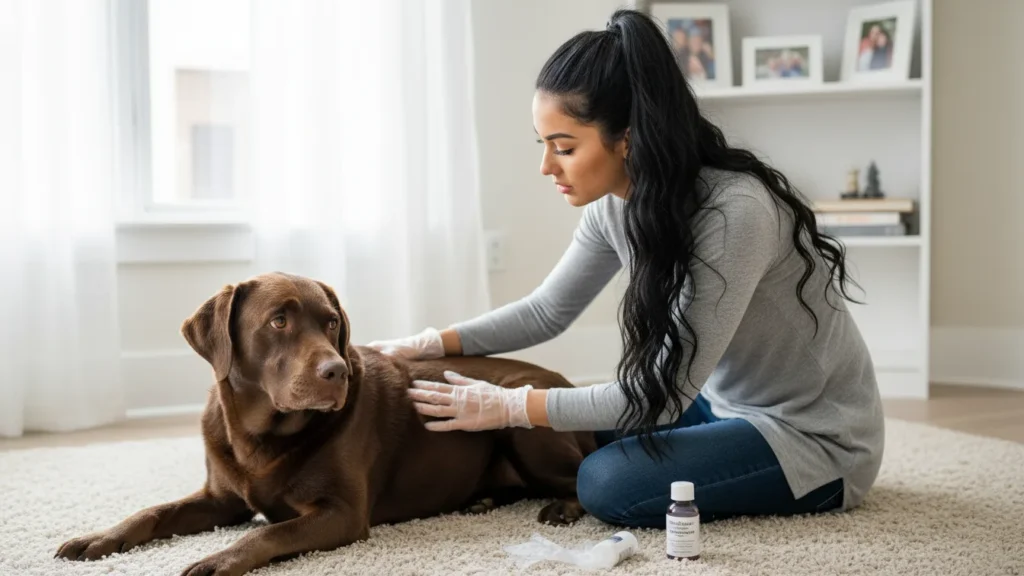
The Greasy Coat That Never Seems to Improve
You bathe your dog.
The coat feels clean—for a day or two.
Then the oil returns.
The smell creeps back.
White flakes dust the fur when you pet them.
At first, seborrhea looks like a grooming problem.
But when greasy skin keeps coming back despite proper care, it’s rarely about cleanliness.
Seborrhea is often a signal—not the disease itself.
And understanding what that signal means can prevent years of skin trouble.
What Seborrhea in Dogs Really Is (Beyond the Surface)
Seborrhea isn’t a single disease.
It’s a pattern of abnormal skin turnover and oil production.
In healthy skin:
- Old skin cells shed gradually
- Oil keeps the coat protected
- Microbes stay balanced
In seborrhea:
- Skin cells shed too quickly
- Oil production becomes excessive (or abnormal)
- The skin barrier weakens
This creates the perfect environment for:
- Odor
- Flaking
- Infections
- Chronic irritation
Seborrhea is how the skin tells you something deeper isn’t right.
Dry vs Greasy Seborrhea: Why Most Dogs Have Both
Owners often think seborrhea is only oily skin.
In reality, there are two patterns—and many dogs show a mix of both.
Seborrhea Sicca (Dry)
- White or gray flakes
- Dull, brittle coat
- Tight or itchy skin
Seborrhea Oleosa (Greasy)
- Oily, sticky coat
- Strong odor
- Yellowish flakes
- Darkened skin over time
The presence of grease doesn’t rule out dryness underneath.
Both reflect disrupted skin regulation.
Why Seborrhea Keeps Returning After Baths
Bathing removes oil—but it doesn’t correct why the oil is being produced excessively.
When seborrhea is secondary to another condition, washing alone becomes a temporary reset.
Within days:
- Oil glands reactivate
- Flakes reappear
- Odor returns
This is why many owners feel stuck in an endless grooming loop.
Primary vs Secondary Seborrhea: The Crucial Difference
Primary Seborrhea (Rare)
- Genetic
- Appears early in life
- Lifelong management needed
- Certain breeds are predisposed
Secondary Seborrhea (Most Cases)
- Caused by another underlying problem
- Improves when the root cause is treated
- Often mismanaged as a cosmetic issue
The majority of dogs have secondary seborrhea.
Which means the skin isn’t the starting point—it’s the messenger.
The Most Common Hidden Causes Behind Seborrhea
1. Allergic Skin Disease
Allergies disrupt normal skin turnover and oil balance.
This leads to:
- Greasy flaking
- Recurrent infections
- Odor between baths
2. Chronic Infections (Bacterial or Yeast)
Microbes feed on skin oils.
As they multiply:
- Oil production increases
- Skin thickens
- Smell intensifies
3. Hormonal Disorders
Conditions like hypothyroidism slow skin renewal.
This causes:
- Excess oil retention
- Scaling
- Poor coat quality
4. Nutritional Imbalances
Skin cells rely on fatty acids, zinc, and vitamins.
Deficiencies can distort oil regulation.
5. Chronic Moisture and Friction
Skin folds, paws, and ears trap moisture, worsening seborrhea locally.
Why Odor Is an Important Clue
Seborrhea-related odor isn’t “dog smell.”
It’s microbial activity.
When you notice:
- Musty or sour smells
- Rapid return of odor after bathing
…it often means yeast or bacteria are thriving on altered skin oils.
Odor tells you what’s happening beneath the coat.
Seborrhea vs Simple Dandruff: A Critical Comparison
| Feature | Simple Dandruff | Seborrhea |
|---|---|---|
| Cause | Dry air, mild irritation | Skin regulation disorder |
| Oiliness | Minimal | Often greasy |
| Odor | Absent | Common |
| Response to bathing | Long-lasting | Short-lived |
| Infection risk | Low | High |
| Underlying disease | Rare | Common |
Seborrhea is not just flakes—it’s dysfunction.
Why Seborrhea Often Leads to Infections
Excess oil creates:
- Moisture retention
- Reduced airflow to skin
- Weakened microbial control
Bacteria and yeast multiply quickly in this environment.
That’s why seborrhea and skin infections often appear together—and why treating one without the other fails.
A Pattern Vets See Repeatedly
A dog presents with:
- Greasy coat
- Flakes
- Mild itching
Treated with medicated shampoo → temporary improvement → relapse.
Eventually:
- Infections develop
- Skin thickens
- Odor worsens
Only then does the deeper cause get investigated.
Earlier recognition saves months—or years—of frustration.
Why This Matters Today
Skin disease isn’t static.
Untreated seborrhea can progress into:
- Chronic infections
- Thickened, darkened skin
- Hair loss
- Constant discomfort
What begins as “just greasy skin” can quietly become a long-term quality-of-life issue.
Hidden Tip: Location Tells a Story
Seborrhea that appears:
- Along the back → often systemic
- In skin folds → moisture-driven
- On ears and paws → allergy-linked
Where grease shows up matters as much as how much there is.
Mistakes That Keep Seborrhea From Improving
- Over-bathing without diagnosis
- Using harsh degreasing shampoos too often
- Ignoring odor as “normal”
- Treating infections without addressing oil imbalance
- Assuming seborrhea is purely cosmetic
These mistakes exhaust the skin instead of healing it.
What Actually Helps Long-Term
Successful management focuses on why seborrhea exists, not just removing oil.
This may involve:
- Treating allergies or hormonal disease
- Restoring skin barrier health
- Strategic antimicrobial therapy
- Nutrition tailored for skin repair
- Appropriate bathing frequency—not excess
When skin balance improves, oil normalizes naturally.
Actionable Steps Owners Can Take
- Track how fast oil returns after bathing
- Note odor patterns and flare triggers
- Observe other signs like itching or hair loss
- Ask whether seborrhea is primary or secondary
- Focus on skin health—not constant cleansing
These steps shift care from reaction to resolution.
Key Takeaways
- Seborrhea is a skin signal, not a diagnosis
- Greasy skin often reflects deeper imbalance
- Most cases are secondary to another condition
- Bathing alone won’t solve the problem
- Treating the cause restores skin balance
Frequently Asked Questions
1. Is seborrhea contagious?
No. Seborrhea itself is not infectious.
2. Can seborrhea go away on its own?
Secondary seborrhea can improve once the underlying cause is addressed.
3. Are certain breeds more prone?
Yes. Some breeds are genetically predisposed, especially to primary seborrhea.
4. Does diet really matter for seborrhea?
Yes. Skin health depends heavily on proper nutrition and fatty acid balance.
5. Can seborrhea cause hair loss?
Yes. Chronic oil imbalance and inflammation can damage hair follicles.
A Calm, Reassuring Conclusion
Seborrhea isn’t a failure of grooming.
It’s the skin asking for help.
When you listen to what greasy skin is signaling—and treat the reason behind it—the coat doesn’t just look better.
It finally becomes healthy again.
Disclaimer: This article is for educational purposes only and is not a substitute for professional veterinary evaluation or individualized care.

Dr. Chaitanya Solanki is a licensed veterinarian with over 10 years of hands-on clinical experience in companion animal medicine. As the founder of Dr. C.M.’s Pet Clinic, he has treated thousands of dogs and cats, focusing on preventive care, behavior, nutrition, and early disease detection. His writing is evidence-based, clinically informed, and designed to help pet owners make confident, responsible care decisions.
Pingback: Mange Isn’t Always Obvious — The Early Skin Changes Vets Spot Before Owners Do
Pingback: That Flaky Skin Might Not Be Dryness — When Dandruff Is a Warning Sign of Hidden Disease