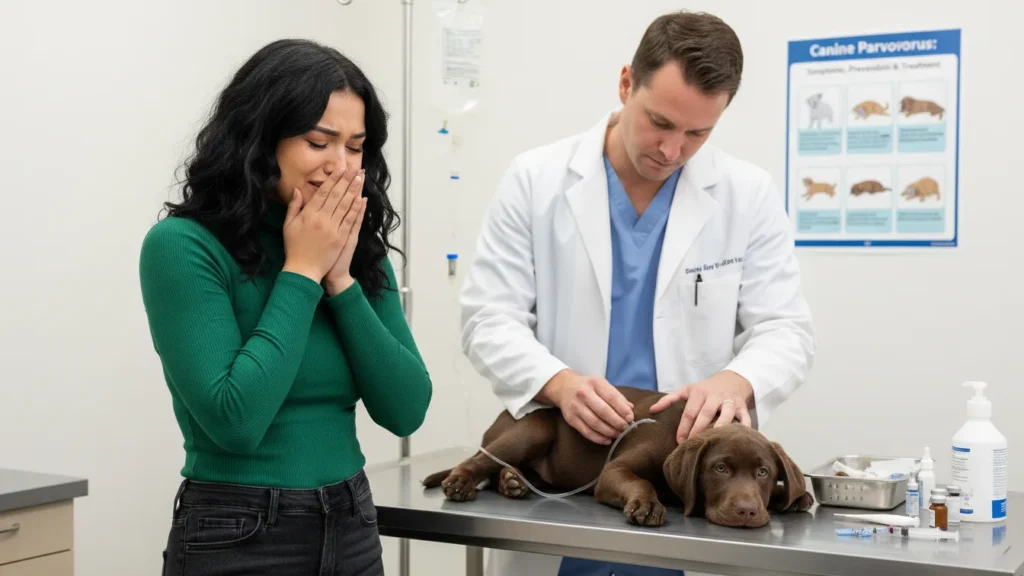
The Mistake Almost Everyone Makes About Parvo
When most people think of parvo, they picture bloody diarrhea, severe vomiting, and emergency hospitalization.
By the time those signs appear, the disease is already well advanced.
What’s dangerous about parvo isn’t just how severe it becomes —
it’s how ordinary and misleading the beginning looks.
Parvo rarely starts as a dramatic emergency.
It starts as something small. Something easy to dismiss.
And that delay is often what decides the outcome.
What Is Parvo — In Simple Terms
Canine parvovirus is a highly contagious viral disease that attacks rapidly dividing cells in a dog’s body.
It primarily affects:
- The intestinal lining
- The immune system (bone marrow)
This combination is what makes parvo so dangerous:
- The gut can’t absorb nutrients or fluids
- The immune system collapses at the same time
Puppies and unvaccinated dogs are at the highest risk, but any unprotected dog can be affected.
Why Bloody Diarrhea Comes Late — Not First
Bloody diarrhea is not the starting point.
It’s the result of severe intestinal damage.
Before that damage happens, the virus is already:
- Multiplying inside the gut
- Suppressing immune cells
- Disrupting normal digestion
The early phase is quieter — and that’s where owners lose time.
The Very First Signs Owners Brush Off
These signs often appear 1–3 days before vomiting or diarrhea.
They look harmless. They feel temporary.
Early Parvo Signs Most People Miss
- Slight tiredness or unusual quietness
- Skipping one meal or eating slowly
- Mild fever (often unnoticed at home)
- Less interest in play
- Clinginess or withdrawal
- Sleeping more than usual
Key insight:
Parvo often starts as a behavior change, not a stomach problem.
The Next Stage: Subtle Digestive Changes
As the virus damages the intestinal lining, digestion starts to fail.
But it still doesn’t look dramatic yet.
Early Digestive Clues
- Soft stool (not watery)
- Mucus in stool
- Occasional nausea
- Lip licking or swallowing sounds
- Mild abdominal discomfort
Many owners assume:
- “He ate something odd”
- “It’s just a mild stomach bug”
This is often the most critical window for intervention.
When Vomiting Begins, the Clock Speeds Up
Vomiting is usually the first symptom that alarms owners.
At this stage:
- The gut lining is breaking down
- Fluid loss accelerates
- Dehydration begins rapidly
Vomiting may start:
- Once or twice a day
- Without blood initially
- Sometimes without diarrhea yet
Waiting for diarrhea before acting is a dangerous mistake.
Bloody Diarrhea: A Late and Serious Sign
By the time blood appears:
- Intestinal tissue is severely damaged
- Bacteria can enter the bloodstream
- Sepsis risk increases
- Immune defenses are critically low
This stage often requires:
- Hospitalization
- IV fluids
- Intensive supportive care
Survival is still possible — but treatment becomes harder and costlier.
Parvo vs. Simple Stomach Upset
This confusion delays care more than anything else.
| Feature | Parvo | Mild Stomach Upset |
|---|---|---|
| Energy level | Progressively worse | Improves within 24 hours |
| Appetite | Rapid decline | Returns quickly |
| Vomiting | Recurrent | Occasional |
| Stool | Worsens over time | Normalizes |
| Response to rest | No improvement | Clear improvement |
Rule of thumb:
If symptoms worsen instead of improve, think parvo.
Puppies Are Not “Resilient” to Parvo
A dangerous myth is that puppies “bounce back easily.”
In reality:
- Puppies dehydrate faster
- Their immune systems are immature
- Their intestinal cells divide rapidly (prime viral targets)
This is why puppies can crash within 24–48 hours once symptoms escalate.
Real-Life Scenario Vets See Repeatedly
A 3-month-old puppy:
- Eats less in the morning
- Sleeps more than usual
Owner waits.
Next day:
- Vomits once
- Still playful at times
Owner waits again.
By day three:
- Continuous vomiting
- Bloody diarrhea
- Extreme weakness
At this point, treatment becomes a race — not a plan.
What To Do at the First Suspicion
Early action doesn’t mean panic.
It means smart timing.
If You Notice Early Signs:
- Stop exposure to other dogs immediately
- Do not try home remedies
- Offer small amounts of water only if not vomiting
- Contact a veterinarian promptly
- Ask whether parvo testing is appropriate
Early testing can save both time and lives.
Common Mistakes That Cost Critical Hours
Avoid these delays:
- Waiting for blood to appear
- Assuming vaccination is complete without confirmation
- Treating vomiting as “normal puppy behavior”
- Trying over-the-counter remedies
- Letting symptoms “run their course”
Parvo doesn’t resolve on its own.
Why This Matters Today
Parvo remains common because:
- Vaccination schedules are missed or delayed
- Puppies are exposed early in public areas
- The virus survives long in the environment
- Early symptoms are misunderstood
Education, not fear, is what reduces loss.
Key Takeaways
- Parvo does not start with bloody diarrhea
- The earliest signs are subtle behavior changes
- Vomiting often appears before diarrhea
- Waiting for severe symptoms wastes precious time
- Early veterinary care dramatically improves survival
- Vaccination is the strongest prevention tool
Frequently Asked Questions (FAQs)
1. Can a vaccinated dog still get parvo?
It’s rare, but incomplete or improperly timed vaccinations reduce protection.
2. How fast does parvo progress?
Symptoms can worsen significantly within 24–72 hours, especially in puppies.
3. Is parvo always fatal?
No. With early detection and proper care, many dogs recover fully.
4. Can parvo spread without direct contact?
Yes. The virus survives on surfaces, soil, shoes, and clothing.
5. Should I isolate my dog if I suspect parvo?
Yes. Immediate isolation reduces spread to other dogs.
Quiet Beginnings, Serious Consequences
Parvo doesn’t announce itself with blood.
It starts with a puppy who’s a little quieter than usual.
A meal that goes unfinished.
A nap that lasts longer than normal.
Owners who learn to respect those small changes act sooner —
and sooner is what saves lives.
Disclaimer: This article is for general educational purposes and does not replace professional veterinary advice. Please consult your veterinarian if you have concerns about your dog’s health.

Dr. Chaitanya Solanki is a licensed veterinarian with over 10 years of hands-on clinical experience in companion animal medicine. As the founder of Dr. C.M.’s Pet Clinic, he has treated thousands of dogs and cats, focusing on preventive care, behavior, nutrition, and early disease detection. His writing is evidence-based, clinically informed, and designed to help pet owners make confident, responsible care decisions.