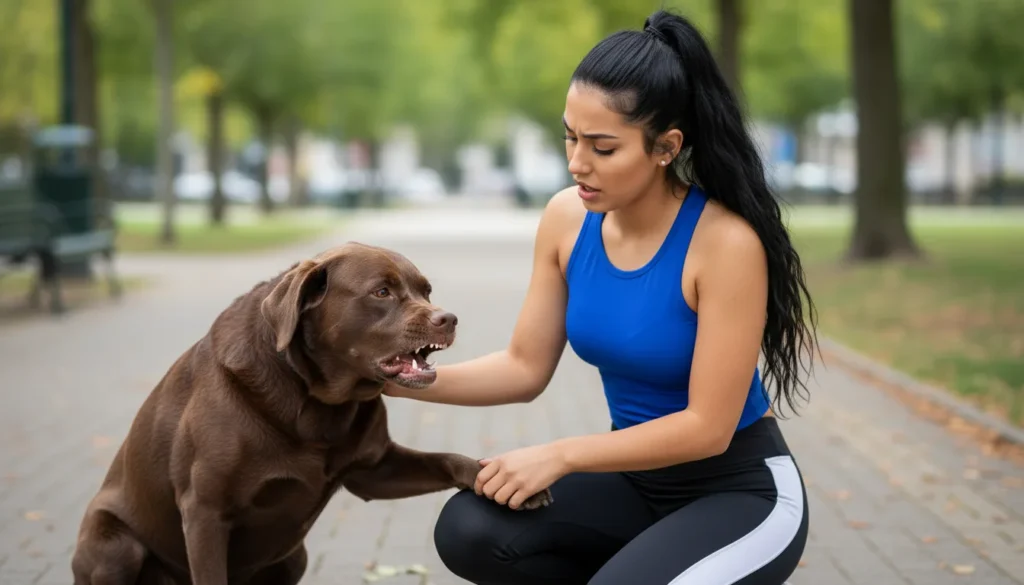
Dogs Don’t Always Show Pain the Way We Expect
Most people imagine pain in dogs as obvious.
A yelp.
A limp.
A whine that makes your heart drop.
But the truth is often quieter.
Many dogs never cry out.
Instead, they adjust.
They protect themselves through subtle behaviors that look almost normal—until you know what you’re seeing.
A dog who feels discomfort rarely announces it like a human would.
They cope.
They conserve.
They move differently.
So if you’ve ever felt that your dog is “just not quite themselves,” this article will help you understand the quiet, surprisingly common ways dogs protect their bodies from pain long before anything dramatic happens.
Why Dogs Hide Pain Instead of Broadcasting It
Dogs evolved with instincts that reward strength and minimize vulnerability.
In the animal world, showing weakness can attract attention or reduce safety.
So many dogs respond to discomfort by becoming:
- Quieter
- More careful
- Less expressive
- More withdrawn
A helpful analogy:
Dogs don’t always raise a red flag when something hurts. They lower their volume instead.
This isn’t deception.
It’s survival wiring.
That’s why early pain protection often looks like subtle behavior, not obvious distress.
The First Quiet Strategy: Moving More Carefully
One of the earliest ways dogs protect themselves is simply slowing down.
Not dramatically.
Just enough.
You may notice:
- Slight hesitation before walking
- Taking stairs more slowly
- Avoiding sudden turns
- Shorter play bursts
Dogs often test what feels comfortable.
They don’t stop moving entirely.
They modify movement.
This is called compensation.
The body is quietly saying:
“Let’s not push that joint or muscle too hard right now.”
Weight Shifting: The Dog Version of Favoring Comfort
Dogs distribute weight across four limbs.
When one area feels sensitive, they often shift pressure away from it.
Look for:
- Standing with weight leaning to one side
- Frequently lifting a paw
- Wider stance for stability
- Sitting slightly crooked
This is one of the most common silent protection behaviors.
It’s like a person leaning off a sore ankle without thinking.
A dog doesn’t need to limp dramatically to protect a limb.
Sometimes they simply stand differently.
Hesitation Before Sitting or Lying Down
Resting should be easy.
So when dogs begin hesitating before settling, it can be a clue.
You might see:
- A pause before lowering into a sit
- Slow, careful lying down
- Standing still as if deciding
- Repositioning multiple times
This often happens because transitions require joint bending and core strength.
Dogs protect themselves by moving cautiously through these “downward” motions.
Owners often interpret this as stubbornness.
More often, it’s caution.
Avoidance of Stairs, Jumping, and Slippery Surfaces
Dogs rarely say “I can’t.”
They say “I’d rather not.”
Pain-protection often shows up as avoidance.
Common examples:
- Waiting before jumping into the car
- Refusing stairs they once loved
- Sticking to rugs instead of tile
- Avoiding high furniture
These are smart choices, not bad behavior.
Dogs learn what feels risky and quietly adjust their environment.
Avoidance is often the most respectful way a dog communicates discomfort.
Comparison Table: Normal Behavior vs. Quiet Pain Protection
| Behavior Change | Often Normal Variation | Possible Pain-Protection Strategy |
|---|---|---|
| Sleeping more after busy day | ✅ Yes | Only if persistent |
| Hesitating before sitting | Rare | ✅ Common early sign |
| Avoiding stairs or jumping | Uncommon | ✅ Very common |
| Shifting weight while standing | Sometimes | ✅ If repeated |
| Reduced play enthusiasm | Sometimes | ✅ Often linked to discomfort |
| Licking one spot repeatedly | Rare | ✅ Possible protective focus |
Licking and Grooming as Self-Soothing
Dogs often lick areas that feel “off.”
Not always dramatically.
But consistently.
They may lick:
- A paw
- A wrist
- A knee
- A hip area
Licking can be soothing and distracting.
It’s a quiet coping tool.
Owners sometimes miss this because grooming seems normal.
The difference is focus:
Repeated attention to one area can be a subtle discomfort signal.
Quiet Withdrawal: Protecting Through Rest and Space
Many dogs become quieter when they don’t feel well.
They may:
- Follow you less
- Rest alone more often
- Skip greetings at the door
- Seem emotionally distant
This is not always sadness.
Often, it’s conservation.
Pain is tiring.
Discomfort takes attention.
Dogs protect themselves by reducing social and physical demands.
Silence can be a coping mechanism.
Changes in Sleep Positions and Resting Spots
Dogs choose rest positions that feel easiest.
When discomfort appears, they often adjust:
- Sleeping stretched out instead of curled
- Avoiding hard floors
- Choosing warmer spots
- Moving away from stairs
You may notice:
- More frequent repositioning
- Less deep, relaxed sprawl
- Preferring soft bedding
Resting behavior is one of the earliest mirrors of comfort.
Dogs protect themselves by changing where and how they settle.
The “Warm-Up Effect”: Stiff at First, Better After Moving
Many dogs protect themselves through timing.
Owners often notice:
- Stiffness after waking
- A few careful steps
- Then normal walking again
This warm-up pattern is common with early joint or muscle changes.
Movement increases circulation and reduces stiffness temporarily.
So the dog looks “fine” after a minute…
…but the pattern repeats.
It’s one of the quietest early signals that the body is adapting.
Facial and Emotional Calming Signals
Discomfort can also show up emotionally.
Dogs may display calming signals like:
- Lip licking
- Yawning at odd times
- Looking away when touched
- Tense mouth corners
These are not random quirks.
They’re subtle nervous system responses.
Pain and stress overlap in body language.
A dog protecting themselves may communicate unease before any physical sign appears.
Real-Life Examples Owners Often Recognize Later
Many owners look back and say:
- “He stopped jumping long before he limped.”
- “She became quieter on walks first.”
- “He hesitated before lying down for months.”
- “I thought she was just aging.”
Dogs rarely go from fine to severe overnight.
They protect themselves in small ways first.
The challenge is that these small ways look like normal life—until you connect them.
Hidden Tips: How to Notice Quiet Protection Early
You don’t need medical training.
Just observation.
Try watching:
- Transitions (up/down movements)
- Posture while standing
- Surface preferences (rugs vs tile)
- Play endurance
- Consistent side favoritism
A powerful tip:
Take short monthly videos.
Subtle changes become clearer over time.
Dogs change gradually.
Video helps you see what your memory normalizes.
Mistakes Owners Commonly Make
Even loving owners often:
- Wait for whining
Many dogs never vocalize pain. - Assume avoidance is stubbornness
Avoidance is often self-protection. - Ignore small posture shifts
Early discomfort lives in body language. - Push exercise unchanged
Dogs will try to keep up even when sore. - Miss patterns because the dog still eats and wags
Dogs can look happy while still compensating.
Awareness prevents bigger struggles later.
Actionable Steps to Support a Dog Who May Be Protecting Themselves
Safe, practical comfort steps include:
- Adding rugs for traction
- Providing supportive bedding
- Keeping nails trimmed for stability
- Encouraging gentle daily movement
- Avoiding forced jumps or stairs
- Noting patterns and discussing persistent changes with a veterinarian
You don’t need to diagnose at home.
You only need to notice the quiet communication early.
Why This Matters Today (Evergreen)
Dogs live longer, closer lives with humans than ever.
That means discomfort often doesn’t appear as emergencies.
It appears as small quality-of-life shifts:
- Less jumping
- More hesitation
- Quieter behavior
- Subtle compensation
Understanding these quiet protection strategies helps owners respond sooner, with less confusion and more confidence.
Pain isn’t always loud.
Often, it’s silent adaptation.
Key Takeaways
- Dogs often protect themselves from pain quietly, not through whining
- Early signals include hesitation, avoidance, weight shifting, and reduced play
- Dogs compensate long before limping becomes obvious
- Licking and rest changes can be subtle self-soothing behaviors
- Patterns over time matter more than one moment
- Early awareness supports comfort and long-term mobility
FAQ: Common Owner Questions
1. Can dogs be in pain without crying or whining?
Yes. Many dogs instinctively hide discomfort and show it through behavior changes instead.
2. What is the most common quiet pain-protection sign?
Avoiding stairs or jumping is one of the most frequent early adjustments.
3. Does licking always mean pain?
Not always, but repeated licking of the same area is worth noting as a possible comfort-seeking behavior.
4. How do I know if changes are just aging?
Gradual slowing can be normal, but new or increasing hesitation and avoidance deserve attention.
5. When should I talk to a veterinarian?
If subtle changes persist, worsen, or affect daily mobility, professional guidance can help clarify the cause.
Conclusion: Dogs Protect Themselves Long Before They Cry Out
Dogs are incredibly brave.
They don’t always whine when something hurts.
They adjust.
They soften their movement.
They avoid what feels risky.
They protect their bodies quietly, through small changes that owners often overlook.
The good news is that these whispers come early.
And when owners learn to notice them, they can support comfort before problems grow.
Your dog may never ask loudly.
But their body is always speaking.
And the quiet ways they protect themselves are worth listening to.

Dr. Chaitanya Solanki is a licensed veterinarian with over 10 years of hands-on clinical experience in companion animal medicine. As the founder of Dr. C.M.’s Pet Clinic, he has treated thousands of dogs and cats, focusing on preventive care, behavior, nutrition, and early disease detection. His writing is evidence-based, clinically informed, and designed to help pet owners make confident, responsible care decisions.