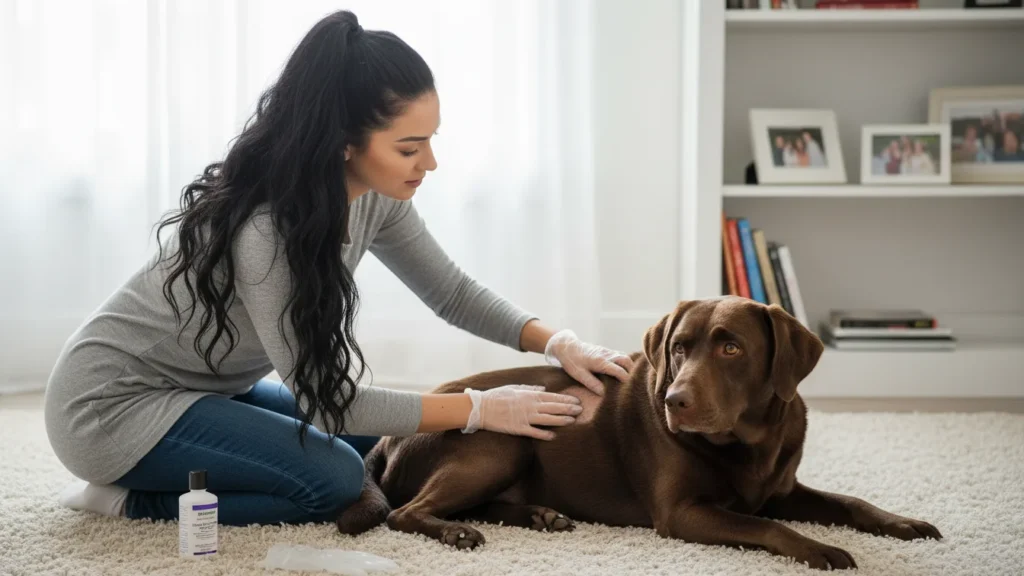
The Skin Problem That Explodes Almost Overnight
In the morning, your dog seems fine.
By evening, there’s a red patch.
By night, it’s raw, wet, and angry-looking.
By the next day, it’s twice the size.
Hot spots don’t creep in slowly.
They erupt.
That speed is exactly why so many owners underestimate them—and why veterinarians don’t.
Hot spots aren’t just irritated skin.
They’re a skin emergency in motion.
What Hot Spots Really Are (Beyond the Name)
The medical term for a hot spot is acute moist dermatitis.
That name matters.
- Acute means sudden
- Moist means wet, inflamed, oozing
- Dermatitis means active skin inflammation
A hot spot is not a disease by itself.
It’s a rapid skin breakdown triggered by licking, chewing, or scratching, followed by bacterial overgrowth.
Once the skin barrier breaks, the cycle accelerates fast.
Why Hot Spots Spread So Shockingly Fast
Hot spots grow because dogs are incredibly efficient at making them worse.
The sequence usually looks like this:
- Something irritates the skin
- The dog licks or scratches
- Moisture builds up
- Bacteria multiply
- Inflammation intensifies
- The dog licks even more
Each step feeds the next.
That’s why a spot the size of a coin can become palm-sized in hours.
The Triggers Owners Rarely Connect to Hot Spots
Hot spots don’t appear randomly.
They’re almost always sparked by an underlying issue.
Common triggers include:
- Flea bites (even one)
- Seasonal or food allergies
- Ear infections
- Matted or wet fur
- Skin folds
- Poorly dried coats after bathing or swimming
- Anal gland discomfort
The hot spot is the flare—not the original fire.
Why Owners Delay (And Why That Delay Matters)
Most owners don’t ignore hot spots out of neglect.
They delay because:
- “It’s just a small patch”
- “I’ll see how it looks tomorrow”
- “He always licks there”
- “It doesn’t seem painful yet”
- “I’ve seen worse online”
The problem?
Hot spots do not self-correct.
Every hour of delay allows:
- Deeper skin damage
- Higher bacterial load
- Greater pain
- Longer healing time
Early action can stop them cold.
Late action turns them into weeks-long problems.
What a Hot Spot Looks Like in Its Early Stage
Catching a hot spot early changes everything.
- Localized redness
- Damp or sticky fur
- Mild hair clumping
- Increased licking at one area
- Skin that feels warmer than surrounding areas
At this stage, the skin is irritated—but not yet destroyed.
This is the window most owners miss.
Advanced Hot Spots: When Things Get Complicated
As hot spots progress, they become harder to manage.
Advanced signs include:
- Raw, open skin
- Oozing discharge
- Strong odor
- Thickened, painful tissue
- Rapid expansion
- Crusting around edges
At this point, infection is no longer superficial.
Healing now requires medical intervention, not just home care.
Hot Spots vs Other Skin Problems: Why Confusion Delays Care
Hot spots are often mistaken for less urgent conditions.
| Feature | Hot Spots | Allergies | Fungal Infection |
|---|---|---|---|
| Onset speed | Sudden | Gradual | Slow |
| Moisture | Very wet | Usually dry | Variable |
| Pain | Often painful | Mostly itchy | Mild discomfort |
| Spread rate | Rapid | Slow | Moderate |
| Urgency | High | Moderate | Moderate |
That speed is the key difference.
Real-Life Example: A 24-Hour Difference
Two dogs, same trigger—fleas.
Dog A:
- Owner noticed redness early
- Licking stopped quickly
- Treatment started same day
- Healed in under a week
Dog B:
- Owner waited “to see”
- Hot spot doubled overnight
- Infection developed
- Required antibiotics, collar, and weeks of care
The difference wasn’t severity.
It was timing.
Common Mistakes That Make Hot Spots Worse
Good intentions often backfire with hot spots.
Mistakes to avoid:
- Letting the dog keep licking “just a little”
- Using thick ointments that trap moisture
- Skipping hair clipping around the area
- Delaying cone use
- Treating the spot but ignoring the trigger
- Re-banding wet skin
Moisture control and interruption of licking are non-negotiable.
Why Hot Spots Are So Painful (Even If Dogs Hide It)
Hot spots expose nerve endings.
They burn.
They sting.
They throb.
Dogs may:
- Flinch when touched
- Guard the area
- Become irritable
- Lick obsessively for relief
Pain isn’t always obvious—but it’s almost always present.
This is another reason early care matters.
How Vets Approach Hot Spots Differently
Veterinary treatment focuses on breaking the cycle.
This often includes:
- Clipping fur to expose and dry skin
- Gentle cleaning and drying
- Anti-inflammatory support
- Infection control
- Preventing self-trauma
- Identifying the underlying trigger
The goal isn’t just healing the spot—it’s stopping recurrence.
Actionable Steps If You Spot a Hot Spot Early
If you catch it early, quick action helps.
Smart steps include:
- Stop licking immediately (cone if needed)
- Clip fur carefully around the area
- Keep the skin clean and dry
- Avoid heavy creams without guidance
- Address the trigger (fleas, ears, allergies)
- Seek veterinary advice if expansion continues
Early intervention often prevents escalation.
Why This Matters More Than People Think
Hot spots are one of the most common reasons dogs end up in urgent care for skin issues.
Not because they’re rare—but because they’re delayed.
Unchecked hot spots can:
- Become deeply infected
- Scar the skin
- Recur repeatedly
- Cause significant discomfort
- Turn a small issue into a major one
Speed matters more than severity.
Key Takeaways
- Hot spots are rapid-onset skin emergencies
- They worsen dramatically with delay
- Moisture and licking fuel their spread
- Early signs are subtle but important
- Fast action shortens healing time dramatically
Frequently Asked Questions
Can hot spots heal on their own?
Rarely. Most continue to worsen without intervention.
Are hot spots contagious?
No. They are self-inflicted inflammatory lesions, not contagious diseases.
Do hot spots mean my dog has allergies?
Often, yes—but not always. They’re commonly triggered by underlying irritation.
Should I bathe my dog if they have a hot spot?
Only with guidance. Improper bathing can increase moisture and delay healing.
Can hot spots come back after healing?
Yes, especially if the underlying cause isn’t addressed.
Acting Early Changes Everything
Hot spots aren’t about panic.
They’re about timing.
When owners act early, hot spots stay small, manageable, and short-lived.
When they wait, the skin pays the price.
Disclaimer: This article is for general educational purposes only and does not replace individualized veterinary guidance.

Dr. Chaitanya Solanki is a licensed veterinarian with over 10 years of hands-on clinical experience in companion animal medicine. As the founder of Dr. C.M.’s Pet Clinic, he has treated thousands of dogs and cats, focusing on preventive care, behavior, nutrition, and early disease detection. His writing is evidence-based, clinically informed, and designed to help pet owners make confident, responsible care decisions.