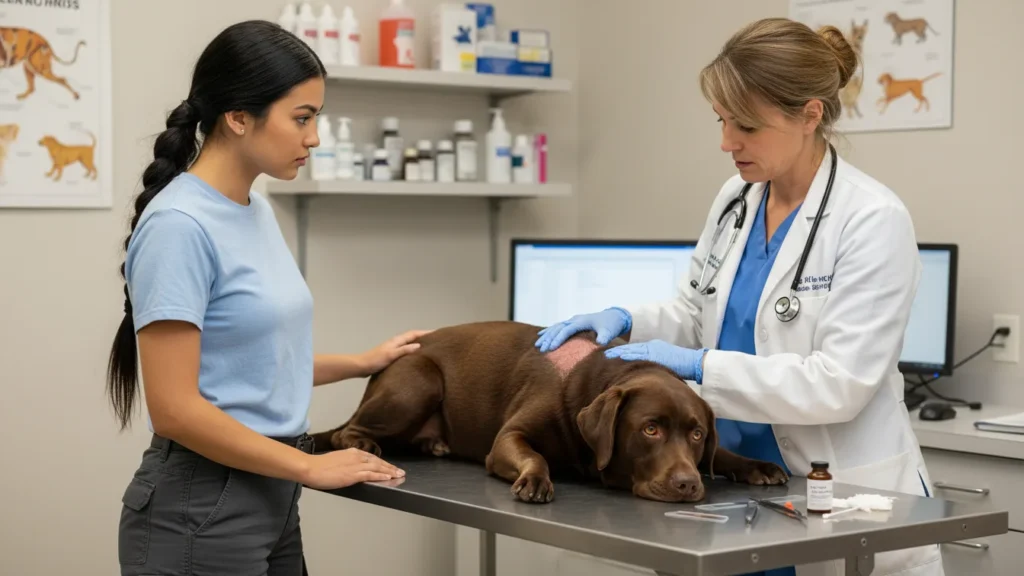
The Skin Problem That Sends Owners Down the Wrong Path
It often begins quietly.
A small patch of hair loss.
A little redness around the eyes or paws.
Some scratching—but not enough to panic.
Most owners assume allergies.
And honestly, that’s not unreasonable.
But weeks later, the skin looks worse.
Hair keeps thinning.
Treatments don’t work the way they should.
This is where many dogs with demodectic mange quietly slip through the cracks—because on the surface, it looks almost identical to allergies.
And the confusion isn’t just an owner problem.
Early-stage cases can fool even experienced clinicians.
Understanding why these two conditions overlap is the key to faster, safer recovery.
Why Demodectic Mange and Allergies Look So Similar
Both conditions affect the skin’s immune balance.
Both cause inflammation, redness, and hair loss.
Both can be localized or widespread.
And both may start without intense itching.
That overlap creates a diagnostic grey zone—especially early on.
But beneath the surface, they are fundamentally different diseases with very different treatment paths.
Missing that distinction delays healing.
What Demodectic Mange Really Is (In Simple Terms)
Demodectic mange is caused by Demodex mites, microscopic organisms that normally live in hair follicles.
Most dogs have them.
Most dogs never get sick.
The problem begins when the immune system fails to control mite populations.
This usually happens when:
- Puppies have immature immunity
- Dogs are under stress
- There is genetic immune weakness
- An underlying illness suppresses defenses
As mites multiply, they damage hair follicles and trigger inflammation from the inside out.
What Allergies Really Are Doing to the Skin
Allergies are an overreaction of the immune system, not a failure of it.
Triggers may include:
- Environmental allergens (dust mites, pollen)
- Food proteins
- Contact irritants
Instead of losing control, the immune system becomes too active, releasing inflammatory chemicals that irritate the skin barrier.
This weakens the skin’s surface defenses, leading to:
- Redness
- Itching
- Secondary infections
- Recurrent flare-ups
Different mechanism.
Similar appearance.
Why Itching Can Be Misleading
One of the biggest myths:
“If it’s not itchy, it can’t be allergies.”
Not true.
Early allergic skin disease can be mild.
Early demodectic mange may have no itching at all.
As secondary infections develop, both conditions can become intensely itchy.
This is why itch alone is a poor diagnostic marker.
The Overlapping Signs That Cause Confusion
Here’s where things get tricky.
Both conditions can cause:
- Patchy hair loss
- Red or pink skin
- Mild scaling
- Recurrent skin infections
- Poor response to basic shampoos
In puppies especially, demodectic mange is often mistaken for:
- Food intolerance
- Seasonal allergies
- “Sensitive skin”
And treatment delays allow mites to multiply further.
Key Differences Most Owners Never Notice
The clues are subtle—but important.
Demodectic Mange Tends to:
- Start around eyes, muzzle, or front legs
- Cause hair loss before itching
- Worsen slowly over weeks
- Appear in young dogs or immunocompromised adults
Allergies Tend to:
- Affect paws, ears, belly, and armpits
- Cause licking and rubbing behaviors
- Flare with seasons or diet changes
- Improve temporarily with anti-inflammatories
Demodectic Mange vs Allergies: Side-by-Side Comparison
| Feature | Demodectic Mange | Allergies |
|---|---|---|
| Primary cause | Immune failure controlling mites | Immune overreaction to triggers |
| Itching | Often mild initially | Usually noticeable |
| Hair loss | Patchy, localized early | Diffuse or symmetrical |
| Age group | Puppies or immune-compromised dogs | Any age |
| Diagnostic test | Deep skin scraping | Allergy evaluation |
| Response to steroids | Often worsens | Often improves |
That last row is critical—and often overlooked.
The Steroid Trap That Makes Mange Worse
Here’s a real-world mistake that matters.
Steroids suppress inflammation.
They also suppress immunity.
In allergic dogs, that helps.
In demodectic mange, it feeds the problem.
Dogs treated with steroids for “allergies” may show:
- Temporary redness reduction
- Rapid mite population growth
- Sudden worsening weeks later
By the time the mistake is caught, the disease may be generalized.
Why Early Diagnosis Changes Everything
Localized demodectic mange often resolves with minimal intervention.
Generalized demodicosis can become:
- Long-term
- Infection-prone
- Emotionally exhausting for owners
The difference between those outcomes is often early identification.
This is why skin scrapings still matter—even when signs seem mild.
A Real-Life Pattern Vets See Repeatedly
A young dog presents with:
- Small bald patches
- Mild redness
- Minimal itching
Treated as allergies → partial improvement → relapse → worsening → skin infections → finally scraped.
The diagnosis was there weeks earlier.
Time—not severity—is often the deciding factor.
Hidden Tip: Location Matters More Than Severity
Owners often focus on how bad the skin looks.
Vets focus on where it started.
Hair loss around:
- Eyes
- Lips
- Chin
- Front legs
…raises early suspicion for demodectic mange—even when the dog seems comfortable.
Mistakes That Delay Recovery
- Assuming all hair loss is allergy-related
- Using steroids before ruling out mites
- Skipping skin scrapings “because it looks mild”
- Treating infections without identifying cause
- Waiting for itching to appear
Skin disease rewards early curiosity, not watchful waiting.
What Owners Can Do Right Now
If your dog has unexplained hair loss:
- Ask whether demodex was ruled out
- Request skin scrapings if not already done
- Avoid immunosuppressive drugs until diagnosis is clear
- Monitor progression weekly—not monthly
- Treat the cause, not just the symptoms
These steps protect your dog from unnecessary escalation.
Why This Matters Today
Modern dogs face:
- Higher stress loads
- Environmental challenges
- Genetic narrowing in breeding
That makes immune-related skin disease more common—and more complex.
Clear diagnosis isn’t optional anymore.
It’s foundational care.
Key Takeaways
- Demodectic mange and allergies can look nearly identical early
- The immune system behaves differently in each condition
- Steroids can worsen demodectic mange
- Hair loss location offers powerful clues
- Early diagnosis prevents long-term skin damage
Frequently Asked Questions
1. Can a dog have both demodectic mange and allergies?
Yes. Allergies can weaken skin defenses, allowing mites to overgrow simultaneously.
2. Is demodectic mange contagious?
No. It results from immune imbalance, not transmission.
3. Why do puppies get demodectic mange more often?
Their immune systems are still developing and may temporarily fail to control mites.
4. Can demodectic mange resolve on its own?
Localized cases sometimes do, but monitoring is essential to prevent progression.
5. Do allergy diets help demodectic mange?
They may support skin health but do not eliminate mites.
A Calm, Reassuring Conclusion
When skin problems don’t behave as expected, it’s not because you missed something obvious.
It’s because some conditions are masters of disguise.
Knowing the difference between demodectic mange and allergies doesn’t just guide treatment—it prevents unnecessary suffering and shortens the path back to healthy skin.
Disclaimer: This article is for educational purposes only and should not replace individualized veterinary advice or diagnosis.

Dr. Chaitanya Solanki is a licensed veterinarian with over 10 years of hands-on clinical experience in companion animal medicine. As the founder of Dr. C.M.’s Pet Clinic, he has treated thousands of dogs and cats, focusing on preventive care, behavior, nutrition, and early disease detection. His writing is evidence-based, clinically informed, and designed to help pet owners make confident, responsible care decisions.