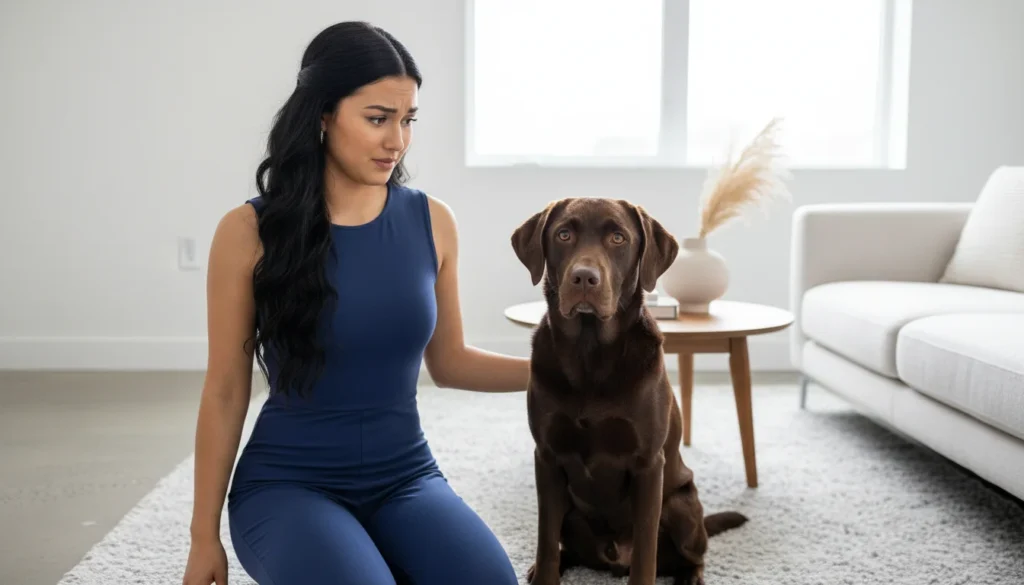
When “Calm” Doesn’t Feel Right
Your dog used to bark, whine, or demand attention.
Now they’re… quiet.
No destruction.
No misbehavior.
No obvious problem.
On the surface, it looks like improvement. But deep down, something feels off.
For many dog owners, silence feels like relief—until it doesn’t.
Because dogs don’t always act out when something is wrong.
Sometimes, they shut down.
And that quiet?
It can be one of the most misunderstood signals in canine behavior.
Why Silence Isn’t Always a Sign of a “Good Dog”
Humans tend to reward calm behavior automatically.
But dogs don’t use silence the way humans do.
For a dog, becoming quiet can mean:
- Emotional overload
- Loss of perceived safety
- Learned helplessness
- Physical discomfort
- Withdrawal to conserve energy
In other words, quiet doesn’t always equal content.
Many dogs stop “acting out” not because they feel better—but because acting stopped working.
Acting Out vs. Shutting Down: Two Stress Responses
Dogs respond to stress in different ways.
Some escalate outward.
Others collapse inward.
Acting-out behaviors:
- Barking
- Chewing
- Jumping
- Pacing
- Vocalizing
Shutdown behaviors:
- Reduced movement
- Less eye contact
- Quiet compliance
- Sleeping more
- Ignoring stimulation
Neither response is “better.”
They’re simply different survival strategies.
The Freeze Response Most Owners Don’t Recognize
Most people understand “fight or flight.”
Dogs also have a third option: freeze.
When a dog feels overwhelmed and unable to escape or change the situation, freezing becomes safer than reacting.
Signs of a freeze response include:
- Still body posture
- Soft or blank facial expression
- Minimal tail movement
- Reduced vocalization
- Slow response to commands
To an untrained eye, this looks like calm obedience.
To behavior professionals, it’s a red flag.
Emotional Learning: When Dogs Learn Silence Is Safer
Dogs are excellent pattern learners.
If barking, whining, or reacting:
- Was punished
- Was ignored
- Increased tension
- Led to unpredictable responses
The dog learns something powerful:
“Expression makes things worse.”
Silence becomes self-protection.
This is especially common in dogs that experienced:
- Harsh training methods
- Inconsistent responses
- High household stress
- Frequent correction without guidance
Quiet Dogs and Emotional Exhaustion
Not all shutdowns are fear-based.
Some are exhaustion-based.
Dogs process emotion through their nervous system, not logic. When stress accumulates over time, they may conserve energy by disengaging.
This can follow:
- Long periods of anxiety
- Repeated routine disruptions
- Chronic overstimulation
- Lack of recovery time
A quiet dog may not be calm—they may be depleted.
Physical Discomfort Often Shows Up as Silence
Pain doesn’t always create noise.
In fact, many dogs become less expressive when something hurts.
Common physical reasons dogs grow quiet:
- Joint stiffness
- Digestive discomfort
- Dental pain
- Early illness
- Hormonal changes
According to behavioral guidance consistent with organizations like American Veterinary Medical Association, behavior changes—especially withdrawal—are often early indicators of underlying discomfort.
This doesn’t mean panic.
It means attention.
Breed and Personality Play a Role—but Don’t Explain Everything
Yes, some breeds are naturally quieter.
Yes, individual temperament matters.
But sudden changes matter more than baseline traits.
A dog who was once expressive and becomes silent deserves closer observation—regardless of breed.
Silence is meaningful when it represents a shift, not a trait.
Comparison Table: Acting Out vs. Shutting Down
| Behavior Pattern | What It Looks Like | What It Often Means | Owner Risk |
|---|---|---|---|
| Acting out | Barking, destruction | Overstimulation or unmet needs | Frustration |
| Withdrawal | Quiet, still, compliant | Emotional or physical overload | Overlooking issues |
| Sudden calm | Reduced reactions | Learned suppression | False reassurance |
| Gradual silence | Less engagement | Chronic stress | Delayed intervention |
Common Mistakes Owners Make With Quiet Dogs
Well-meaning owners often miss the message.
Mistakes to avoid:
- Praising silence without context
- Assuming “they grew out of it”
- Ignoring subtle body language
- Focusing only on obedience
- Waiting for obvious symptoms
Dogs rarely go from quiet to crisis overnight.
They fade gradually.
What Healthy Calm Actually Looks Like
Not all quiet is bad.
Healthy calm includes:
- Soft but responsive eyes
- Relaxed body posture
- Willing engagement
- Curiosity when invited
- Balanced sleep and play
Shutdown calm looks different:
- Limited responsiveness
- Tension under stillness
- Avoidance of interaction
- Reduced interest in favorites
Learning to see the difference changes everything.
Actionable Steps: How to Respond When a Dog Goes Quiet
Step 1: Observe Without Judging
Track changes:
- Energy levels
- Social interaction
- Appetite
- Sleep patterns
Patterns matter more than single days.
Step 2: Lower Pressure
Reduce:
- Excessive commands
- Forced interactions
- High stimulation environments
Safety restores expression.
Step 3: Invite, Don’t Demand
Offer choices:
- Gentle play
- Calm walks
- Enrichment without pressure
Let engagement return naturally.
Step 4: Rule Out Physical Causes
If quiet persists beyond 7–10 days or accompanies other changes, professional input is appropriate.
Why This Matters Today
Modern dogs live in environments far louder, faster, and more demanding than their nervous systems evolved for.
Silence is often a coping strategy—not a sign of success.
The earlier you recognize withdrawal, the easier it is to restore emotional balance.
Key Takeaways
- Quiet behavior isn’t always positive
- Dogs may shut down instead of acting out
- Silence can signal stress, fear, or discomfort
- Sudden behavior changes deserve attention
- Understanding quiet prevents bigger problems later
Frequently Asked Questions
Is a quiet dog always unhappy?
No. Context and change matter more than personality alone.
Can training cause a dog to shut down?
Yes, especially if correction outweighs guidance or clarity.
How long is “too long” for quiet behavior?
Persistent withdrawal beyond a week, especially with other changes, should be evaluated.
Do older dogs naturally become quieter?
Somewhat—but emotional engagement should remain. Sudden silence isn’t normal aging.
Should I encourage my dog to be more active?
Invite gently. Forcing interaction can deepen withdrawal.
Conclusion: Silence Is Still Communication
Dogs don’t stop communicating when they go quiet.
They simply change the language.
Learning to listen to silence—rather than celebrating it blindly—is one of the most compassionate skills a dog owner can develop.
Because the calmest dog in the room isn’t always the most comfortable one.
Disclaimer: This article is for general informational purposes and is not a substitute for professional veterinary or behavioral advice.

Dr. Chaitanya Solanki is a licensed veterinarian with over 10 years of hands-on clinical experience in companion animal medicine. As the founder of Dr. C.M.’s Pet Clinic, he has treated thousands of dogs and cats, focusing on preventive care, behavior, nutrition, and early disease detection. His writing is evidence-based, clinically informed, and designed to help pet owners make confident, responsible care decisions.
Pingback: Your Pet Isn’t Just “Moody” — The Gut-Brain Connection Most Owners Miss
Pingback: Why Dogs Get Unusually Quiet — What Their Body May Be Trying to Tell You