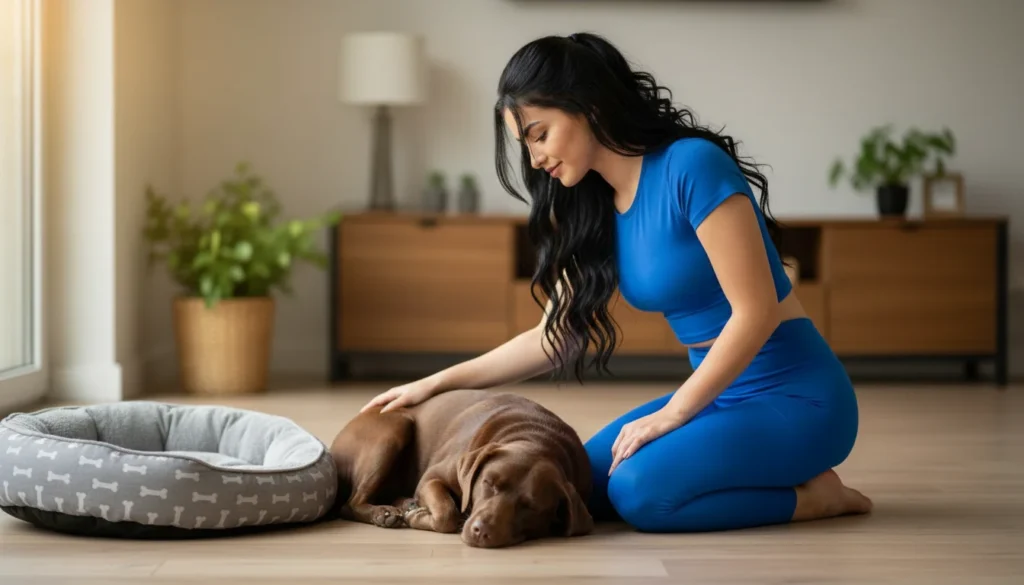
The Bed They Loved… Until They Didn’t
Last week, your dog slept in the same place every night.
Their bed. The couch corner. Right beside you.
Now?
They’ve moved.
Maybe to the hallway.
A cooler floor.
Another room entirely.
It’s subtle. Quiet. Easy to dismiss.
But dogs don’t change sleeping spots randomly.
Sleep is when dogs feel most vulnerable.
Where they choose to rest says a lot about comfort, safety, and internal state.
Understanding why dogs change favorite sleeping spots helps you tell the difference between normal adjustment—and an early signal worth paying attention to.
Why Sleeping Location Matters So Much to Dogs
For dogs, sleep isn’t just rest.
It’s risk assessment.
Before settling down, dogs subconsciously evaluate:
- Temperature
- Noise
- Smell
- Body comfort
- Emotional safety
- Proximity to people
A sleeping spot is chosen because it meets multiple needs at once.
When those needs change, the location changes too.
The Most Common (and Completely Normal) Reason: Temperature
Dogs are incredibly sensitive to temperature—far more than we realize.
Seasonal shifts, heating systems, or even a sunny window can make a once-perfect spot uncomfortable.
Dogs may move to:
- Tile or hardwood floors when warm
- Carpet or bedding when cold
- Hallways with airflow
- Bathrooms with cooler surfaces
This kind of movement is normal, healthy, and self-regulating.
If the change lines up with weather or indoor temperature shifts, it’s usually not a concern.
Comfort Changes: When the Body Feels Different
Dogs don’t wake up one day and announce, “My joints feel stiff.”
They adjust behavior instead.
Physical comfort influences sleep location more than almost any other factor.
Dogs may change spots due to:
- Joint stiffness
- Muscle soreness
- Pressure sensitivity
- Subtle pain that isn’t obvious yet
Hard floors may suddenly feel better.
Raised beds may feel worse—or vice versa.
According to guidance consistent with organizations like American Veterinary Medical Association, early physical discomfort often appears first as behavior changes rather than visible pain.
Emotional Safety: Dogs Sleep Where They Feel Secure
Dogs choose sleep locations based on emotional context, not just comfort.
Changes in sleeping spots often follow:
- Household stress
- New people or pets
- Schedule disruptions
- Owner anxiety or illness
- Environmental noise
A dog may move closer to you for reassurance—or farther away to reduce stimulation.
Neither choice is “bad.”
It’s information.
Proximity Shifts: Closer or Farther Isn’t Random
Many owners worry when a dog stops sleeping near them.
But distance alone doesn’t equal emotional withdrawal.
Dogs adjust proximity based on:
- Confidence levels
- Need for quiet
- Sensory overload
- Desire for autonomy
A secure dog may choose distance because they can—not because they feel disconnected.
Context always matters more than location.
Smell and Sound: Invisible Influences Humans Miss
Dogs experience their environment through scent first.
Sleeping spot changes can happen because of:
- New cleaning products
- Laundry detergents
- Outdoor smells drifting in
- Appliances cycling at night
- Subtle vibrations
What smells neutral to you may be overwhelming—or comforting—to your dog.
Dogs often move to rebalance sensory input, not to avoid a specific place.
Age-Related Changes in Sleeping Behavior
Puppies
- Experiment with locations
- Seek warmth and security
- Change spots frequently
Adult Dogs
- Settle into routines
- Adjust for comfort or emotion
- Change spots with context shifts
Senior Dogs
- Prioritize joint comfort
- Avoid stairs or jumping
- Seek stable temperatures
- Change positions more often during the night
With age, flexibility in sleeping choices often increases—not decreases.
When a New Sleeping Spot Signals Something More
Most sleeping spot changes are harmless.
But patterns matter.
Pay closer attention if the change is:
- Sudden and persistent
- Combined with appetite changes
- Paired with reduced activity
- Accompanied by restlessness
- Linked to avoidance of certain surfaces
Dogs don’t “act sick” the way humans do.
They adapt quietly.
Comparison Table: Normal vs Concerning Sleeping Spot Changes
| Pattern | Likely Meaning | What to Do |
|---|---|---|
| Seasonal movement | Temperature regulation | No action needed |
| Rotating spots | Comfort optimization | Observe calmly |
| Avoiding old bed | Surface discomfort | Check bedding |
| Sleeping alone suddenly | Emotional regulation | Note context |
| Hiding or isolating | Possible stress or pain | Monitor closely |
Common Owner Mistakes
Well-intentioned owners often misread sleep changes.
Mistakes to avoid:
- Forcing dogs back to old spots
- Assuming defiance or stubbornness
- Ignoring gradual shifts
- Overreacting to a single night
- Replacing beds without understanding why
Dogs aren’t rejecting a place.
They’re responding to how it feels.
Actionable Steps: How to Respond the Right Way
Step 1: Observe Patterns, Not Preferences
Track:
- Time of day
- Room conditions
- Your dog’s posture
- Frequency of movement
Patterns tell the real story.
Step 2: Improve Sleep Options
Offer:
- Multiple bed types
- Different surface firmness
- Quiet and low-traffic areas
- Temperature variety
Choice reduces stress.
Step 3: Avoid Reinforcing Anxiety
If a dog moves due to stress:
- Stay calm
- Maintain routine
- Avoid excessive reassurance
Your emotional neutrality provides stability.
Step 4: Check the Basics
Ensure:
- Beds are clean and odor-neutral
- No drafts or heat sources nearby
- Floors aren’t too slippery
- Access is easy for older dogs
Small environmental tweaks often solve the issue.
Hidden Tip: Sleeping Spots Can Reflect Energy Levels
Dogs often change sleeping locations based on how deeply they plan to rest.
Light naps happen in social areas.
Deep sleep happens in quieter, safer-feeling zones.
This is normal canine self-regulation—not avoidance.
Why This Matters Today
Modern homes change constantly:
- Lighting
- Temperature
- Noise
- Schedules
Dogs adapt in quiet ways.
Recognizing sleep-location shifts as communication—not misbehavior—helps you catch discomfort early and support long-term well-being.
Key Takeaways
- Dogs change sleeping spots for comfort, safety, and regulation
- Temperature and physical comfort are common drivers
- Emotional context influences proximity
- Sudden or persistent changes deserve observation
- Choice and flexibility support healthy sleep
Frequently Asked Questions
Is it bad if my dog stops sleeping in their bed?
Not necessarily. It may no longer meet their comfort needs.
Do dogs change sleeping spots when they’re anxious?
Yes. Anxiety often increases movement and location switching.
Should I move my dog back to their old spot?
No. Let your dog choose—unless safety is an issue.
How long should I monitor before worrying?
Look for patterns over 7–10 days, not one night.
Can diet or exercise affect sleeping locations?
Indirectly, yes—through body comfort and energy regulation.
Conclusion: Sleep Location Is Communication
When dogs change favorite sleeping spots, they’re not being picky.
They’re adjusting to how their body feels, how their environment sounds, and how safe they feel in that moment.
Listening to those quiet choices helps you respond before discomfort turns into something bigger.
Sometimes, the smallest shifts tell the biggest stories.
Disclaimer: This article is for general informational purposes only and does not replace personalized veterinary or behavioral advice.

Dr. Chaitanya Solanki is a licensed veterinarian with over 10 years of hands-on clinical experience in companion animal medicine. As the founder of Dr. C.M.’s Pet Clinic, he has treated thousands of dogs and cats, focusing on preventive care, behavior, nutrition, and early disease detection. His writing is evidence-based, clinically informed, and designed to help pet owners make confident, responsible care decisions.