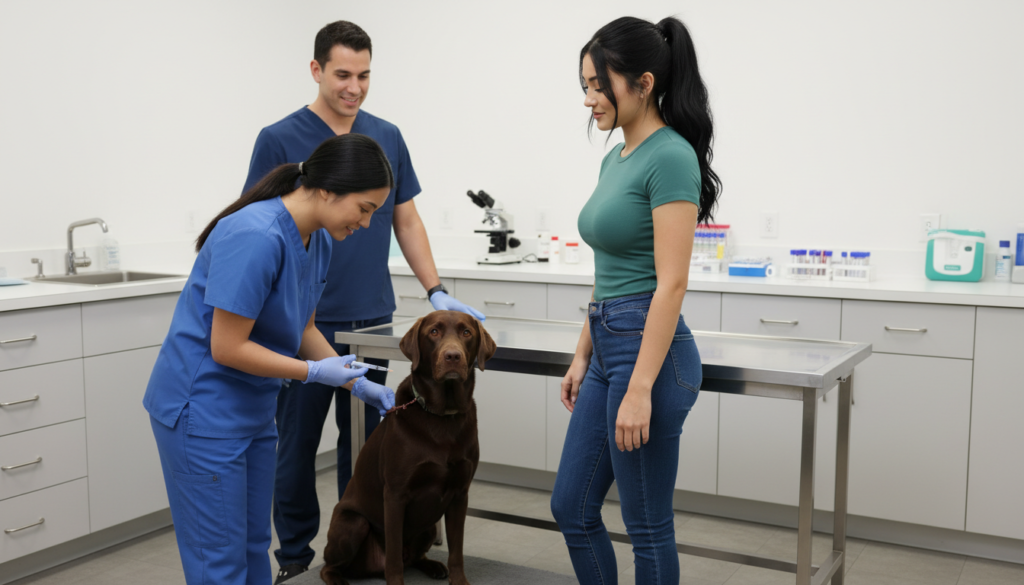
The misunderstanding that quietly hurts pets every day
Most pet owners don’t ignore care.
They delay it, unintentionally.
A routine check feels optional.
An emergency feels unavoidable.
So care gets postponed—until it can’t be.
This is where confusion begins:
Preventive care and emergency care are often treated as interchangeable.
They are not.
And misunderstanding the difference doesn’t just affect cost—it affects outcomes, suffering, and long-term health.
Preventive Care and Emergency Care Serve Opposite Roles
Preventive care is proactive.
Emergency care is reactive.
One aims to stop problems before they grow.
The other tries to contain damage once something has already gone wrong.
Veterinary medicine—like human medicine—works best before disease escalates.
This principle is emphasized by organizations such as the American Veterinary Medical Association, which consistently highlights early intervention as a cornerstone of better outcomes.
What Preventive Care Actually Means (Beyond Vaccines)
Many people reduce preventive care to shots and parasite control.
In reality, it’s much broader—and more powerful.
- Physical exams that detect subtle changes
- Baseline bloodwork to catch trends early
- Dental evaluations before infections spread
- Nutritional assessments
- Weight and mobility tracking
- Early screening for chronic disease
Most serious illnesses don’t start dramatically.
They start quietly.
Preventive care is designed to listen for whispers.
What Emergency Care Is Designed to Do—and Its Limits
Emergency care is lifesaving.
But it’s not designed for prevention.
Emergency veterinary care focuses on:
- Stabilizing the pet
- Managing acute pain or distress
- Preventing immediate deterioration
- Buying time
It often means:
- Higher stress for pets
- More invasive procedures
- Limited diagnostic clarity initially
- Decisions under pressure
Emergency care saves lives—but it can’t undo months or years of progression.
The Biological Reality: Disease Progresses Whether You’re Watching or Not
Pets don’t pause disease while owners wait.
While symptoms look mild on the outside:
- Organs compensate silently
- Inflammation spreads
- Pain thresholds increase
- Damage becomes harder to reverse
This is why groups like the ASPCA emphasize recognizing early health changes and acting before crisis points.
Preventive care works with biology.
Emergency care fights biology under pressure.
Why Emergency Visits Feel “Sudden” (But Rarely Are)
Pet owners often say:
In most cases, it didn’t.
The signs were just subtle:
- Gradual appetite changes
- Slight weight loss
- Reduced activity
- Increased thirst
- Small behavior shifts
Preventive visits are where these clues get connected.
Emergency visits happen when clues become impossible to ignore.
Comparison Table: Preventive Care vs Emergency Care
| Aspect | Preventive Care | Emergency Care |
|---|---|---|
| Timing | Before illness escalates | After crisis begins |
| Goal | Detect, prevent, slow disease | Stabilize, save life |
| Stress level | Low | High |
| Cost predictability | High | Low, often escalating |
| Treatment intensity | Conservative | Aggressive |
| Long-term outcome | Often better | Often uncertain |
Real-Life Example: Two Dogs, Same Condition, Different Paths
Two dogs develop early kidney changes.
Dog A sees a vet during a routine wellness exam.
Bloodwork shows mild abnormalities.
Outcome:
- Diet change
- Hydration support
- Monitoring
- Years of stable quality of life
Dog B skips preventive care.
Shows up later with vomiting and lethargy.
Outcome:
- Emergency hospitalization
- IV fluids
- Advanced disease
- Shortened lifespan
Same disease.
Different timing.
Different futures.
The Financial Myth That Keeps Pets From Preventive Care
Many owners avoid routine care to “save money.”
But preventive care costs are:
- Smaller
- Predictable
- Spread out
Emergency care costs are:
- Sudden
- Stressful
- Often far higher
Preventive care doesn’t eliminate emergencies—but it dramatically reduces their frequency and severity.
Why Preventive Care Feels Optional (And Emergency Care Doesn’t)
Preventive care lacks urgency.
There’s no alarm.
No visible crisis.
No emotional spike.
Emergency care triggers fear—and fear forces action.
Unfortunately, fear-driven care is:
- More expensive
- Less controlled
- Emotionally overwhelming
Preventive care works quietly, which makes it easy to undervalue—until it’s gone.
Hidden Tip: Baseline Testing Is Preventive Care’s Superpower
One of preventive care’s biggest advantages is baseline data.
Baseline bloodwork and exams allow veterinarians to:
- Detect tiny deviations early
- Compare current health to past health
- Spot disease before symptoms appear
Without a baseline, emergency vets are often working blind.
Common Mistakes Pet Owners Make
- Waiting for obvious symptoms
- Assuming youth equals health
- Treating behavior changes as “mood”
- Skipping exams because vaccines are up to date
- Believing emergencies are unavoidable
Many emergencies are predictable in hindsight.
Actionable Steps to Use Preventive Care Properly
You don’t need perfection.
You need consistency.
Do this:
- Schedule routine wellness exams—even when pets seem fine
- Agree to baseline diagnostics when recommended
- Track changes in appetite, energy, and weight
- Ask, “What could this become if ignored?”
- Treat prevention as protection, not an upsell
These small steps compound over years.
Why This Matters Today (And Going Forward)
Pets are living longer than ever.
With longer life comes:
- More chronic disease
- More gradual decline
- Greater benefit from early detection
Veterinary medicine is incredibly advanced—but timing determines how effective it can be.
Preventive care gives medicine time to work.
Key Takeaways
- Preventive care and emergency care serve entirely different purposes
- Preventive care detects problems early, when they’re easier to manage
- Emergency care saves lives but can’t reverse long-term damage
- Delaying care increases cost, stress, and uncertainty
- Routine exams and baseline testing are powerful tools
- Prevention protects quality of life—not just longevity
Frequently Asked Questions
1. Can preventive care really prevent emergencies?
Not all—but many. It significantly reduces risk, severity, and surprise.
2. How often should pets receive preventive care?
Most pets benefit from at least annual exams; seniors or chronic conditions may need more frequent monitoring.
3. Isn’t emergency care enough if something goes wrong?
Emergency care stabilizes crises. It does not replace early detection or disease prevention.
4. My pet seems healthy—do we still need exams?
Yes. Many serious conditions develop silently before symptoms appear.
5. Is preventive care worth the cost?
In most cases, it lowers lifetime healthcare costs while improving comfort and outcomes.
Conclusion: Prevention Is Quiet. Protection Isn’t Always Loud.
Emergency care is dramatic.
Preventive care is subtle.
But when it comes to long-term health, quiet protection wins.
Preventive care doesn’t just reduce emergencies—it reshapes them into manageable moments instead of devastating ones.
Choosing prevention isn’t about avoiding emergencies entirely.
It’s about giving your pet the best possible odds—before urgency decides for you.
Disclaimer: This article is for general educational purposes only and is not a substitute for professional veterinary advice. Always consult your veterinarian regarding your pet’s health.

Dr. Chaitanya Solanki is a licensed veterinarian with over 10 years of hands-on clinical experience in companion animal medicine. As the founder of Dr. C.M.’s Pet Clinic, he has treated thousands of dogs and cats, focusing on preventive care, behavior, nutrition, and early disease detection. His writing is evidence-based, clinically informed, and designed to help pet owners make confident, responsible care decisions.