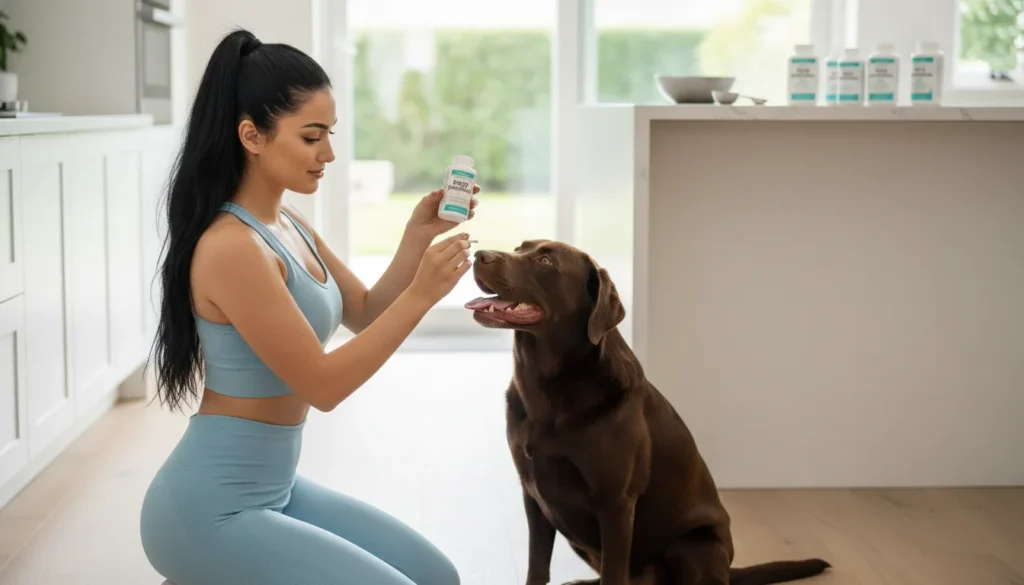
The Immune System You Can’t See—But Influence Every Day
When we think about immunity in pets, we usually picture vaccines, infections, or seasonal illness.
We don’t usually think about the gut.
Yet inside your dog or cat is an immune system that doesn’t live in lymph nodes or blood alone—it lives along the intestinal wall, responding constantly to what passes through.
Here’s the part many pet parents don’t realize:
Nearly 70% of your pet’s immune activity is linked to the gut.
That means every supplement meant to “support digestion” is also quietly influencing immune balance—for better or worse.
Understanding how gut supplements affect immunity helps you support resilience, not just symptom control.
The Gut–Immune Connection in Pets (Simplified)
Your pet’s gut is more than a digestive tube.
It’s a communication hub between:
- Food
- Microbes
- Immune cells
- Inflammatory signals
The intestinal lining acts like a border checkpoint:
- Let nutrients in
- Keep pathogens out
- Train immune cells what to tolerate vs attack
When this system is balanced, immunity is calm and responsive.
When it’s disrupted, the immune system becomes either overactive or underprepared.
Gut supplements influence this balance directly.
How Probiotics Influence Immune Function
Probiotics are live beneficial microorganisms.
Their immune role goes far beyond digestion.
In pets, probiotics help:
- Train immune cells to respond appropriately
- Reduce unnecessary inflammation
- Support antibody production in the gut
- Strengthen the intestinal barrier
This is why probiotics are often helpful after:
- Antibiotics
- Infections
- Periods of stress
- Acute diarrhea
However, probiotics don’t “boost” immunity indiscriminately.
They modulate it—helping the immune system react less when it should, and better when needed.
Why Probiotics Sometimes Worsen Immune-Related Symptoms
This surprises many owners.
In some pets, probiotics can:
- Increase itching
- Worsen loose stools
- Trigger gas or discomfort
Why?
Because the immune system is already overstimulated.
Adding bacteria into an inflamed gut can temporarily amplify immune signaling instead of calming it.
Veterinary guidance from American Veterinary Medical Association emphasizes that probiotic use should be condition-specific, not routine for every pet.
The Overlooked Role of Prebiotics in Immune Balance
If probiotics are the workers, prebiotics are the infrastructure.
Prebiotics are fermentable fibers that:
- Feed beneficial bacteria
- Increase production of short-chain fatty acids
- Support immune tolerance
- Strengthen gut lining integrity
These fatty acids—especially butyrate—play a key role in calming immune overreaction.
In many pets with:
- Allergies
- Recurrent infections
- Sensitive digestion
prebiotics influence immunity more gently and more sustainably than probiotics alone.
Fiber Supplements: Immune Support or Immune Stress?
Fiber is often treated as a stool tool—but it’s also an immune influencer.
When used correctly, fiber:
- Feeds beneficial microbes
- Improves gut barrier strength
- Reduces inflammatory signaling
When overused, fiber can:
- Reduce nutrient absorption
- Increase immune stress
- Aggravate inflammation, especially in cats
This balance matters because immune cells depend on nutrients absorbed through the gut.
Comparison Table: How Gut Supplements Affect Pet Immunity
| Supplement Type | Primary Gut Effect | Immune Impact | Common Mistake |
|---|---|---|---|
| Probiotics | Add beneficial bacteria | Modulate immune response | Overuse in inflamed guts |
| Prebiotics | Feed existing microbes | Improve immune tolerance | Using too much too fast |
| Fiber | Alter stool + bacteria | Support barrier integrity | Treating as harmless |
| Enzymes | Improve digestion | Indirect immune support | Using without deficiency |
Real-Life Example: When Gut Support Reduced Immune Symptoms
A dog with recurring ear infections is placed on:
- Short-term targeted probiotics
- Long-term prebiotic fiber
- A stable, simplified diet
Over months:
- Ear infections decrease
- Stool normalizes
- Skin irritation reduces
No immune drugs were added.
The immune system didn’t need stimulation—it needed better gut communication.
Why “Boosting Immunity” Is the Wrong Goal
This is one of the most important mindset shifts.
Pets rarely need their immune system boosted.
They need it regulated.
An overactive immune system shows up as:
- Allergies
- Chronic inflammation
- Sensitivities
An underperforming immune system shows up as:
- Frequent infections
- Poor recovery
- Low resilience
Gut supplements help by restoring balance—not pushing harder.
Why This Matters Today (Evergreen Insight)
Modern pets face:
- More antibiotics
- More processed diets
- Higher stress environments
- Longer lifespans
All of these strain the gut–immune connection.
According to research shared by Cornell University College of Veterinary Medicine, long-term immune health is closely tied to microbiome diversity and gut barrier function, not constant immune stimulation.
Hidden Tips Most Pet Owners Never Hear
- Improved stool often precedes improved immunity
- Immune flare-ups can start in the gut weeks earlier
- Cats respond more sensitively to gut changes than dogs
- Consistency matters more than supplement strength
- Less frequent illness is a delayed benefit—not instant
Common Mistakes to Avoid
- Using multiple gut supplements at once
- Expecting immediate immune changes
- Overusing probiotics in allergic pets
- Ignoring diet stability
- Treating gut supplements as cures
Gut–immune support is cumulative.
Actionable Steps: Supporting Immunity Through the Gut
- Stabilize diet before adding supplements
- Use probiotics short-term when disruption occurs
- Support long-term balance with prebiotics
- Monitor stool, skin, and energy—not just digestion
- Reassess supplements regularly
Small, steady changes protect immune health better than aggressive intervention.
FAQ: Gut Supplements and Pet Immunity
1. Can gut supplements really affect immunity?
Yes. The majority of immune signaling occurs in the gut.
2. Do probiotics strengthen immunity?
They help regulate immune responses—not simply “boost” them.
3. Are prebiotics safer for immune-sensitive pets?
Often yes, especially for long-term use.
4. Why do allergies relate to gut health?
Poor gut barrier function increases immune reactivity.
5. How long before immune benefits appear?
Often weeks to months, not days.
Key Takeaways
- The gut is central to immune regulation
- Supplements influence immunity indirectly but powerfully
- Balance matters more than stimulation
- Probiotics, prebiotics, and fiber play different roles
- Long-term gut support creates immune resilience
Conclusion: Immunity Isn’t Built Overnight—It’s Maintained Daily
Strong immunity in pets doesn’t come from chasing every supplement trend.
It comes from:
- A stable gut environment
- Thoughtful, minimal supplementation
- Respecting the immune system’s need for balance
When gut supplements are used with intention, they don’t just improve digestion—they quietly strengthen your pet’s ability to adapt, recover, and thrive.
That’s immunity done right.
Disclaimer: This article is for general educational purposes and does not replace personalized veterinary guidance. Always consult your veterinarian for immune or digestive concerns in pets.

Dr. Chaitanya Solanki is a licensed veterinarian with over 10 years of hands-on clinical experience in companion animal medicine. As the founder of Dr. C.M.’s Pet Clinic, he has treated thousands of dogs and cats, focusing on preventive care, behavior, nutrition, and early disease detection. His writing is evidence-based, clinically informed, and designed to help pet owners make confident, responsible care decisions.