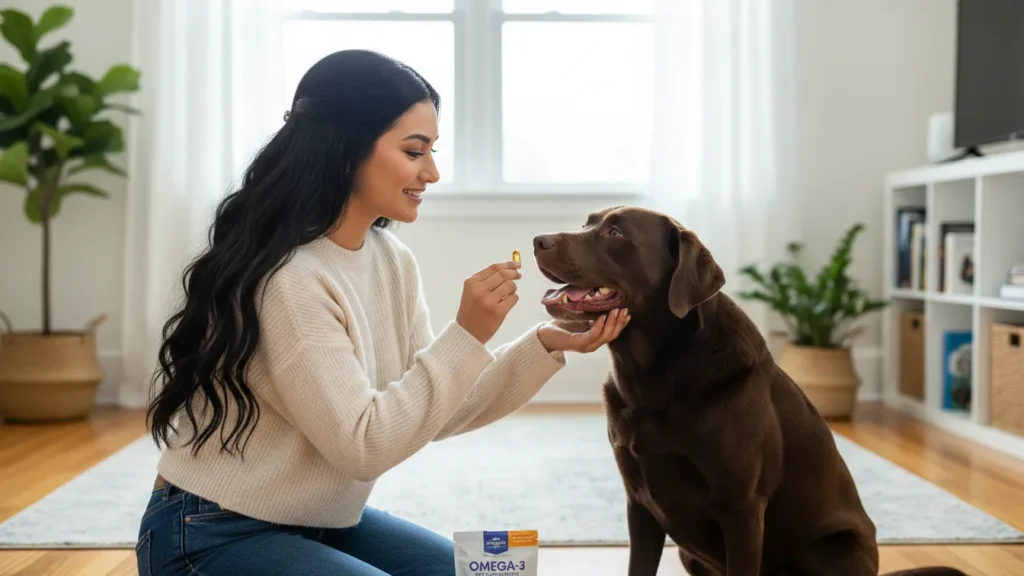
When “Healthy Oils” Make Skin Worse
Many pet owners do the right thing — and still get the wrong result.
A dog starts itching.
A cat’s coat looks dull.
Someone recommends omega-3.
So fish oil is added.
Weeks pass.
And the skin barely improves… or sometimes looks worse.
This is the confusing part.
Because omega-3 is supposed to help skin.
And it does — but only when one critical factor is addressed:
👉 The balance between omega-3 and omega-6.
Most skin problems linked to fatty acids are not caused by deficiency.
They’re caused by imbalance.
Why This Matters Today (Even If You Already Use Omega Oils)
Modern pet diets have changed dramatically.
Compared to the past, today’s diets often contain:
- Far more omega-6 fatty acids
- Processed fats from poultry, grains, and vegetable oils
- Very little natural omega-3
This shift quietly alters skin biology.
Adding omega-3 without correcting the imbalance is like:
Pouring water into a bucket with a hole.
The system doesn’t stabilize — it stays inflamed.
Omega-3 and Omega-6: Not Opposites, But Partners
Omega-3 and omega-6 are both essential fatty acids.
Pets need both.
The problem is not that omega-6 is “bad.”
The problem is too much omega-6 without enough omega-3 to balance it.
In simple terms:
- Omega-6 tends to promote inflammation
- Omega-3 helps resolve and regulate inflammation
Skin health depends on controlled inflammation, not zero inflammation.
The Hidden Reality of Most Pet Diets
Most commercial pet foods already provide:
- Plenty — often excessive — omega-6
- Minimal omega-3
This means many pets live in a state of:
- Constant low-grade skin inflammation
- Over-reactive immune responses
- Fragile skin barriers
When itching, redness, or flaking appears, it’s often the imbalance finally showing itself.
Why Adding Omega-3 Alone Sometimes Fails
Here’s the mistake many owners make:
They add a small dose of omega-3 to a diet that’s already very high in omega-6.
Biologically, this means:
- Omega-6 pathways remain dominant
- Inflammatory signaling continues
- Omega-3 never reaches a level where it can shift the balance
So owners conclude:
“Omega-3 didn’t work for my pet.”
In reality, it never got the chance to.
Skin Inflammation Is a Ratio Problem, Not a Switch
Fatty acids compete inside the body.
They:
- Share enzymes
- Influence the same cell membranes
- Compete to produce signaling molecules
If omega-6 vastly outnumbers omega-3:
- Inflammatory mediators dominate
- Skin becomes reactive and itchy
- Healing slows
Balance changes outcomes more than absolute amounts.
Comparison Table: Imbalanced vs Balanced Fatty Acids
| Aspect | Omega-6 Heavy Diet | Balanced Omega-3 : Omega-6 |
|---|---|---|
| Skin inflammation | High | Controlled |
| Itch threshold | Low | Higher |
| Skin barrier strength | Fragile | More resilient |
| Coat quality | Dull, dry | Softer, shinier |
| Response to supplements | Poor | More reliable |
Real-Life Example: Same Supplement, Different Results
Dog A:
High-omega-6 diet + low-dose fish oil.
Itching reduced slightly, then plateaued.
Dog B:
Diet adjusted + adequate omega-3 added.
Redness reduced by week 4.
Coat improved by week 7.
Same supplement.
Different balance.
Different biology.
Why Omega-6 Isn’t the Villain — Excess Is
Omega-6 fatty acids:
- Support skin structure
- Aid normal immune responses
- Are necessary for health
The issue is excess without counterbalance.
Think of omega-6 as the gas pedal, and omega-3 as the brake.
Skin problems occur when:
- The gas pedal is pressed constantly
- The brake is barely functioning
The Most Common Skin Supplement Mistakes
❌ Adding omega-3 without evaluating diet
❌ Using doses meant for “general wellness”
❌ Expecting rapid improvement
❌ Ignoring food-based omega-6 sources
❌ Switching supplements instead of correcting ratios
These mistakes keep inflammation alive even with “good” supplements.
Hidden Tip: Why Some Pets Get Worse at First
In some pets, increasing omega-3:
- Mobilizes inflammatory pathways
- Changes skin turnover
- Temporarily increases shedding or flaking
This doesn’t mean harm.
It often means the skin environment is shifting.
Stopping too early prevents stabilization.
How Balance Improves the Skin Barrier
Healthy skin depends on:
- Strong lipid layers
- Tight cell junctions
- Controlled immune signaling
Balanced fatty acids:
- Reduce excessive immune reactions
- Improve moisture retention
- Make skin less reactive to allergens
This is why balanced pets:
- Itch less
- Heal faster
- Relapse less often
Actionable Steps to Correct the Balance
- Review your pet’s primary diet fat sources
- Understand that omega-6 is usually already abundant
- Use omega-3 at a dose that meaningfully shifts balance
- Be consistent for at least 6–8 weeks
- Monitor itch, redness, and skin comfort — not just coat shine
Balance is a process, not a single dose.
Why This Matters Emotionally (And Long-Term)
Chronic skin irritation affects:
- Sleep
- Mood
- Behavior
- Bonding
Repeated flare-ups frustrate owners and exhaust pets.
Correcting fatty acid balance:
- Reduces flare frequency
- Makes skin more resilient
- Lowers dependence on constant interventions
This isn’t cosmetic care — it’s comfort care.
Key Takeaways
- Most pet skin problems involve fatty acid imbalance, not deficiency
- Omega-6 excess quietly fuels inflammation
- Omega-3 works only when it meaningfully shifts the ratio
- Balance matters more than brand or buzzwords
- Skin stability improves gradually, not overnight
Frequently Asked Questions
1. Is omega-6 bad for pets?
No. It’s essential — but excess without omega-3 is the problem.
2. Why didn’t omega-3 help my pet before?
The dose or balance was likely insufficient.
3. Can diet alone fix the imbalance?
Sometimes, but many modern diets remain omega-6 heavy.
4. How long does it take to rebalance skin?
Usually 4–8 weeks for visible improvement.
5. Should I stop omega-6 completely?
No. The goal is balance, not elimination.
Conclusion: Skin Health Isn’t About More — It’s About Balance
Most owners don’t make a bad choice.
They make an incomplete one.
Skin health doesn’t improve because omega-3 is added —
it improves because the inflammatory scale finally tips back toward balance.
Once that balance is restored, the skin becomes:
- Calmer
- Stronger
- Less reactive
And that’s when supplements finally start doing what they were meant to do.
Disclaimer: This article is for general educational purposes only and does not replace individualized veterinary or nutritional advice. Always consult your veterinarian for persistent or worsening skin conditions in pets.

Dr. Chaitanya Solanki is a licensed veterinarian with over 10 years of hands-on clinical experience in companion animal medicine. As the founder of Dr. C.M.’s Pet Clinic, he has treated thousands of dogs and cats, focusing on preventive care, behavior, nutrition, and early disease detection. His writing is evidence-based, clinically informed, and designed to help pet owners make confident, responsible care decisions.
Pingback: Biotin for Pets: When It Helps — and When It Doesn’t