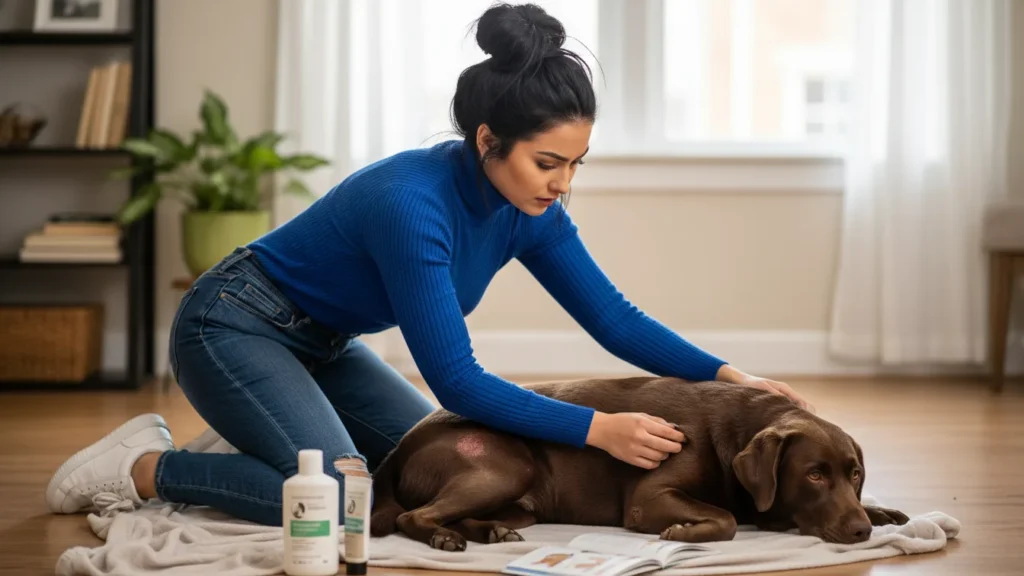
A Skin Problem That Never Really Ends
It usually starts small.
A patch of redness.
A little extra scratching.
Maybe a faint smell you assume is “just dog smell.”
You treat it.
It improves.
Then—weeks later—it’s back. Sometimes worse.
For many dog owners, pyoderma feels like a skin infection that never truly leaves, no matter how many shampoos, sprays, or antibiotics are used.
And that’s not your fault.
Because pyoderma almost never starts with bacteria alone.
The skin infection is usually the symptom, not the disease.
Understanding that single shift changes everything.
What Pyoderma in Dogs Actually Is (And What It Isn’t)
Pyoderma simply means bacterial infection of the skin.
But that definition hides an important truth:
Bacteria are usually secondary invaders, not the original problem.
Healthy dog skin already has bacteria living on it.
In pyoderma, those bacteria multiply out of control because the skin barrier has been compromised.
Common signs include:
- Red bumps or pimples
- Crusts or scabs
- Hair loss in patches
- Greasy or flaky skin
- Strong or sour odor
- Intense itching or licking
The infection shows where something went wrong — not why it happened.
Why Pyoderma Keeps Coming Back After “Successful” Treatment
Many dogs improve quickly on antibiotics or medicated shampoos.
That creates a false sense of resolution.
But once treatment stops, the infection returns because the underlying trigger was never addressed.
The most common reasons recurrence happens include:
- Allergies that continue to inflame the skin
- Hormonal imbalances that weaken immunity
- Moisture trapped in skin folds
- Incomplete treatment duration
- Repeated antibiotic use without diagnosis
- Poor skin barrier repair
Think of it like painting over damp walls.
The mold always returns.
The Hidden Triggers Most Owners Never Notice
Recurrent pyoderma usually has one or more silent drivers working beneath the surface.
1. Allergies (The #1 Cause)
Food allergies, environmental allergies, or flea allergy dermatitis all damage the skin barrier.
Even mild allergies can:
- Create micro-breaks in skin
- Increase oil production
- Lower resistance to bacteria
Scratching is not the cause — itching is the symptom.
2. Hormonal Imbalances
Conditions like thyroid imbalance or adrenal disorders reduce skin turnover and immune defense.
Signs often missed:
- Recurrent infections without intense itching
- Symmetrical hair loss
- Darkened skin patches
- Weight changes or lethargy
3. Moisture Traps
Areas that stay warm and damp are bacterial playgrounds:
- Skin folds
- Armpits
- Groin
- Under collars
- Between toes
Dogs who swim often or live in humid climates are at higher risk.
4. Incomplete Healing of the Skin Barrier
Even after bacteria are killed, the skin may remain fragile.
Without repair, reinfection is easy.
Why Antibiotics Alone Often Make Things Worse Long-Term
Antibiotics are sometimes necessary — but they are not a cure.
Repeated or short courses can:
- Reduce bacterial diversity
- Promote resistant strains
- Delay proper diagnosis
- Mask deeper problems
This is why some dogs seem to need antibiotics again and again.
They’re treating the flare, not the foundation.
Superficial vs Deep Pyoderma: Why It Matters
Not all pyoderma behaves the same.
| Feature | Superficial Pyoderma | Deep Pyoderma |
|---|---|---|
| Skin layers involved | Upper skin only | Deep skin + hair follicles |
| Common signs | Red bumps, scabs | Painful sores, draining tracts |
| Odor | Mild to moderate | Strong, foul |
| Healing time | Faster | Slow, prone to scarring |
| Recurrence risk | Moderate | High without investigation |
Deep pyoderma almost always signals an underlying systemic issue.
The Emotional Toll Owners Rarely Talk About
Recurrent skin infections don’t just affect dogs.
Owners experience:
- Guilt (“Am I doing something wrong?”)
- Frustration over costs
- Fear of chronic disease
- Helplessness watching constant discomfort
Dogs, meanwhile, live in a cycle of:
- Itch → relief → relapse
- Treatment → restriction → flare
Breaking that cycle matters — for both sides of the leash.
Mistakes That Quietly Keep Pyoderma Alive
Even well-intentioned care can delay recovery.
Common mistakes include:
- Stopping antibiotics once skin “looks better”
- Using random medicated shampoos without guidance
- Ignoring diet as a skin factor
- Treating smell instead of inflammation
- Over-bathing damaged skin
- Reusing old prescriptions
Small choices compound over time.
What Actually Helps Break the Recurrence Cycle
Long-term control focuses on three pillars, not one.
1. Identify and Manage the Trigger
This may involve:
- Allergy testing or elimination diets
- Hormone screening
- Flea control review
- Environmental adjustments
Without this step, relapse is almost guaranteed.
2. Repair the Skin Barrier
This often includes:
- Targeted medicated bathing (not excessive)
- Moisturizing therapies
- Omega-3 fatty acid support
- Gentle grooming routines
Healthy skin resists bacteria naturally.
3. Use Medication Strategically
Instead of reflex antibiotics:
- Culture when infections recur
- Adjust duration appropriately
- Combine topical and systemic care
- Monitor response closely
Precision beats repetition.
Why This Matters More Today Than Ever
Antibiotic resistance is rising — in pets and humans.
Every unnecessary or incomplete course increases future risk.
Managing pyoderma correctly:
- Protects your dog’s long-term health
- Preserves treatment options
- Reduces chronic discomfort
- Prevents escalating skin disease
This is not about over-treating.
It’s about treating smarter.
Key Takeaways
- Pyoderma is usually a secondary problem, not the root disease
- Recurrent infections signal allergies, hormones, or skin barrier damage
- Antibiotics alone rarely solve chronic pyoderma
- Deep or recurring cases need investigation, not repetition
- Long-term control comes from trigger management + skin repair
Frequently Asked Questions
Why does my dog’s pyoderma come back right after antibiotics?
Because the bacteria were removed temporarily, but the underlying skin weakness or trigger remained active.
Can diet really affect skin infections?
Yes. Food sensitivities can silently inflame skin, lowering resistance to bacteria even without digestive signs.
Is pyoderma contagious to humans or other pets?
No. The bacteria involved are usually normal skin residents that overgrow due to imbalance.
How long does pyoderma take to fully resolve?
Superficial cases may resolve in weeks. Chronic or deep cases often need months of guided management.
Should I stop bathing my dog if skin infections keep returning?
Not necessarily — but frequency, products, and technique matter more than most owners realize.
A Calm, Clear Way Forward
Recurring pyoderma isn’t a sign of failure.
It’s a sign that your dog’s skin is asking for deeper attention.
When you stop chasing symptoms and start addressing causes, the cycle finally slows — and often stops.
Relief becomes lasting, not temporary.
Disclaimer: This article is for general educational purposes only and does not replace personalized veterinary advice. Always consult a qualified professional for diagnosis and treatment decisions.

Dr. Chaitanya Solanki is a licensed veterinarian with over 10 years of hands-on clinical experience in companion animal medicine. As the founder of Dr. C.M.’s Pet Clinic, he has treated thousands of dogs and cats, focusing on preventive care, behavior, nutrition, and early disease detection. His writing is evidence-based, clinically informed, and designed to help pet owners make confident, responsible care decisions.
Pingback: Why Antibiotics Keep Failing in Recurrent Skin Infections — And What Actually Heals the Skin