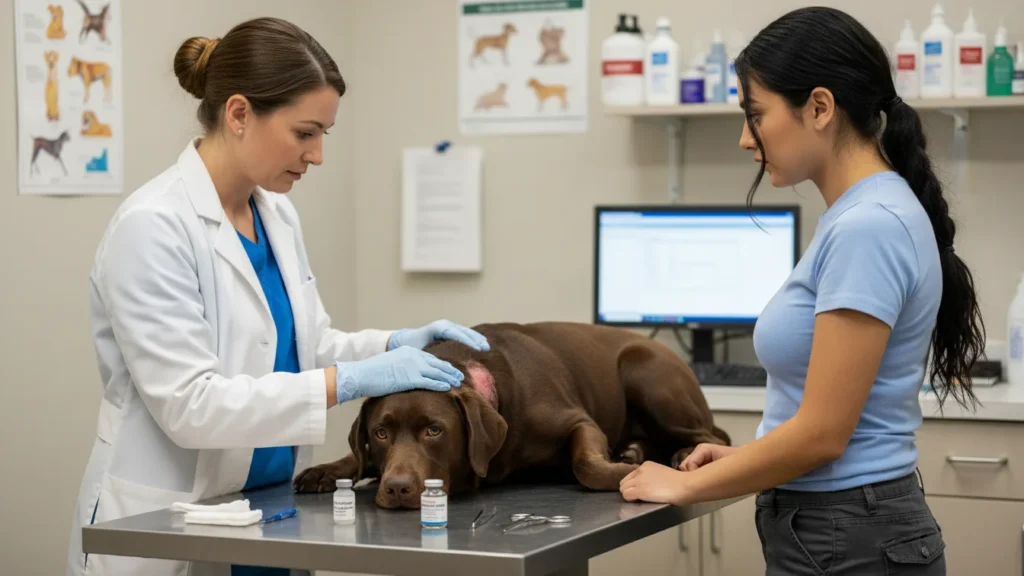
The Rash That Starts the Investigation
It often begins with a human, not a pet.
A small itchy ring on the arm.
A circular rash on a child’s neck.
A stubborn patch that doesn’t behave like a normal allergy.
Only later does someone ask the question that flips everything:
“Could this be from the pet?”
In many households, ringworm is discovered after a human develops symptoms—long before anyone suspects the dog or cat.
That delay isn’t carelessness.
It’s how ringworm behaves.
What Ringworm Actually Is (And Why the Name Misleads)
Despite the name, ringworm is not a worm.
It’s a fungal infection of the skin, hair, or nails, caused by dermatophyte fungi that feed on keratin.
These fungi:
- Live in the environment
- Survive on surfaces for months
- Spread through direct and indirect contact
In pets, ringworm doesn’t always look dramatic.
In humans, it often does.
That difference explains why owners miss it.
Why Pets Can Carry Ringworm Without Obvious Signs
One of ringworm’s most confusing traits is how quietly it lives on animals.
Many pets:
- Have minimal itching
- Show no discomfort
- Continue normal behavior
- Carry only subtle skin changes
Some pets are asymptomatic carriers, especially cats.
Meanwhile, humans—who lack the same fur barrier—develop visible lesions quickly.
The result?
Humans become the early warning system.
The Early Signs in Pets That Owners Commonly Overlook
Ringworm in pets rarely announces itself loudly.
Early clues include:
- Small, circular hair thinning
- Broken or brittle hairs
- Mild scaling that looks like dandruff
- Patchy coat texture changes
- Lesions hidden under fur
- No itching at all
These signs are easy to dismiss as shedding, dryness, or grooming issues.
By contrast, human skin reacts fast—and visibly.
Why Ringworm Looks Different on Humans vs Pets
The contrast is striking.
In Humans
- Red, circular rash
- Raised edges
- Central clearing
- Itching or burning
- Rapid expansion
In Pets
- Hair loss without redness
- Minimal inflammation
- Little to no itching
- Slow, patchy spread
This mismatch delays suspicion in pet owners.
How Ringworm Spreads Before Anyone Notices
Ringworm spreads through fungal spores, not active infection alone.
Spores can live on:
- Bedding
- Furniture
- Clothing
- Carpets
- Grooming tools
- Hands and arms
A pet can look normal while shedding spores daily.
Humans pick it up first because:
- Skin is exposed
- Clothing traps spores
- Micro-cuts allow entry
By the time a rash appears, exposure has already been ongoing.
Real-Life Example: The Child With the “School Rash”
A child develops a circular rash.
Parents assume:
- School exposure
- Sports mats
- Playground contact
Treatment starts.
Weeks later, another family member develops a similar lesion.
Only then does someone notice:
- The cat has a small bald patch behind the ear
- No scratching
- No discomfort
The pet was the source—but showed the least obvious signs.
Why Ringworm Is Commonly Misdiagnosed in Pets
Ringworm masquerades as many benign problems.
It’s often mistaken for:
- Seasonal shedding
- Allergies
- Flea irritation
- Dry skin
- Minor wounds
- Grooming clipper marks
Without diagnostic testing, ringworm can quietly persist for months.
Ringworm vs Other Pet Skin Conditions
Understanding the differences helps explain the delay.
| Feature | Ringworm | Allergies | Hot Spots |
|---|---|---|---|
| Itching | Mild or absent | Moderate to severe | Intense |
| Hair loss | Circular, patchy | Diffuse | Localized |
| Moisture | Dry | Dry or inflamed | Wet |
| Contagious | Yes (to humans & pets) | No | No |
| Onset | Slow | Gradual | Sudden |
Ringworm’s dry, quiet nature makes it easy to miss.
The Human Factor: Why People Notice First
Humans notice ringworm early because:
- Skin reactions are more visible
- Lesions itch more
- Clothing rubs the area
- The immune response is different
They don’t point to spots.
They don’t check mirrors.
Humans do.
Common Mistakes That Prolong Ringworm in Homes
Once ringworm enters a household, mistakes can extend it.
Common errors include:
- Treating only the human, not the pet
- Treating the pet but ignoring the environment
- Stopping treatment when lesions fade
- Skipping diagnostic confirmation
- Sharing bedding or grooming tools
- Assuming one pet is the only carrier
Ringworm requires a household approach, not a single target.
How Vets Confirm Ringworm in Pets
Ringworm diagnosis isn’t based on looks alone.
Veterinarians may use:
- Wood’s lamp examination
- Fungal cultures
- Microscopic hair analysis
- PCR testing in some cases
Confirmation matters because treatment length and containment depend on accuracy.
Why Early Detection Makes a Huge Difference
When ringworm is caught early:
- Lesions stay small
- Treatment duration shortens
- Environmental contamination stays low
- Spread to humans slows dramatically
- Recurrence risk drops
Late detection leads to:
- Multi-room contamination
- Repeated human infections
- Long treatment cycles
- Frustration and stigma
Actionable Steps If You Suspect Ringworm
If ringworm crosses your mind, don’t panic—but don’t delay.
Smart steps include:
- Check pets carefully under good light
- Look for circular hair loss or scaling
- Limit close skin contact temporarily
- Wash hands after handling pets
- Avoid sharing bedding or towels
- Schedule veterinary testing promptly
Early clarity saves weeks of confusion.
Why This Matters Today
Ringworm isn’t dangerous—but it’s disruptive.
It affects:
- Children
- Immunocompromised individuals
- Multi-pet households
- Shelters and breeders
- Busy families with shared spaces
Awareness—not fear—is what stops its spread.
Key Takeaways
- Ringworm often shows up in humans before pets
- Pets may carry it with minimal or no signs
- Hair loss in pets is often subtle, not itchy
- Environmental spores drive household spread
- Early diagnosis shortens treatment for everyone
Frequently Asked Questions
Can pets have ringworm without symptoms?
Yes. Many pets, especially cats, can carry ringworm with minimal or no visible signs.
Is ringworm dangerous to humans?
It’s usually mild but uncomfortable. Prompt treatment prevents spread and recurrence.
Should I isolate my pet if ringworm is suspected?
Temporary separation can help until diagnosis and treatment begin.
Does ringworm mean poor hygiene?
No. Ringworm is related to exposure and immunity, not cleanliness.
How long does ringworm treatment usually take?
Several weeks, even after skin looks normal—completion matters.
When the Pet Looks Fine, Look Again
Ringworm doesn’t shout.
It waits quietly—until someone else notices first.
When owners learn to spot its subtle signs, ringworm loses its advantage.
Awareness turns a frustrating cycle into a manageable one.
Disclaimer: This article is for general educational purposes only and should not replace personalized veterinary or medical advice.

Dr. Chaitanya Solanki is a licensed veterinarian with over 10 years of hands-on clinical experience in companion animal medicine. As the founder of Dr. C.M.’s Pet Clinic, he has treated thousands of dogs and cats, focusing on preventive care, behavior, nutrition, and early disease detection. His writing is evidence-based, clinically informed, and designed to help pet owners make confident, responsible care decisions.
Pingback: Skin Problems in Dogs and Cats: Why the Right Supplement Starts With the Right Cause