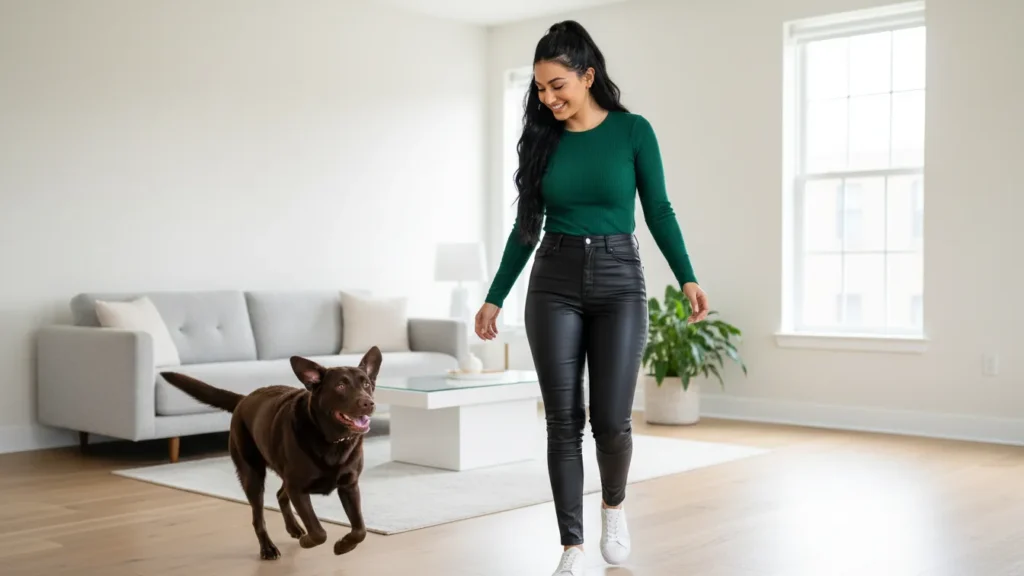
A Familiar Scene Most Dog Owners Recognize
Your dog walks from the living room to the hallway.
Stops.
Turns around.
Does it again.
No toys involved.
No door waiting.
No obvious trigger.
You might say:
“He’s just restless today.”
In our clinic, this behavior is mentioned almost casually—often as an afterthought.
But repetitive pacing is one of the most commonly misunderstood behaviors in dogs.
And no—it’s usually not about excess energy.
What Pacing Actually Is (From a Veterinary Perspective)
Pacing is purposeful movement without resolution.
That’s the key difference.
A dog playing, exploring, or exercising eventually settles.
A pacing dog does not.
Instead, we see:
- Repeated routes
- Fixed patterns (room-to-room, hallway loops)
- Difficulty lying down comfortably
- A sense of being unable to “switch off”
This tells us the dog is responding to internal tension, not external boredom.
Why “Restlessness” Is a Misleading Label
Calling pacing “restlessness” oversimplifies a complex signal.
In reality, pacing often reflects:
- Physical discomfort
- Internal anxiety
- Cognitive confusion
- Hormonal or neurological changes
- Environmental stress the dog can’t escape
Dogs pace when their nervous system is activated but unresolved.
Think of it as the body searching for relief.
The Most Common Causes of Repetitive Pacing
1. Internal Discomfort or Pain
Many dogs pace because lying down increases discomfort.
This is common with:
- Gastrointestinal discomfort
- Abdominal pressure
- Early organ inflammation
- Spinal or disc-related pain
Standing and moving redistributes pressure—temporarily easing discomfort.
This is why pacing often increases at night.
2. Anxiety That Has No Outlet
Dogs don’t worry the way humans do—but they do experience unresolved stress.
Common triggers include:
- Subtle household changes
- Owner stress or routine shifts
- Sounds humans tune out
- Anticipation without resolution (waiting, uncertainty)
Pacing becomes a coping mechanism.
3. Cognitive Changes (Especially in Older Dogs)
In senior dogs, pacing can be linked to canine cognitive dysfunction.
Signs often include:
- Nighttime pacing
- Appearing “lost” indoors
- Repeating paths without purpose
- Difficulty settling even when tired
This isn’t stubbornness.
It’s confusion.
4. Hormonal or Metabolic Imbalances
Conditions affecting internal balance can create pacing behavior, including:
- Thyroid imbalances
- Elevated cortisol
- Blood sugar instability
These changes affect the nervous system directly—leading to motor restlessness.
5. Learned Stress Loops
Some dogs pace because they’ve learned that movement reduces internal tension.
The relief is brief—but enough to reinforce the behavior.
Over time, pacing becomes automatic.
How Vets Tell the Difference Between Normal Movement and a Problem
| Behavior | Likely Meaning | Concern Level |
|---|---|---|
| Brief pacing before meals | Anticipation | Low |
| Pacing that stops with play | Boredom | Low |
| Repetitive pacing without engagement | Internal stress | Moderate |
| Pacing + trouble lying down | Discomfort or pain | High |
| Nighttime pacing in senior dogs | Cognitive change | High |
Pattern and persistence matter more than speed.
A Real Clinic Example
A 7-year-old mixed breed was brought in for “anxiety.”
The owner said:
“He just walks around the house nonstop at night.”
No destruction.
No vocalizing.
Still eating normally.
Physical exam revealed mild abdominal sensitivity.
Bloodwork showed early pancreatitis.
Once treated, the pacing stopped.
The anxiety wasn’t behavioral—it was physical.
Why Dogs Pace More Indoors Than Outside
Outdoors offers:
- Sensory engagement
- Distraction
- Clear purpose
Indoors is predictable and quiet.
That’s when internal sensations become louder.
This is why pacing often appears:
- In the evening
- At night
- During quiet household moments
Stillness gives discomfort room to surface.
Common Mistakes Owners Make
❌ Trying to “tire the dog out”
Exercise doesn’t resolve internal discomfort or anxiety-driven pacing.
❌ Ignoring it because appetite is normal
Many dogs eat well despite pain or stress.
❌ Assuming it’s behavioral without ruling out health
Medical causes are often missed when pacing is labeled “anxiety.”
❌ Waiting for obvious symptoms
Pacing often comes before vomiting, limping, or lethargy.
Hidden Tip: Watch the Transitions
Pay attention to when pacing starts:
- After lying down?
- When lights go off?
- When the house quiets?
These transitions reveal whether the trigger is physical, cognitive, or emotional.
What You Can Do Immediately
- Observe the pattern
Note time of day, duration, and routes. - Avoid punishment or interruption
This increases stress and worsens pacing. - Offer gentle structure
Calm routines reduce nervous system activation. - Schedule a veterinary check if pacing is new or persistent
Especially if your dog is middle-aged or older. - Mention pacing specifically
This helps guide diagnostic thinking.
Why This Matters Today
Dogs are living longer—and living indoors more than ever.
That means we see more subtle, behavior-based signals of discomfort and disease.
Pacing is not misbehavior.
It’s communication.
And the earlier it’s understood, the easier it is to help.
Frequently Asked Questions
1. Can pacing really indicate pain even without limping?
Yes. Internal pain often shows up as movement-based coping.
2. Is pacing always serious?
Not always—but persistent, pattern-based pacing should never be ignored.
3. Why does pacing happen more at night?
Quiet environments amplify internal discomfort and confusion.
4. Should I consult a vet even if tests were normal before?
Yes. Conditions evolve, and early stages may not show on initial tests.
5. Can anxiety alone cause pacing?
Yes—but anxiety itself often has underlying triggers that deserve attention.
Key Takeaways
- Repetitive pacing is rarely simple restlessness
- It often signals internal discomfort, anxiety, or cognitive change
- Patterns matter more than intensity
- Early attention can prevent worsening conditions
- Understanding pacing leads to calmer, healthier dogs
A Calm, Simple Conclusion
Dogs don’t pace to annoy us.
They pace because something inside them hasn’t settled.
When you see your dog walking the same path again and again, it’s not a failure of training or exercise.
It’s a quiet request for understanding.
And noticing it—without judgment—is the first step toward helping them feel at ease again.
Disclaimer: This article is for educational purposes only and does not replace professional veterinary evaluation or diagnosis.

Dr. Chaitanya Solanki is a licensed veterinarian with over 10 years of hands-on clinical experience in companion animal medicine. As the founder of Dr. C.M.’s Pet Clinic, he has treated thousands of dogs and cats, focusing on preventive care, behavior, nutrition, and early disease detection. His writing is evidence-based, clinically informed, and designed to help pet owners make confident, responsible care decisions.
Pingback: Why Dogs Hide Illness Until It’s Advanced — The Survival Instinct Most Owners Don’t Realize
Pingback: Your Old Dog Isn’t Just Slowing Down — These Signs Often Mean Pain
Pingback: Why Dogs Bark at Nothing — What They’re Actually Reacting To
Pingback: The Quiet Way Dogs Show Pain — Why Most Owners Miss the Earliest Signs
Pingback: The Subtle Body Shift Vets Recognize as Early Pain — Why Most Owners Miss It
Pingback: Your Dog Looks Fine — But These Quiet Changes Often Mean Something Isn’t
Pingback: Why Older Pets Suddenly Change Behavior — The Quiet Signals Many Owners Miss Until It’s Serious
Pingback: Why Dogs Get Restless Before Bedtime — The Hidden Signals Most Owners Misread