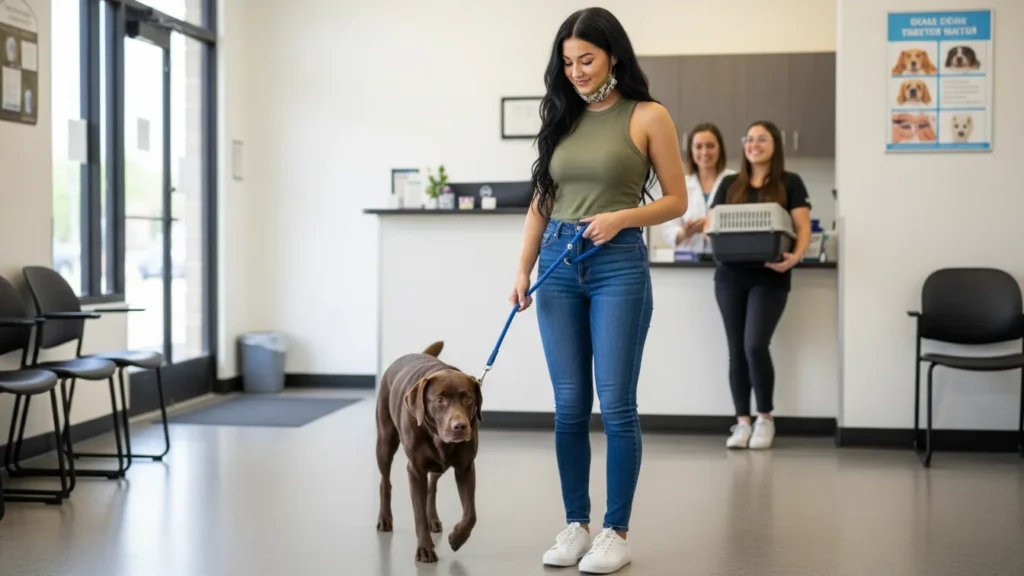
The Emergency No One Plans For
Emergency vet visits almost never start with panic.
They usually start months—or years—earlier with a simple thought:
“My pet seems fine. We’ll go next year.”
Then one day, something changes fast.
A sudden collapse.
Severe vomiting.
Breathing trouble.
Unexplained pain.
And the words every vet hears too often:
“They were fine just yesterday.”
In reality, most emergencies aren’t sudden at all.
They’re the final chapter of a problem that started quietly.
What Annual Exams Are Really Designed to Do
Annual exams aren’t about finding something “wrong.”
They’re designed to:
- Detect early shifts before damage occurs
- Track changes over time
- Catch silent conditions while they’re manageable
An annual exam is not a one-day snapshot.
It’s part of a long-term health timeline.
When that timeline breaks, gaps form—and that’s where emergencies grow.
Why Small Problems Become Big Emergencies
Health problems rarely stay the same.
Without monitoring, they:
- Progress quietly
- Stress organs slowly
- Reach a tipping point
Annual exams interrupt this progression early.
Skipping them allows:
- Mild issues to worsen
- Compensating organs to fail
- Treatment windows to close
Emergencies often happen not because care was absent—but because it was delayed.
What Vets Commonly Catch During Annual Exams
Many serious emergencies start as findings that look “minor” at first.
Annual exams often detect:
- Early kidney or liver stress
- Heart murmurs before heart failure
- Dental disease before infection spreads
- Weight trends that predict metabolic disease
- Subtle pain from joints or spine
None of these usually cause obvious symptoms early on.
That’s exactly why exams matter.
Why Pets Don’t Show You Something Is Wrong
Pets are masters of adaptation.
They don’t complain.
They don’t slow down right away.
They hide discomfort instinctively.
So instead of clear warning signs, early disease looks like:
- Sleeping a little more
- Slowing down just slightly
- Being “less playful than before”
These changes are easy to dismiss—until they’re no longer subtle.
Annual exams are the bridge between what pets hide and what medicine can see.
A Clear Comparison: Annual Exams vs Emergency Visits
| Factor | Annual Exams | Emergency Visits |
|---|---|---|
| Timing | Early, planned | Late, sudden |
| Stress level | Low | Very high |
| Cost | Predictable, lower | Often high |
| Treatment options | Broad | Limited |
| Outcome | Usually better | Often uncertain |
Most emergency vets will tell you the same thing:
Many emergencies could have been managed—or avoided entirely—with earlier exams.
Real-Life Example: The Emergency That Wasn’t Sudden
A middle-aged dog skipped annual exams for three years.
At home:
- Eating well
- Active
- No obvious symptoms
One night: sudden breathing distress.
Diagnosis: advanced heart disease.
Earlier exams would have detected:
- A mild murmur
- Early heart enlargement
Instead of medication and monitoring, the dog needed emergency stabilization.
The disease didn’t appear suddenly—the crisis did.
Why Skipping “Just One Year” Adds Risk
One skipped year doesn’t seem like much.
But health doesn’t pause.
In one year:
- Organs age
- Diseases progress
- Compensatory mechanisms weaken
Annual exams work because they’re regular.
Skipping breaks the pattern—and removes context that vets rely on to notice change.
Why This Matters More Today Than Ever
Pets today live longer than ever before.
Longer life means:
- More chronic disease risk
- More silent progression
- More reliance on early detection
Modern pet care isn’t about reacting anymore.
It’s about staying ahead of problems that don’t announce themselves.
Annual exams are the simplest way to do that.
Common Reasons Owners Skip Annual Exams (and the Reality)
“My pet seems healthy.”
→ That’s when exams are most useful.
“We’ll go if something seems wrong.”
→ Symptoms usually appear late.
“It’s just a routine visit.”
→ Routine is what prevents emergencies.
“Emergency care will handle it if needed.”
→ Emergency care treats crises—not progression.
None of these reasons are careless.
They’re just based on how humans expect illness to behave.
Biology doesn’t work that way.
Hidden Tip: Annual Exams Create a Health Baseline
One of the biggest benefits of annual exams is something owners rarely notice:
Vets compare:
- This year vs last year
- Weight changes
- Lab value shifts
- Subtle physical exam differences
Without annual exams, there’s nothing to compare against—making emergencies harder to predict.
What Annual Exams Usually Include
A typical annual exam may involve:
- Full physical examination
- Weight and body condition scoring
- Dental and gum evaluation
- Heart and lung assessment
- Discussion of behavior, appetite, and energy
- Screening tests when appropriate
These are non-invasive, low-stress, and extremely informative.
Actionable Steps to Avoid Preventable Emergencies
You don’t need to do everything perfectly.
Start with:
- Scheduling annual exams consistently
- Keeping copies of past records
- Mentioning even small changes to your vet
- Following up on mild findings
- Viewing exams as protection, not obligation
Consistency matters more than perfection.
Why Annual Exams Aren’t About Finding Bad News
This is important.
Annual exams are not:
- A search for problems
- A reason to worry
- A sign something is wrong
They are about keeping small things small.
Most exams end with reassurance—and reassurance is powerful.
Key Takeaways
- Most pet emergencies develop over time, not suddenly
- Skipping annual exams allows silent problems to progress
- Early detection prevents crisis-level illness
- Annual exams reduce stress, cost, and uncertainty
- Prevention works best when nothing feels urgent
Frequently Asked Questions
1. Are annual exams really necessary for young pets?
Yes. Early exams establish baselines that help detect changes later.
2. Can annual exams actually prevent emergencies?
In many cases, yes—by detecting issues before they become critical.
3. What if my pet hates vet visits?
One calm, planned visit is far less stressful than emergency care.
4. Are annual exams expensive?
They’re usually much less costly than emergency treatment.
5. How often should annual exams be done?
Once a year for most pets, or more often if recommended by your vet.
A Calm, Honest Conclusion
Emergencies feel sudden—but they rarely come out of nowhere.
They grow quietly in the spaces where routine care was skipped.
Annual exams don’t prevent every problem—but they dramatically reduce the chances that small issues turn into big crises.
And when it comes to your pet’s health, timing is everything.
Disclaimer: This article is for general educational purposes only and does not replace professional veterinary advice or diagnosis.

Dr. Chaitanya Solanki is a licensed veterinarian with over 10 years of hands-on clinical experience in companion animal medicine. As the founder of Dr. C.M.’s Pet Clinic, he has treated thousands of dogs and cats, focusing on preventive care, behavior, nutrition, and early disease detection. His writing is evidence-based, clinically informed, and designed to help pet owners make confident, responsible care decisions.
Pingback: Why Preventive Care Is About Timing, Not Treatment — The Quiet Health Advantage Most Pet Owners Discover Too Late