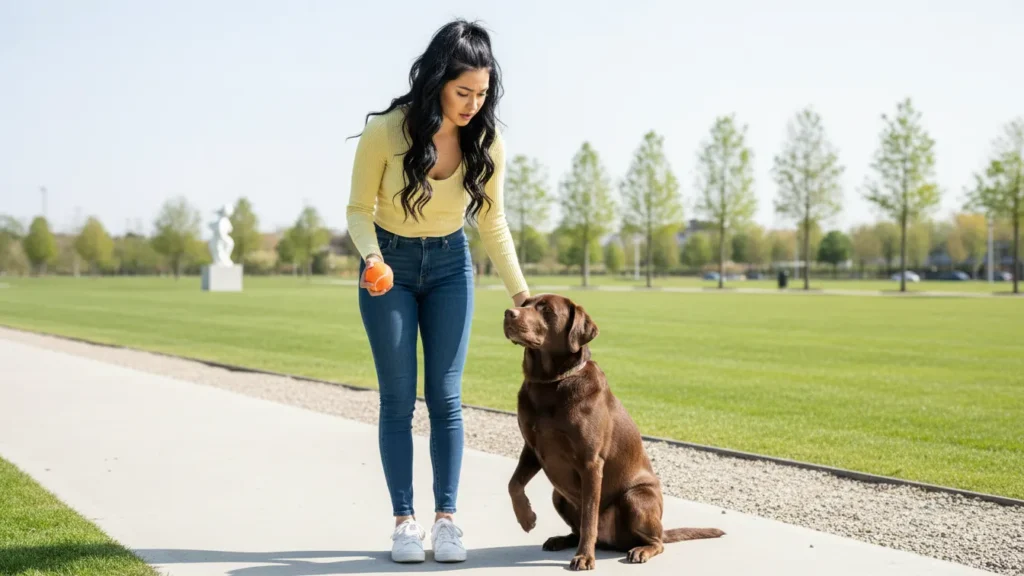
When a Jump Suddenly Becomes a Pause
At first, it feels minor.
Your dog doesn’t jump into the car right away.
Hesitates before climbing onto the sofa.
Waits… then chooses a longer route.
No limping.
No crying.
No obvious injury.
So it’s easy to assume they’re just being careful—or getting older.
But in veterinary behavior and orthopedics, avoiding jumping is one of the earliest, quietest signs that something isn’t right.
Why Jumping Matters More Than We Think
Jumping isn’t just a fun behavior.
It’s a high-load movement that requires:
- Strong hindlimb joints
- Stable hips and knees
- A flexible spine
- Good core muscle engagement
- Confidence in balance and landing
When any of these systems feel compromised, the dog’s brain makes a simple decision:
“Let’s not do that anymore.”
And it does so long before pain becomes obvious.
Dogs Are Masters of Compensation
Dogs don’t complain.
They adapt.
Evolution taught them that showing weakness is risky, so instead of signaling pain loudly, they:
- Change movement patterns
- Avoid stressful actions
- Redistribute weight
- Choose safer alternatives
Jumping is often the first behavior to go because it’s optional—and physically demanding.
The Subtle Signs Owners Commonly Miss
Before a dog completely stops jumping, you might notice:
- Longer pauses before jumping
- Multiple “false starts”
- Looking at the surface, then looking away
- Choosing stairs or ramps if available
- Waiting for help instead of leaping
These micro-changes are incredibly meaningful.
They’re not stubbornness.
They’re self-preservation.
Why Pain Isn’t Obvious Yet
Early joint and spinal issues don’t always hurt constantly.
In the beginning, discomfort appears:
- Only under load
- Only during certain movements
- Only at specific joint angles
Jumping combines force, speed, and compression, making it uncomfortable earlier than walking or standing.
That’s why dogs may:
- Walk normally
- Play gently
- Eat well
Yet still avoid jumping.
Common Physical Reasons Dogs Stop Jumping First
1. Early Joint Degeneration
Even mild cartilage wear can make impact uncomfortable.
Commonly affected joints:
- Hips
- Knees (stifles)
- Elbows
Pain may be absent at rest but triggered during explosive movement.
2. Muscle Weakness or Imbalance
Muscles stabilize joints during jumping.
When muscles weaken—even slightly—dogs lose confidence in:
- Push-off strength
- Landing control
The result isn’t limping, but hesitation.
3. Spinal Discomfort
Jumping compresses the spine.
Early spinal stiffness or disc stress can cause dogs to:
- Avoid vertical motion
- Keep movements low and controlled
This is especially common in medium to long-backed breeds.
4. Neurological Sensitivity
Subtle nerve discomfort can affect:
- Coordination
- Confidence
- Limb awareness
Dogs may still walk fine but avoid movements requiring precise timing—like jumping.
5. Previous Minor Injuries
Dogs remember discomfort.
Even after healing, the brain may associate jumping with:
- Instability
- Pain
- Risk
So the behavior changes quietly.
Jumping Avoidance vs Normal Aging: The Difference
| Behavior Change | Likely Meaning |
|---|---|
| Gradual slowing with no hesitation | Normal aging |
| Sudden hesitation before jumping | Early discomfort |
| Avoiding only high jumps | Load sensitivity |
| Needing help but walking fine | Joint or spine issue |
| Complete refusal after confidence loss | Pain or instability |
The pattern matters more than the age.
Real-Life Example: “He Just Started Waiting”
A 6-year-old mixed-breed dog:
- Stopped jumping into the car
- Walked normally on leash
- Still played gently
The owner waited—because there was no limping.
A checkup revealed early hip joint stress.
Because it was caught early:
- Activity was modified
- Supportive exercises were introduced
- Progression slowed significantly
The dog never developed severe pain.
Why Dogs Avoid Jumping Before They Avoid Walking
Walking is low-impact and rhythmic.
Jumping is:
- Explosive
- Asymmetrical
- High-force
The body tolerates walking far longer than jumping.
So when jumping disappears first, it’s often the earliest warning light.
Mistakes Well-Meaning Owners Make
❌ Assuming Laziness
Dogs don’t suddenly become lazy about things they love.
❌ Forcing the Jump
Lifting or encouraging a jump can worsen strain.
❌ Waiting for Limping
By the time limping appears, the issue is often advanced.
❌ Correcting or Scolding
Avoidance is communication, not disobedience.
Hidden Tip Most Owners Don’t Know
Dogs often avoid jumping only in familiar places first.
Why?
Because they feel safe enough to adapt quietly at home.
At the park or vet clinic, adrenaline may mask the issue temporarily.
That’s why home behavior matters most.
What’s Happening Inside the Body
Early musculoskeletal changes often involve:
- Reduced joint lubrication
- Micro-inflammation
- Muscle fatigue
- Altered load distribution
None of these require severe damage to change behavior.
The nervous system detects risk early—and acts.
Actionable Steps If Your Dog Avoids Jumping
- Observe when and where avoidance happens
- Note symmetry—does one side lead more?
- Avoid encouraging jumps
- Provide ramps or steps when possible
- Schedule a vet evaluation if behavior persists
Early intervention protects long-term mobility.
Why This Matters Today
Dogs are living longer—and more actively—than ever.
That means:
- More joint wear over time
- More subtle early warning signs
- Greater opportunity for prevention
Understanding jumping avoidance helps owners:
- Act earlier
- Reduce chronic pain risk
- Preserve quality of life
Key Takeaways
- Dogs avoid jumping long before pain becomes obvious
- Hesitation is often the first sign, not refusal
- Jumping stresses joints, spine, and muscles early
- Waiting for limping delays care
- Early awareness can slow or prevent long-term damage
Frequently Asked Questions (FAQs)
1. Is it normal for older dogs to stop jumping?
Some slowing is normal, but sudden or selective avoidance should be evaluated.
2. Can puppies avoid jumping due to pain?
Yes. Growth-related joint or muscle issues can cause hesitation.
3. Does avoiding jumping always mean arthritis?
Not always. Muscle strain, spinal issues, or neurological sensitivity can also be involved.
4. Should I lift my dog instead?
Occasional assistance is fine, but repeated lifting without evaluation can mask problems.
5. How long should I observe before seeing a vet?
If avoidance lasts more than a few days or worsens, early assessment is best.
A Calm, Honest Conclusion
Your dog isn’t being dramatic.
They’re being careful.
When a jump turns into a pause, it’s often your dog saying:
“Something doesn’t feel right yet—but it might soon.”
Listening at that stage makes all the difference between early support and late-stage pain.
Disclaimer: This article is for general awareness and education only and does not replace personalized veterinary advice.

Dr. Chaitanya Solanki is a licensed veterinarian with over 10 years of hands-on clinical experience in companion animal medicine. As the founder of Dr. C.M.’s Pet Clinic, he has treated thousands of dogs and cats, focusing on preventive care, behavior, nutrition, and early disease detection. His writing is evidence-based, clinically informed, and designed to help pet owners make confident, responsible care decisions.
Pingback: The Hidden Early Clues of Joint Trouble in Dogs and Cats (Before Limping Starts)