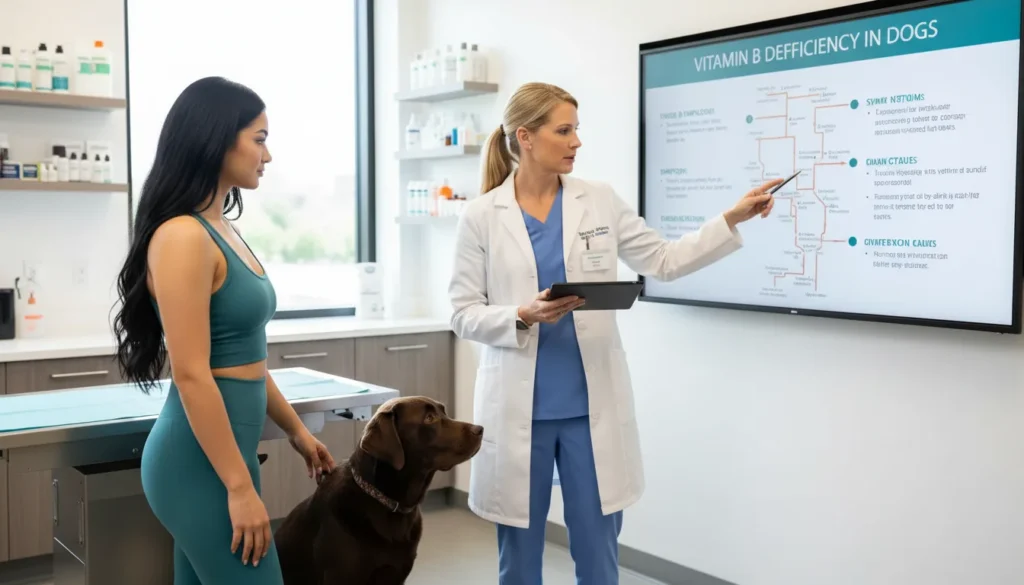
Vitamin B-Complex for Pets: When Deficiency Shows Up as Weakness
Your dog isn’t running to the door anymore.
Your cat is sleeping longer, eating less, and moving slower.
It’s easy to assume:
- “They’re just getting older.”
- “Maybe they’re stressed.”
- “It’s probably nothing.”
But here’s something many pet owners don’t realize:
A simple Vitamin B deficiency can sometimes look exactly like weakness, fatigue, or low spirit.
Not dramatic.
Not obvious.
Just… quiet decline.
And because it’s subtle, it often goes unnoticed until symptoms become impossible to ignore.
Vitamin B-Complex is one of the most underestimated nutritional foundations in pet health—and when it’s low, the body shows it fast.
Let’s break down what it really does, why pets become deficient, and how to support them safely.
Why Vitamin B-Complex Matters So Much for Pets
B vitamins aren’t just “extra nutrients.”
They are essential metabolic tools.
Every single day, your pet’s body relies on Vitamin B-Complex to:
- Convert food into energy
- Support nerve signaling
- Maintain brain function
- Build red blood cells
- Protect digestion and appetite
- Help muscles function properly
So when B vitamins drop?
The body doesn’t crash all at once.
Instead, it slows down.
Weakness is often the first whisper.
What Is Vitamin B-Complex?
Vitamin B-Complex isn’t one vitamin.
It’s a group of multiple B nutrients working together.
Key B Vitamins for Dogs and Cats Include:
- B1 (Thiamine) – energy and nerve function
- B2 (Riboflavin) – metabolism and skin health
- B3 (Niacin) – digestion and circulation
- B5 (Pantothenic acid) – hormone and stress balance
- B6 (Pyridoxine) – immune and brain support
- B7 (Biotin) – coat and skin strength
- B9 (Folate) – cell growth and blood formation
- B12 (Cobalamin) – appetite, nerves, red blood cells
Each one plays a different role.
But together, they act like the body’s internal energy wiring.
When Deficiency Shows Up as Weakness
Vitamin B deficiency rarely appears as a single clear symptom.
Instead, it shows up as a collection of “something feels off.”
Common weakness-related signs include:
- Low energy
- Slower walking or jumping
- Muscle tremors
- Reduced stamina
- Fatigue after minimal activity
- Lack of playfulness
- Poor appetite
- Weight loss over time
For cats especially, deficiency can look like quiet withdrawal.
For dogs, it may resemble aging.
That’s what makes it so easy to miss.
Why Would a Pet Become Vitamin B Deficient?
Most healthy pets on balanced diets get enough.
So when deficiency appears, it’s usually connected to something deeper.
Common causes include:
1. Digestive Malabsorption
The gut is where B vitamins are absorbed.
If digestion is inflamed or impaired, vitamins simply don’t get taken in.
This is common in pets with:
- IBD (Inflammatory Bowel Disease)
- Chronic diarrhea
- Food sensitivities
- Pancreatic disorders
Even with a good diet, absorption fails.
2. Poor Appetite or Restricted Eating
Pets that eat less over time may slowly lose B intake.
This often happens in:
- Senior pets
- Picky cats
- Pets recovering from illness
- Pets with dental pain
B vitamins are water-soluble and not stored well.
So low intake affects them quickly.
3. Chronic Illness and Increased Demand
Some conditions increase the body’s need for B vitamins.
Examples include:
- Kidney disease
- Liver disease
- Diabetes
- Hyperthyroidism in cats
The body burns through nutrients faster during chronic stress.
4. Antibiotic Use or Gut Microbiome Disruption
Healthy gut bacteria produce some B vitamins.
Long-term antibiotic exposure can disrupt that balance, lowering B availability.
5. Homemade or Unbalanced Diets
One of the most overlooked risks:
DIY diets without veterinary formulation often miss key B nutrients.
Especially:
- Folate
- B12
- Thiamine
Deficiency can build slowly until weakness appears.
The Most Important B Vitamin for Weak Pets: B12
Vitamin B12 deserves special attention.
It is crucial for:
- Red blood cell formation
- Nerve function
- Appetite signaling
- Muscle energy
Low B12 is extremely common in cats with GI disease.
Signs of B12 deficiency include:
- Weight loss
- Poor appetite
- Weakness
- Anemia
- Lethargy
B12 is often supplemented by injection because absorption may be impaired.
Real-Life Example: The “Lazy Dog” That Wasn’t Lazy
A 6-year-old Labrador suddenly stopped wanting walks.
The owner thought:
“Maybe he’s just slowing down.”
Bloodwork showed mild anemia.
Further testing revealed low B12 and folate due to intestinal inflammation.
After:
- B-complex support
- Dietary adjustment
- Gut treatment
The dog’s energy returned dramatically within weeks.
Weakness wasn’t age—it was deficiency.
Vitamin B-Complex Supplements: When They Help Most
B-Complex support is most valuable when pets have:
- Chronic digestive disease
- Poor appetite
- Recovery after surgery
- Anemia linked to nutrition
- Neurologic weakness
- Stress-related depletion
It’s not a “performance enhancer.”
It’s restoring what the body needs to function normally.
Comparison Table: B-Complex vs Individual B Supplements
| Supplement Type | Best For | Common Use Case | Vet Monitoring Needed? |
|---|---|---|---|
| Full B-Complex | General deficiency support | Weakness, poor appetite, recovery | Sometimes |
| B12 Alone | GI disease, anemia | Cats with IBD, weight loss | Often yes |
| Folate (B9) | Cell regeneration | Malabsorption, intestinal issues | Yes |
| Thiamine (B1) | Neurologic support | Cats with appetite loss | Yes |
| Biotin (B7) | Skin and coat health | Dry coat, brittle fur | Low risk |
Hidden Tips Most Owners Don’t Know
✅ Tip 1: Weakness Can Start in the Gut
Many pets aren’t deficient because they lack vitamins…
They’re deficient because they can’t absorb them.
✅ Tip 2: B Vitamins Work Best Together
B vitamins are synergistic.
Supplementing one alone may not correct the full imbalance.
✅ Tip 3: Cats Are More Vulnerable Than Dogs
Cats have higher thiamine requirements and can decline faster with deficiency.
✅ Tip 4: Appetite Changes Are Often the First Clue
Weakness often comes after appetite loss—not before.
Mistakes to Avoid With B Supplements
Even safe vitamins can be misused.
Avoid:
- Giving human B-complex gummies (toxicity risk)
- Over-supplementing without testing
- Ignoring chronic diarrhea as an underlying cause
- Using supplements instead of diagnosis
- Assuming weakness is always nutritional
Supplements support health—but do not replace veterinary evaluation.
Actionable Steps If Your Pet Seems Weak
Here’s a smart approach:
Step-by-step:
- Monitor appetite and stool quality
- Check for weight loss trends
- Request bloodwork including B12/folate if GI signs exist
- Ask if weakness is neurologic or metabolic
- Use vet-approved B supplements only
- Focus on gut health alongside supplementation
Weakness is never just weakness.
It’s information.
Key Takeaways
- Vitamin B-Complex supports energy, nerves, appetite, and blood health
- Deficiency can quietly appear as weakness, fatigue, or reduced stamina
- Digestive disease is one of the most common causes
- B12 is especially critical in cats and chronically ill pets
- Supplements help most when guided by diagnosis, not guessing
- Weakness should always trigger investigation, not assumption
FAQ: Vitamin B-Complex for Pets
1. Can Vitamin B deficiency cause weakness in pets?
Yes. B vitamins are essential for energy metabolism and nerve function, so deficiency often presents as fatigue or low stamina.
2. Is B-complex safe for dogs and cats?
Veterinary-formulated B-complex supplements are generally safe, but dosing depends on size, condition, and underlying disease.
3. Why do cats often need B12 injections?
Cats with GI disease often cannot absorb B12 properly, so injections bypass the digestive tract.
4. Can I give my pet human Vitamin B supplements?
No. Human products may include unsafe additives or incorrect doses. Always use pet-specific formulations.
5. How quickly do pets improve after supplementation?
Some pets show appetite and energy improvement within days to weeks, depending on the cause and severity.
Conclusion: Weakness May Be a Nutrient Whisper, Not a Normal Decline
When pets become weaker, the instinct is to blame age or slowing down.
But sometimes…
The body is quietly asking for nutritional support.
Vitamin B-Complex is foundational—not flashy.
It powers nerves.
It fuels muscles.
It supports appetite.
It helps pets feel like themselves again.
And when deficiency is caught early, the turnaround can be remarkable.
The key is not guessing.
The key is recognizing weakness as a signal—and responding with science, care, and the right support.

Dr. Chaitanya Solanki is a licensed veterinarian with over 10 years of hands-on clinical experience in companion animal medicine. As the founder of Dr. C.M.’s Pet Clinic, he has treated thousands of dogs and cats, focusing on preventive care, behavior, nutrition, and early disease detection. His writing is evidence-based, clinically informed, and designed to help pet owners make confident, responsible care decisions.